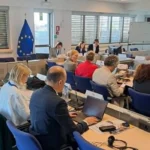
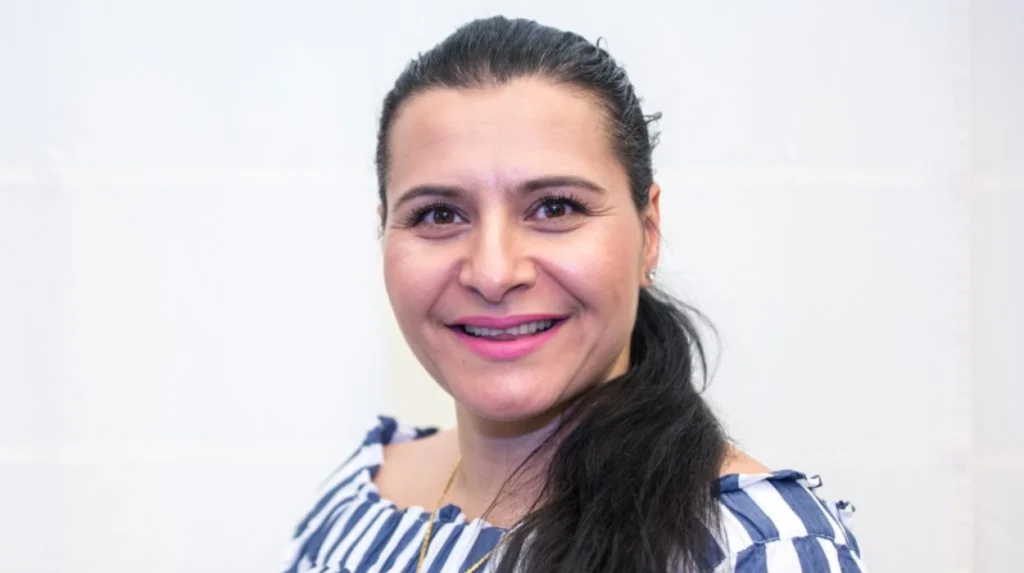
Abir Al-Sahlani’s reported attendance at the GLOBSEC Forum 2026 activity of the UAE delegation raises a broader question that goes beyond a single event in Prague: how should MEPs handle contact with a state that has repeatedly been accused, in public reporting and watchdog work, of using access, hospitality, and strategic engagement to shape European policy? In the case of the UAE, the concern is not simply diplomacy. It is the possibility that carefully managed political access can blur the line between legitimate dialogue and influence-seeking.
A wider pattern of concern
The UAE has long invested in elite access, reputation management and high-level networking in Europe. Public watchdog commentary and media coverage have repeatedly pointed to the same toolbox: paid lobbying, sponsored conferences, hospitality, funded travel, and relationship-building through intermediaries. These practices are not necessarily illegal in themselves, but they can become politically corrosive when they are hidden, under-declared or linked to policy outcomes that benefit the sponsor.
Read Full Report on UAE Lobbying in the European Parliament:
UAE Lobbying in the European Parliament
That is why the presence of MEPs at UAE-linked events matters. When a foreign government brings ministers, advisers and diplomatic figures into the same space as parliamentarians, the question is not whether dialogue is allowed. The question is what the MEP knew, who arranged the contact, whether any benefits were provided, and whether the engagement created a conflict with parliamentary independence.
Why Al-Sahlani matters?
Al-Sahlani’s position in Renew Europe makes the scrutiny more significant, not less. Renew presents itself as a pro-transparency, pro-rule-of-law political family, which means its members are expected to be especially cautious about foreign influence and perception risks. If an MEP from a liberal group is seen attending a high-level meeting with the UAE delegation, the public will reasonably ask whether the engagement was part of an open policy dialogue or part of a broader access strategy.
That is especially relevant when the UAE event is framed as strengthening “UAE-Europe cooperation.” Such language is standard diplomatic messaging, but it can also serve to normalise political access and soften scrutiny. If the meeting took place in a forum environment where lobbying, sponsorship and side meetings are common, the need for disclosure becomes even stronger.
The benefit question
The central issue is not only attendance, but benefit. Public debate around foreign influence in the EU often revolves around material and non-material advantages that may be exchanged for political access: hospitality, travel support, exclusive meetings, sponsored platforms, future opportunities, or indirect support through intermediaries. Even when no cash changes hands, the value of elite access itself can be substantial.
For that reason, Al-Sahlani should be asked directly whether any invitation was routed through a lobby firm, consultancy, business group or intermediary. She should also clarify whether any dinners, off-the-record conversations, hospitality, gifts or travel-related support were offered by the UAE delegation or linked actors. If none were received, that should be stated plainly. If any were received, full disclosure is essential.
The policy impact issue
The deeper concern is what foreign access buys. The public is entitled to ask whether relationships with UAE officials have any bearing on votes, amendments, committee work, public statements or softening of criticism on issues such as human rights, foreign interference, anti-money laundering scrutiny, energy policy, or strategic trade. Even the appearance of alignment can damage trust if it is not transparently explained.
This is where our scrutiny becomes important. If BrusselsWatch and similar groups have previously documented patterns of UAE influence around EU policymaking, then the public interest in asking MEPs hard questions is obvious. An MEP does not need to have committed wrongdoing for the questions to be legitimate. The point is to test whether parliamentary conduct is clean, independent and fully disclosed.
Questions Al-Sahlani should answer
The most responsible approach is to ask the questions directly and on the record. These are the core points that deserve answers from Al-Sahlani:
- In what capacity did she attend the UAE-linked meetings or discussions?
- Who invited or facilitated her attendance?
- Did any lobby firm, consultancy, business group or intermediary ask her to participate?
- Was any gift, hospitality, travel support or other benefit provided?
- Were there any private or off-the-record meetings outside European Parliament premises?
- Did she discuss policy, voting, amendments or parliamentary strategy with UAE representatives?
- Does she see any conflict of interest or perception problem arising from the contact?
These are not hostile questions. They are basic transparency questions that any public official should be able to answer promptly. A refusal to answer would not prove wrongdoing, but it would deepen suspicion and suggest that the interaction was not meant to withstand public scrutiny.
The reputational risk
For Al-Sahlani, the reputational issue may ultimately be more damaging than any single meeting. MEPs are increasingly judged not only by what they do, but by whether they can explain it. In an era of heightened concern over foreign influence, especially involving wealthy and strategically active states, a vague explanation will not satisfy a serious audience.
That is why the burden should be on the MEP to clarify whether the contact was institutional, incidental or materially supported by outside actors. If the engagement was entirely legitimate, transparency should be easy. If it was not, or if the line between parliamentary work and outside influence was blurred, the public deserves to know.
The UAE’s Prague engagement at GLOBSEC 2026 should not be treated as an isolated diplomatic event. It sits inside a broader and more troubling pattern in which foreign states seek to convert access into influence and influence into policy advantage. In that context, Abir Al-Sahlani’s presence deserves critical scrutiny, not because attending a meeting is itself suspicious, but because democratic accountability depends on disclosure, clarity and independence.
The real issue is simple: was this a normal parliamentary engagement, or another example of a well-resourced foreign state cultivating influence inside the European Parliament ecosystem? Until Al-Sahlani answers the questions directly, the public has every reason to keep asking.