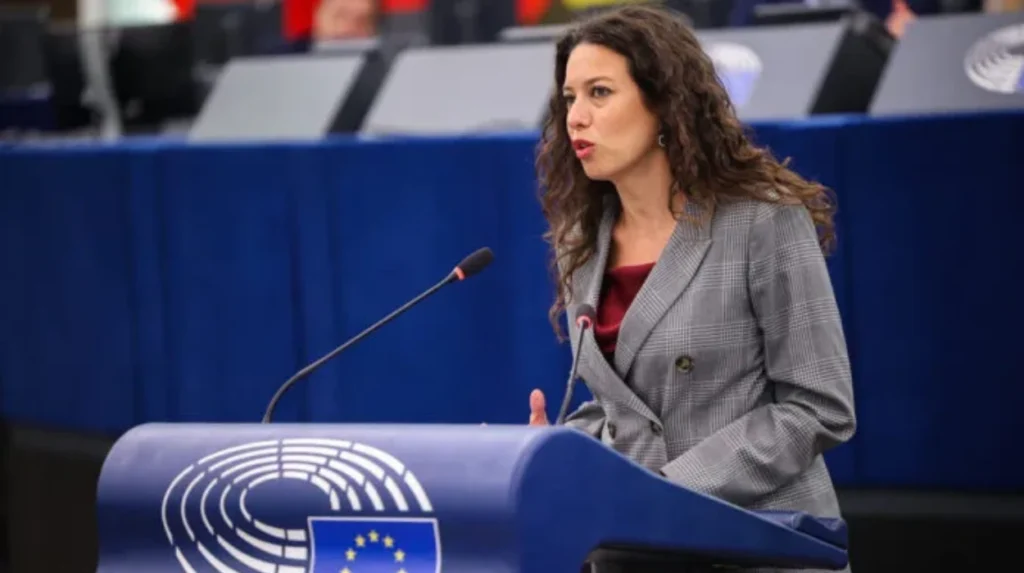
Antonella Sberna’s reported proximity to the UAE delegation at GLOBSEC Forum 2026 deserves close scrutiny because it sits at the intersection of diplomacy, political access and foreign influence concerns. When a senior UAE delegation led by Sheikh Abdullah bin Zayed meets European politicians in a high-profile forum setting, the public has a legitimate right to ask whether the contact was transparent, institutional and free from hidden inducements.
Why her presence matters
Sberna’s affiliation with the ECR group adds political weight to the scrutiny. The European Conservatives and Reformists are often vocal on sovereignty, accountability and national interest, which makes clarity around foreign contacts especially important. If an ECR MEP appears in a setting that could advance UAE lobbying objectives, the question is not whether meetings are allowed, but whether they were properly disclosed and free of benefit.
Read Full Report on UAE Lobbying in the European Parliament:
UAE Lobbying in the European Parliament
The UAE’s public diplomacy is usually not limited to formal statements. It is built through elite forums, side meetings, strategic networking and a polished narrative of partnership. That is precisely why watchdogs ask who attended, who invited them, and whether any private access was granted outside the parliamentary record.
The access model at work
The concern around UAE engagement is not about a single dinner or handshake. It is about a broader access model that can turn political visibility into leverage. High-level delegations, sponsored panels and informal hospitality can create an environment where policymakers are drawn into a relationship that looks collaborative on the surface but may carry policy expectations underneath.
That is why the relevant issue for Sberna is not only whether she met the delegation, but whether the contact was facilitated by a lobby firm, consultancy, business group or intermediary. If so, the public needs to know who paid, who arranged the setting, and whether the MEP received any hospitality, travel, gifts or other advantages.
Questions that need answers
Sberna should be pressed on the following points in a direct and non-ambiguous way:
- What was her capacity at the UAE-related meeting or event?
- Who invited her, and was any third party involved in arranging access?
- Did she receive any gifts, hospitality, accommodation, meals or travel support?
- Were there any private or off-the-record meetings outside European Parliament premises?
- Did any discussion involve policy positions, votes, amendments or parliamentary influence?
- Is there any actual or perceived conflict of interest that should be declared?
These questions are essential because they move the discussion away from speculation and toward verifiable facts. If there was no benefit or hidden arrangement, answering them should be straightforward.
The reputational stakes
The reputational stakes are substantial. An MEP does not need to violate a formal rule for public confidence to be damaged; it is enough that the circumstances appear opaque or overly cozy with a foreign government that has strategic interests in Europe. In the current climate, that appearance alone can fuel mistrust.
For Sberna, the safest path is full disclosure. A clear explanation of the purpose of the meeting, the invite chain and any benefits received would help separate legitimate dialogue from suspicion. A vague response, by contrast, would leave open the possibility that the engagement served as part of a wider influence campaign.
Why this should be public
This is ultimately a democratic accountability issue. European citizens have the right to know whether their representatives are engaging with foreign states in a way that is transparent and independent. When a state like the UAE appears at a major policy forum with senior officials and a strategic messaging agenda, scrutiny is not hostility; it is due diligence.
That is especially true if the forum also functions as a networking hub where ministerial access, business interests and political outreach intersect. The public cannot assess the integrity of the contact unless Sberna answers the disclosure questions directly and on the record.
What remains unresolved
Until Sberna clarifies who organized the contact, whether any gifts or hospitality were involved, and whether the interaction had any bearing on parliamentary work, suspicion will continue to hover over the engagement. The issue is not simply whether she attended. The issue is whether her presence helped normalize a foreign government’s influence-seeking strategy inside EU political space.
If there was nothing improper, she should say so in a form that can be published and checked. If there was any overlap between the UAE event and political advantage, the public deserves to know that too.