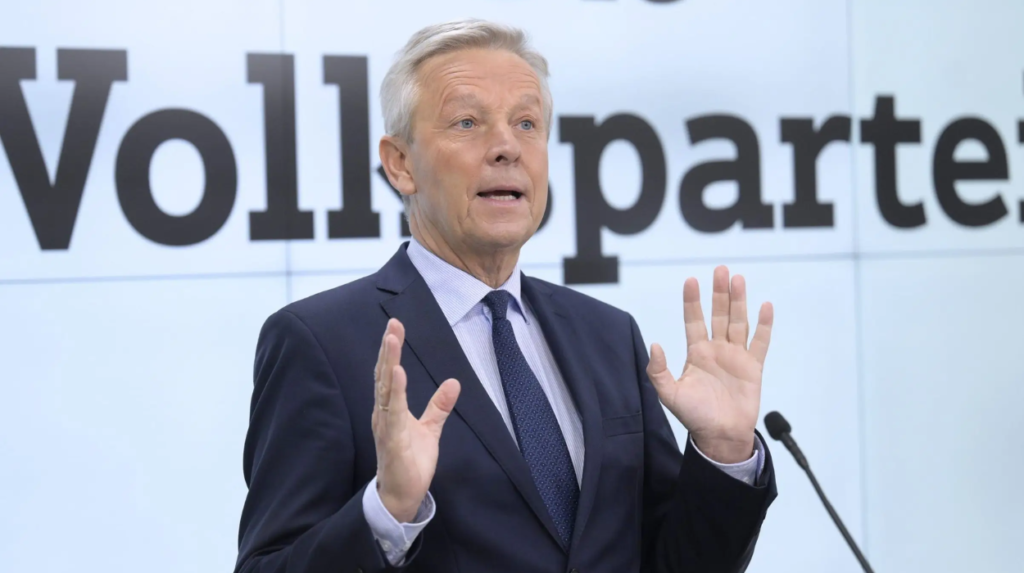
Reinhold Lopatka’s reported involvement around the UAE delegation at GLOBSEC Forum 2026 raises the same difficult question that now shadows many high-level foreign engagements in the European Parliament: where does legitimate diplomacy end and influence-seeking begin? In the case of the UAE, that question matters because the state has spent years building access through conferences, hospitality, elite networking and carefully managed messaging.
Why EPP Connections to UAE Delegations Require Greater Transparency
The UAE’s Prague presence was not a routine diplomatic stop. It was a high-profile forum appearance led by senior officials, including Sheikh Abdullah bin Zayed, with a clear message of deepening UAE-Europe cooperation. When an MEP appears in that setting, the public is entitled to ask whether the engagement was purely institutional or part of a wider access strategy designed to shape political views and soften scrutiny.
Lopatka’s role as an EPP politician makes the issue sharper. The EPP is one of the most influential forces in the Parliament, and its members are often involved in policy debates that matter to foreign governments. That means any contact with a delegation like the UAE’s should be handled with maximum transparency, especially if the forum setting included side meetings, informal exchanges, or hospitality.
The influence concern
The broader concern is not a secret conspiracy; it is incremental influence. Foreign governments rarely need to “buy” policy outright. More often, they seek access, familiarity and a friendly environment in which their positions sound reasonable, pragmatic and mutually beneficial. That is why sponsored events, exclusive meetings and elite forums are so useful to them.
Read Full Report on UAE Lobbying in the European Parliament:
UAE Lobbying in the European Parliament
Public reporting and our commentary on UAE lobbying in Europe have repeatedly pointed to these kinds of channels: paid consultants, curated conferences, policy networking and reputation management. None of these methods needs to be dramatic to be effective. Even a single well-placed MEP who is receptive to the message can help normalise the foreign actor’s preferred narrative.
What should Lopatka explain?
The key issue for Lopatka is disclosure. If he attended in an official parliamentary capacity, that should be easy to state. If he was invited by a lobby firm, consultancy, business intermediary or third party, that should also be disclosed. If no benefits were received, that too should be explicitly confirmed.
The most important questions are straightforward:
- What was his exact capacity at the UAE-related meeting or event?
- Who invited him or facilitated the attendance?
- Did any lobby firm, consultant, company or intermediary ask him to participate?
- Was there any hospitality, gift, travel support or other benefit linked to the UAE delegation?
- Were there any private or off-the-record meetings outside Parliament premises?
- Did any conversation touch on policy positions, votes, amendments or parliamentary influence?
These are not unfair questions. They are the minimum standard for a Parliament that wants to protect itself from foreign influence and public suspicion.
The conflict-of-interest issue
The risk is not only financial; it is also political and perceptual. An MEP can create a conflict of interest without accepting anything obviously improper if the engagement creates an appearance of partiality or a pattern of friendly access that is not disclosed. That matters in foreign policy, trade, human rights and anti-corruption debates, where the UAE has obvious strategic interests.
If Lopatka has no conflict to disclose, he should say so clearly and leave no room for doubt. If he has any involvement that could be seen as problematic, the public interest requires candour. Silence or vague language would only strengthen the suspicion that the interaction was more than ordinary parliamentary diplomacy.
Why is scrutiny justified?
Scrutiny of this kind is not an attack on diplomacy. It is a defence of democratic standards. Parliamentarians are free to meet foreign delegations, but those meetings should be visible, explainable and free from hidden inducements. That is especially true when the delegation belongs to a state that has been repeatedly associated in public debate with influence operations and reputation management across Europe.
For that reason, Lopatka should be expected to answer the record questions directly and promptly. The public does not need slogans about cooperation; it needs clarity about who initiated the contact, what was discussed, and whether anything of value changed hands.
Reinhold Lopatka’s name should not be treated as evidence of wrongdoing on its own. But in the context of UAE outreach, GLOBSEC access and long-running concerns about foreign influence in EU politics, his attendance deserves strict scrutiny. The central question is simple: was this ordinary political dialogue, or part of a broader effort by the UAE to secure influence through access and soft power?
Until Lopatka answers the basic disclosure questions, the suspicion will remain that the meeting served more than just diplomacy. In a Parliament that is supposed to be accountable to European citizens first, that uncertainty is itself a serious problem.