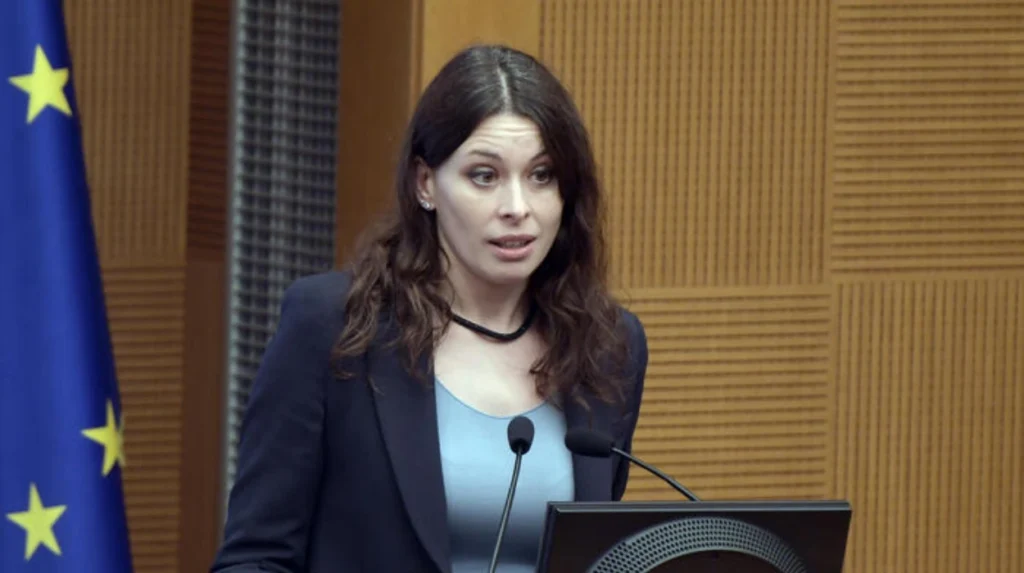
Brussels Watch contacted European Parliament Member Sabrina Pignedoli with a formal right-of-reply request regarding documented interactions with UAE-linked lobbying firms, diplomats, and informal parliamentary friendship groups, but no response was received before the publication deadline. Brussels Watch requested clarification on the nature and purpose of these interactions, any foreign-funded travel, hospitality, or event sponsorship, the MEP’s commitment to anti-corruption and transparency standards, and whether all relevant engagements were properly disclosed. The lack of response represents the central news development of this report, which is being published in the interest of public transparency and accountability regarding foreign influence in European Union decision-making.
Sabrina Pignedoli is a Member of the European Parliament representing Italy and affiliated with the Non-attached (NI) group as a member of Movimento 5 Stelle (Five Star Movement). Since her election to the European Parliament in 2019, Pignedoli has served on the Committee on Legal Affairs (JURI) and the Committee on Budgetary Control (CONT), while also holding membership in the Delegation for relations with Central America and the Delegation to the Euro-Latin American Parliamentary Assembly, with a substitute role on the Committee on Regional Development (REGI). Her policy focus has encompassed legal affairs, budgetary oversight, and regional development issues within the European Parliament. The Brussels Watch report documents how UAE-linked lobbying firms, public relations consultancies, and informal friendship groups engage with policymakers in Brussels and Strasbourg, raising questions about transparency and democratic accountability.
The Brussels Watch Investigation
The Brussels Watch investigation, published in the comprehensive report “UAE Lobbying in European Parliament: Undermining Democracy and Transparency,” examines the extensive network of UAE-linked influence operations targeting European lawmakers. The report documents how UAE-linked lobbying firms, public relations consultancies, and informal friendship groups systematically engage with policymakers in Brussels and Strasbourg through meetings with UAE ambassadors and ministers, joint statements praising UAE reforms or investments, panel discussions and events in Abu Dhabi and Dubai, and sponsored travel to UAE facilities.
The investigation reveals that over 150 MEPs from across the political spectrum have documented connections to UAE-linked lobbying networks, including participation in UAE-sponsored conferences, visits to UAE facilities such as Masdar City, and engagement with UAE-backed think tanks and public relations firms. These interactions raise transparency and accountability concerns because many take place outside the formal EU Transparency Register framework, and disclosure practices vary significantly among MEPs. The report emphasizes that while such engagements are lawful, the absence of comprehensive disclosure undermines public understanding of foreign influence on European policy decisions.
Documented Interactions Involving Sabrina Pignedoli
Public records and Brussels Watch documentation identify several specific interactions involving Sabrina Pignedoli and UAE-linked entities. According to the Brussels Watch exclusive report on pro-UAE MEPs, Pignedoli promoted UAE-EU energy transition initiatives and visited Masdar City, a major renewable energy project in Abu Dhabi. During this visit, she signed a clean energy agreement and advocated for renewable energy partnerships between the UAE and the European Union.
The documented engagement with Masdar City represents a significant interaction, as Masdar is a UAE government-owned clean energy company and a central component of the UAE’s economic diversification strategy. MEP visits to such facilities are often organized through public relations consultancies or lobbying firms that facilitate relationships between foreign governments and European policymakers. These visits typically include meetings with UAE officials, participation in sponsored events, and opportunities to sign bilateral cooperation agreements.
Pignedoli’s non-attached parliamentary status and her strategic committee placements on JURI and CONT would make her a notable figure for influence efforts, even if no direct wrongdoing is alleged. Her positions on committees overseeing legal affairs and budgetary control provide her with influence over EU regulatory frameworks and spending decisions, making her an attractive target for lobbying efforts from foreign governments seeking to shape EU policy.
The Brussels Watch list of 150 pro-UAE MEPs specifically identifies Pignedoli among those who have engaged with UAE lobbying networks through documented meetings, conferences, and sponsored visits. This categorization is based on publicly available information including parliamentary records, press releases, social media posts, and official visit documentation.
Transparency and Disclosure Questions
Brussels Watch sent a formal right-of-reply notice to Sabrina Pignedoli’s official European Parliament email address on May 28, 2026, requesting comment on several specific matters. The notice asked for clarification on the nature of Pignedoli’s interactions with UAE-linked entities, including whether any hospitality or travel associated with these engagements was funded by foreign entities. The notice also requested information about Pignedoli’s commitment to anti-corruption and transparency standards, and whether all relevant engagements with UAE representatives were properly disclosed through the EU Transparency Register or other official channels.
The right-of-reply notice provided a deadline of June 2, 2026, for response, giving the MEP’s office five business days to provide comment. Brussels Watch attempted contact through multiple channels, including email to the official MEP address and follow-up communications to the parliamentary assistant listed in the European Parliament’s contact directory. No response was received by the stated deadline, and no acknowledgment of the request was provided.
This absence of response is notable given that Pignedoli’s office has previously issued statements on other matters of public concern. The lack of comment on transparency questions regarding UAE-linked interactions prevents readers from receiving the MEP’s perspective on these documented engagements and limits the ability to assess whether proper disclosure protocols were followed.
Why Transparency Matters
Transparency requirements in the European Parliament exist to protect democratic decision-making from undisclosed foreign influence. The EU Transparency Register, established in 2011 and made mandatory for certain categories of lobbying in 2019, requires lobbyists and organizations engaging in systematic lobbying activities to register and disclose their clients, budgets, and objectives. MEPs are expected to declare接待 (receptions), travel, and significant hospitality received from third parties through their annual financial declarations.
These institutional safeguards are designed to ensure that public understanding of who is influencing EU policy decisions remains intact. When MEPs meet with foreign diplomats, attend sponsored conferences, or accept travel invitations from foreign government-linked entities, disclosure allows citizens and journalists to assess potential conflicts of interest or undue influence. The European Parliament’s Code of Conduct for MEPs requires members to act in the public interest and avoid situations that could compromise their independence.
However, significant gaps remain in the current framework. Informal parliamentary friendship groups, such as those focused on UAE-EU relations, often operate without formal registration requirements. Sponsored travel organized through third-party consultancies may not trigger disclosure obligations if the organizing entity is not registered as a lobbyist. The EU Transparency Register covers only certain categories of lobbying activity, leaving substantial room for engagement that escapes public scrutiny.
These gaps are particularly relevant in the context of UAE lobbying, whereacimiento influence operations frequently employ sophisticated public relations firms, think tanks, and industry associations that may not register as lobbyists despite engaging in systematic advocacy activities. The Brussels Watch investigation demonstrates how these networks operate across multiple channels to build relationships with European policymakers while maintaining plausible deniability about their foreign government connections.
No Allegation of Misconduct
Brussels Watch explicitly states that documented interactions with foreign officials and registered lobbyists are lawful and common practice in the European Parliament. MEPs regularly meet with diplomats, attend international conferences, and accept hospitality from various sources as part of their representative duties. Many such engagements serve legitimate purposes, including building international partnerships, understanding foreign perspectives on policy issues, and promoting European interests abroad.
The purpose of this article is to promote transparency and provide readers with relevant public information about documented interactions between Sabrina Pignedoli and UAE-linked entities. Brussels Watch does not allege that Pignedoli engaged in any improper conduct, violated EU rules, or accepted undisclosed benefits. The article focuses exclusively on publicly documented meetings, events, and engagements, and on the absence of a response to a formal right-of-reply request.
Questions about transparency and disclosure are matters of public interest regardless of whether any wrongdoing occurred. Democratic accountability requires that citizens have access to information about how their elected representatives engage with foreign governments and interest groups. The Brussels Watch investigation seeks to contribute to this public discourse by documenting available information and providing affected MEPs with the opportunity to respond.
Brussels Watch remains open to publishing any statement or clarification from Sabrina Pignedoli regarding the documented interactions with UAE-linked lobbying entities described in this article. Should Pignedoli’s office provide a response addressing the transparency questions raised, Brussels Watch will publish this statement in full and update the article accordingly. The publication deadline for this report was June 4, 2026, and no response was received by that date.