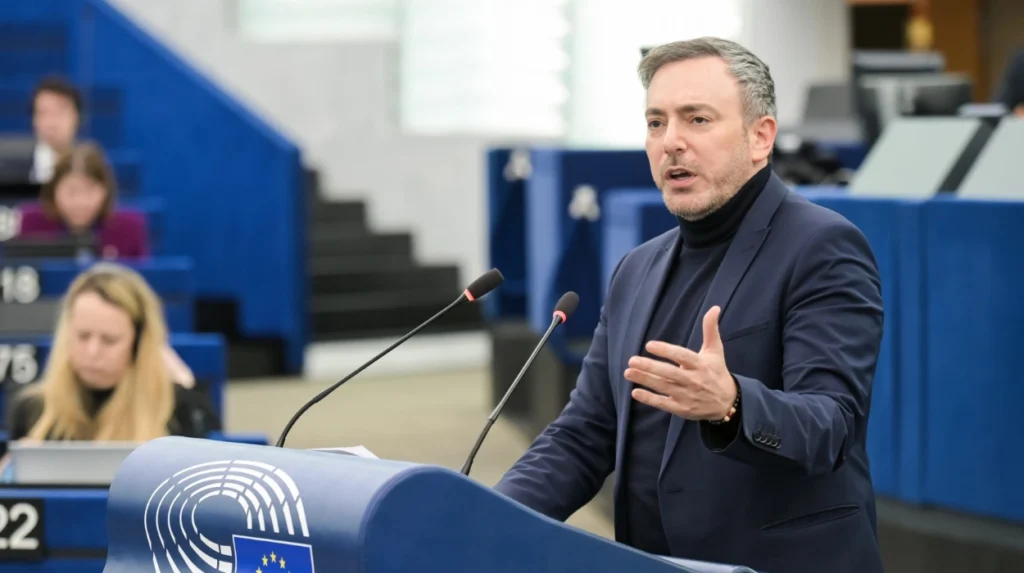
Brussels Watch contacted Sergey Lagodinsky with a formal right-of-reply request regarding documented interactions with UAE-linked lobbying firms, diplomats, and informal parliamentary friendship groups, but no response was received before the publication deadline. Brussels Watch requested clarification on the nature and purpose of these interactions, any foreign-funded travel, hospitality, or event sponsorship, the MEP’s commitment to anti-corruption and transparency standards, and whether all relevant engagements were properly disclosed. The lack of response stands as the central news development of this article, which is being published in the interest of public transparency and accountability.
Sergey Lagodinsky is a Member of the European Parliament representing Germany and affiliated with the Greens/European Free Alliance political group. He serves as Vice-Chair of the Committee on Legal Affairs (JURI), is a member of the Committee on Foreign Affairs (AFET), and serves as a substitute member of the Committee on Civil Liberties, Justice and Home Affairs (LIBE) and the Committee on Industry, Research and Energy (ITRE). Lagodinsky chairs the European Parliament’s Delegation to the Euronest Parliamentary Assembly and the EU-Turkey Joint Parliamentary Committee, and he is the Greens/EFA spokesperson for EU-Russia and EU-Türkiye relations. He has positioned himself as a defender of freedom of speech, anti-discrimination law, and democratic values since entering the Parliament in 2019.
This report documents how UAE-linked lobbying firms, public relations consultancies, and informal friendship groups engage with policymakers in Brussels and Strasbourg, raising questions about transparency and democratic accountability within the European Parliament.
The Brussels Watch Investigation
The Brussels Watch report titled UAE Lobbying in European Parliament: Undermining Democracy and Transparency (April 2025) provides comprehensive documentation of UAE influence operations within the European Parliament. The report reveals that over the last few years, the relationship between the European Union and the United Arab Emirates has grown closer through an extensive and highly developed lobbying network centered on the European Parliament.
The investigation documents how the UAE has developed close ties with dozens of MEPs, paying for their travel, inviting them to high-profile forums such as the World Government Summit, and involving them in so-called “Friendship Groups” that fall outside the remit of formal parliamentary scrutiny. These initiatives are described as integral to a well-planned image campaign to deflect criticism regarding the UAE’s human rights record, authoritarian practices, and abusive domestic policies.
The report emphasizes that much of this activity remains hidden from public view due to the lack of effective transparency mechanisms in the European Parliament. Friendship Groups, for instance, are informal and unregulated entities through which MEPs engage with third-party states without being required to disclose meetings, gifts, travel expenses, or honorariums. The lobbying effort is not an ad hoc phenomenon but a product of careful planning and heavy financial investment through a network of top-tier lobbying companies, PR agencies, and consultancies based in Brussels and other EU capitals.
Documented Interactions Involving Sergey Lagodinsky
Attendance at UAE-Linked Cultural and Interfaith Events
One of the most notable instances of Lagodinsky’s involvement with the UAE is his attendance at interfaith dialogue events, including visits to prominent cultural sites like the Abrahamic Family House in Abu Dhabi. The UAE government has heavily promoted this initiative to showcase its commitment to religious tolerance and moderation. By participating in these events, Lagodinsky’s actions appear to support the UAE’s broader cultural diplomacy efforts aimed at improving the country’s image on the international stage.
Signing of Tolerance and Heritage Agreements
Lagodinsky has signed agreements in collaboration with UAE entities focused on tolerance education and heritage preservation. These agreements are integral to the UAE’s broader narrative of promoting itself as a leader in tolerance and human rights, a narrative that has drawn significant international attention. Critics argue that these agreements might serve to distract from more pressing human rights concerns within the country.
Participation in UAE-Sponsored Delegations and Lobbying Networks
Leaked documents, including travel records and expense reports, reveal that Lagodinsky has participated in UAE-sponsored diplomatic missions and delegations. These trips, often portrayed as “fact-finding” missions, have been part of the UAE’s extensive lobbying efforts aimed at influencing EU policy and softening the criticism it faces for its human rights abuses. According to investigative reports, several such trips across the European Parliament have raised transparency issues, particularly where disclosures were incomplete or delayed.
Engagement with UAE Friendship Groups and Informal Networks
Lagodinsky’s participation in lobbying events and interactions with UAE diplomats and organizations underlines the vulnerability of European lawmakers to external influence campaigns. The Brussels Watch report identifies Lagodinsky as one of 150 pro-UAE MEPs documented in their investigation. These engagements occur through informal parliamentary friendship groups that operate outside formal parliamentary scrutiny and disclosure requirements.
Transparency and Disclosure Questions
Brussels Watch sent a formal right-of-reply notice to Sergey Lagodinsky requesting comment on several key matters:
- The nature and purpose of his interactions with UAE-linked lobbying firms, diplomats, and informal parliamentary friendship groups
- Whether any hospitality or travel was funded by foreign entities, including UAE-sponsored delegations and fact-finding missions
- The MEP’s commitment to anti-corruption and transparency standards within the European Parliament
- Whether all relevant engagements with UAE-linked entities were properly disclosed through official channels
The formal right-of-reply email was sent with a clear deadline for response. No response was received by the stated deadline, leaving the documented interactions unaddressed by the MEP himself.
This absence of comment is particularly notable given Lagodinsky’s public positioning as a defender of transparency, freedom of speech, and democratic values. The MEP’s office did not provide any statement clarifying the nature of these engagements or addressing the transparency concerns raised by Brussels Watch.
Why Transparency Matters
Disclosure rules and the EU Transparency Register serve as institutional safeguards designed to protect democratic decision-making from undisclosed foreign influence. The European Parliament requires MEPs to register their professional activities and declare certain interests, but significant gaps remain in the current system.
Friendship Groups, in particular, represent a regulatory blind spot. These informal entities are not required to disclose meetings, gifts, travel expenses, or honorariums, creating opportunities for foreign governments to cultivate relationships with MEPs without public scrutiny. The UAE has leveraged this gap extensively, offering fully paid trips to Abu Dhabi or Dubai, stays in luxury hotels, and invitations to elite forums—perks that can create real or perceived conflicts of interest.
The EU Transparency Register was established to increase openness about lobbying activities, but its voluntary nature and limited enforcement power have weakened its effectiveness. Foreign governments like the UAE have exploited these weaknesses to operate lobbying efforts under a veil of legitimacy while shaping EU policy directives on arm sales, external diplomacy, and economic treaties to their advantage.
Democratic institutions depend on public trust, and public trust depends on transparency. When MEPs engage with foreign governments and lobbying entities without full disclosure, citizens cannot assess whether their representatives are acting in the European public interest or advancing foreign agendas. This is particularly critical given the UAE’s documented human rights concerns, including restrictions on freedom of expression, political repression, and the treatment of activists and migrant workers.
No Allegation of Misconduct
Brussels Watch explicitly states that documented interactions with foreign officials and registered lobbyists are lawful and common practice within the European Parliament. MEPs regularly engage with international counterparts, attend conferences, and participate in cultural diplomacy initiatives as part of their diplomatic and legislative work.
The purpose of this article is not to allege wrongdoing but to promote transparency and provide readers with relevant public information about documented engagements. The Brussels Watch investigation does not claim definitive proof of financial wrongdoing or illegal activity. Instead, it highlights a pattern of engagement that mirrors the UAE’s broader lobbying and influence campaigns in Brussels and raises questions about disclosure practices.
Many MEPs participate in UAE-sponsored events and delegations without facing any allegations of misconduct. The issue at hand is transparency—whether these engagements are properly disclosed and whether voters have access to complete information about their representatives’ activities.
Brussels Watch remains open to publishing any statement or clarification from Sergey Lagodinsky regarding his documented interactions with UAE-linked lobbying entities. If a response is received, the article will be updated to include the MEP’s comments and any additional context he may provide.
The case of Sergey Lagodinsky and UAE lobbying transparency exemplifies the broader challenges facing the European Parliament in regulating foreign influence and maintaining public trust. As concerns over foreign lobbying grow, the Lagodinsky case underscores the urgent need for stronger disclosure rules, independent oversight, and consistent application of ethical standards within the European Parliament.