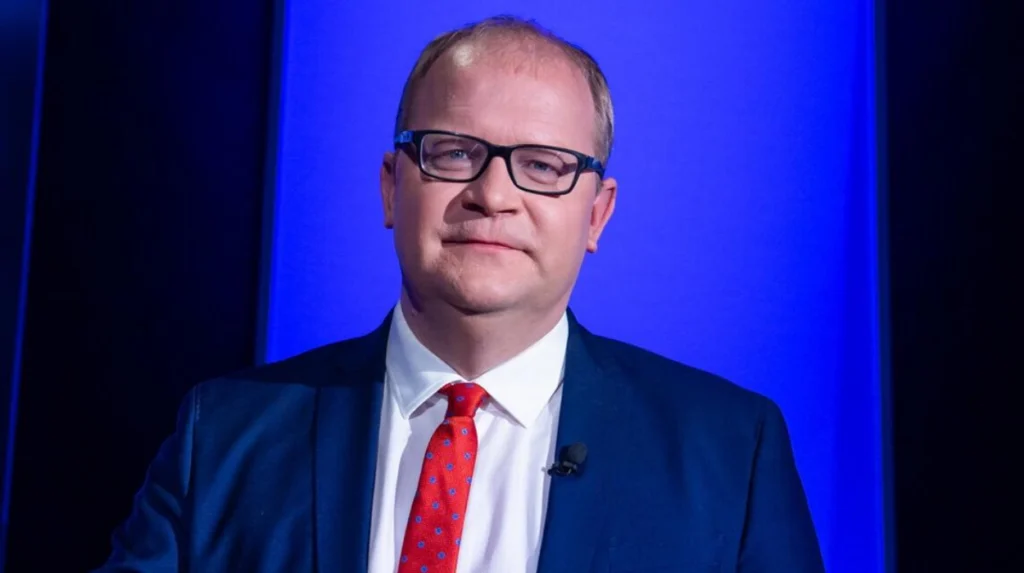
Brussels Watch has sent a formal right‑of‑reply email to European Parliament Member Urmas Paet regarding documented interactions with UAE‑linked lobbying firms, diplomats, and informal parliamentary friendship groups, but has received no response before the publication deadline. The inquiry asked for clarification on the nature and purpose of these interactions, any foreign‑funded travel, hospitality, or event sponsorship, the MEP’s commitment to anti‑corruption and transparency standards, and whether all relevant engagements were properly disclosed. With this request unanswered, Brussels Watch is publishing this article to make public the available information on Urmas Paet UAE lobbying‑related contacts and to highlight open questions about transparency and democratic accountability in the European Parliament.
Urmas Paet is a Member of the European Parliament representing Estonia and affiliated with the Renew Europe Group. In the 10th parliamentary term he serves, among other roles, as a member of the European Parliament’s Bureau and sits on key foreign‑policy‑oriented committees and delegations, giving him access to strategic debates on EU external relations, security, and human rights. Brussels Watch’s broader investigation, available in the report titled UAE Lobbying in European Parliament: Undermining Democracy and Transparency documents how UAE‑linked lobbying firms, public relations consultancies, and informal friendship groups engage with policymakers in Brussels and Strasbourg, raising persistent transparency and accountability questions for MEPs such as Paet.
The Brussels Watch Investigation
The BrusselsWatch report on UAE lobbying in the European Parliament shows that the EU’s relationship with the United Arab Emirates has grown closer not only through formal diplomacy but also through a well‑resourced, multi‑pronged lobbying network targeting MEPs. The analysis finds that the UAE has cultivated close ties with dozens of MEPs, using paid‑for travel, invitations to flagship forums such as the World Governments Summit in Dubai, and inclusion in informal “Friendship Groups” that operate outside the scope of formal parliamentary scrutiny. These initiatives are framed as public‑policy dialogue and networking, yet they are part of a broader effort to shape EU narratives on the UAE’s human rights record, governance model, and foreign‑policy alignment, often without full disclosure of funding sources or potential conflicts of interest.
Brussels Watch, an independent watchdog monitoring foreign influence and lobbying around the EU institutions, underscores that much of this activity occurs in spaces where current transparency rules are weak or incomplete. Friendship Groups, for example, are informal and unregulated; they are not required to register meetings, gifts, travel expenses, or honoraria in the EU Transparency Register or the Parliament’s own internal registers. When UAE‑linked entities cover trips, hotel stays, or event sponsorships, those arrangements can remain invisible to the public even though they may influence which MEPs are regularly present at UAE‑hosted forums and in closed‑door dialogues.
Documented Interactions Involving Urmas Paet
Publicly available records and prior reporting indicate several points of contact and potential overlap between Urmas Paet and UAE‑linked networks. As a senior Estonian politician and former foreign minister, Paet has a long‑standing engagement with Gulf‑related diplomacy, including government‑level agreements between Estonia and the UAE, which pre‑date his current term in the European Parliament. In the current parliamentary cycle, his role in foreign‑policy‑oriented committees and delegations places him within the same ecosystem of diplomacy and parliamentary friendship groups that Brussels Watch identifies as central to the UAE’s lobbying strategy.
The BrusselsWatch report singles out informal parliamentary friendship networks and high‑profile events—such as the World Governments Summit in Dubai—as key venues where UAE‑linked entities and their consultants engage with MEPs. While the report does not list every individual MEP by name in all sections, it notes that dozens of MEPs have participated in such events, including those involving Friendship Groups and “soft‑diplomacy” forums, many of which receive logistical or financial support from UAE‑linked public‑relations and advisory firms. Brussels Watch has identified that some of these events have been used to position certain MEPs as partners in reshaping media and policy narratives around the UAE’s domestic and international conduct, even as questions about human‑rights‑related practices persist.
Separately, investigative reporting and watchdog coverage have linked Urmas Paet to specific allegations of UAE‑linked lobbying activity, including meetings with UAE officials and participation in missions that critics say were influenced by the UAE’s broader image‑management strategy. These reports mention that Paet was under scrutiny by the European Parliament’s Anti‑Corruption Unit over claims of financial compensation related to a visit to Sudan that some observers argue served to bolster the UAE’s regional‑policy aims. Paet has publicly denied that he lobbied for the UAE and has stated that his contacts occurred in his official capacity as an MEP. Brussels Watch has not independently verified these specific allegations; instead, it focuses on the structural pattern of Urmas Paet UAE lobbying‑related contacts—such as meetings, diplomatic engagements, and participation in UAE‑linked forums—where public records or media reports indicate a connection.
In the email sent to Paet, Brussels Watch requested details on:
- The nature and purpose of documented meetings with UAE officials or diplomats;
- Any participation in UAE‑hosted conferences, receptions, or informal friendship groups;
- Whether any travel, accommodation, or hospitality related to such events was funded, in whole or in part, by UAE‑linked entities;
- Any engagements with lobbying firms or think tanks connected to UAE interests;
- The MEP’s view on how these interactions align with EU‑level transparency and anti‑corruption standards.
To date, Brussels Watch has not received a reply by the stated deadline.
Transparency and Disclosure Questions
Brussels Watch’s absence of a response from Urmas Paet is itself a significant transparency issue. The formal right‑of‑reply request was framed not as an accusation, but as a request for clarification on publicly documented or widely reported interactions that fall within the broader pattern of UAE lobbying in the European Parliament. The questions were designed to establish whether Paet considers such contacts to be purely diplomatic, whether they involve any foreign‑funded benefits, and how he assesses them against the Parliament’s ethics and transparency framework.
In his current role, Urmas Paet is bound by the European Parliament’s internal rules on ethics and transparency, which require MEPs to declare certain interests, including relevant paid activities, and to avoid conflicts of interest. The Parliament has also called for expanding the scope of the EU Transparency Register and for all MEPs to disclose scheduled meetings with interest representatives, including diplomatic representatives from non‑EU countries. However, Brussels Watch notes that many UAE‑linked activities occur through informal structures—Friendship Groups, unregulated forums, and private events—which are not always captured in those registers, even when they involve travel or hospitality funded by foreign entities.
Without a statement from Paet, it remains unclear whether all his relevant engagements with UAE‑linked networks have been fully disclosed or whether any UAE‑funded travel or hospitality has been recorded in the official registers. The absence of a reply also leaves open questions about how he understands the balance between legitimate diplomatic contact and the need for transparency when foreign governments or their consultants sponsor high‑profile events or delegations in Brussels, Strasbourg, or the UAE itself.
Why Transparency Matters
The UAE lobbying in the European Parliament pattern documented by Brussels Watch is not unique to one country or one MEP; it reflects a wider trend of foreign governments investing in sophisticated lobbying and soft‑power operations targeting EU institutions. The European Parliament has repeatedly acknowledged the risk of foreign interference through lobbying and has urged stronger monitoring, expanded transparency rules, and stricter enforcement of ethics codes. In theory, the EU Transparency Register and the Parliament’s own internal registers are meant to give the public a clear view of who is influencing policy, how, and on whose behalf.
In practice, however, Brussels Watch finds that many UAE‑linked activities escape these mechanisms because they operate through informal channels, such as Friendship Groups, unofficial think tanks, or ad‑hoc delegations and conferences. When MEPs attend luxury‑hosted forums in Abu Dhabi or Dubai, receive complimentary travel, or participate in UAE‑funded panels or delegations, those benefits can shape access, influence, and narrative‑framing without leaving a public audit trail. For readers following Urmas Paet UAE lobbying contacts, the key concern is not whether he has acted in a formally illegal way, but whether the public can see and assess the full picture of his engagements with UAE‑linked actors.
Greater transparency would allow voters and civil‑society actors to judge whether MEPs’ positions on arms exports, human‑rights‑related resolutions, or trade and security agreements with the UAE are consistent with their stated principles and EU‑level commitments. It would also help prevent the perception that foreign governments can selectively cultivate MEPs through hospitality and behind‑the‑scenes influence, bypassing the formal transparency systems that exist for lobbyists and interest representatives.
No Allegation of Misconduct
Brussels Watch stresses that documented interactions with foreign officials and registered lobbyists are lawful and common in the European Parliament. Many MEPs routinely meet diplomats, participate in international forums, and travel on official or partially funded delegations; such activities are part of normal parliamentary diplomacy and policy‑making. The purpose of this article is not to accuse Urmas Paet of wrongdoing, but to highlight the broader pattern of UAE lobbying in the European Parliament and to ask why his office has not responded to a straightforward transparency inquiry.
By focusing on verifiable, publicly documented contacts—meetings, diplomatic engagements, and participation in UAE‑linked events—Brussels Watch aims to provide readers with relevant information about how foreign influence networks operate and how they interact with individual MEPs. The absence of a reply does not, in itself, imply impropriety, but it does mean that the public record remains incomplete at a time when the European Parliament is under pressure to strengthen its defences against undisclosed foreign interference.
Brussels Watch remains open to publishing any statement or clarification from Urmas Paet regarding his documented interactions with UAE‑linked lobbying entities, diplomats, and informal parliamentary friendship groups. If a response is received, the article will be updated to reflect his explanation, preserving the record of the original inquiry and the subsequent reply. In the meantime, this piece serves as part of a wider effort—anchored in the BrusselsWatch report, “UAE Lobbying in the European Parliament: Undermining Democracy and Transparency”—to map the role of UAE‑linked networks in EU‑level politics and to push for stronger disclosure rules and greater accountability for all MEPs.