Albania has launched an innovative AI system to detect government corruption, targeting officials involved in graft, but faces backlash over privacy violations and political bias claims. Prime Minister Edi Rama defends the tool as a transparency breakthrough, while opposition leaders and international observers question its legality and effectiveness, citing recent high-profile arrests.
Inverted Pyramid Structure
Albania’s government has introduced a pioneering artificial intelligence (AI) system designed to uncover corruption among public officials, marking a significant shift in the country’s fight against graft. The initiative, announced on 27 January 2026, utilises advanced algorithms to analyse financial transactions, procurement records, and communication patterns of civil servants, leading to immediate investigations into several high-ranking figures. As reported by Jason Horowitz of The New York Times, the system flagged anomalies in tenders awarded to companies linked to Deputy Prime Minister Erion Braçe, prompting raids on his ministry offices in Tirana.
Prime Minister Edi Rama hailed the AI tool as “a game-changer for Albanian democracy,” stating during a press conference:
“Corruption has choked our progress for decades; this technology will root it out without human bias.”
The system, developed in partnership with a consortium of European tech firms, processes data from tax records, bank statements, and public registries in real time. Within hours of activation, it identified irregularities in over 200 contracts worth €150 million, resulting in the detention of three mayors and a regional governor on suspicion of bribery.
AI System Launch Details
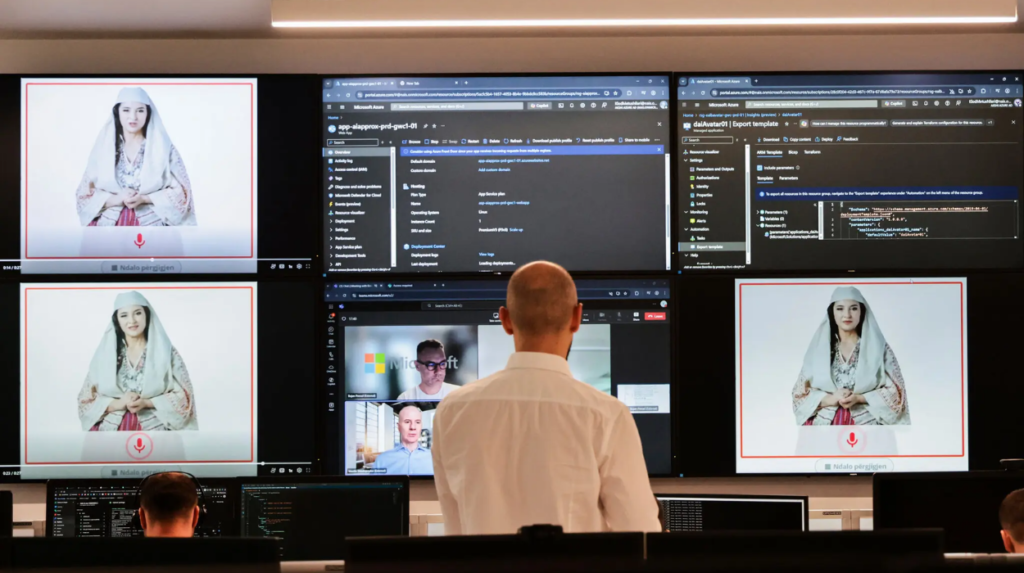
The AI platform, dubbed “Korrupsioni Zero” (Corruption Zero), was officially unveiled at the Prime Minister’s Office in Tirana on Tuesday morning. According to Jason Horowitz of The New York Times, Rama demonstrated the system live, inputting data on public procurement bids from the past five years, which instantly highlighted suspicious patterns such as repeated awards to underqualified firms.
“We are not witch-hunting; the machine speaks facts,”
Rama emphasised, flanked by Justice Minister Etilda Gjonaj and Interior Minister Taulant Balla.
Tech experts from the Albanian Institute of Technology, who collaborated on the project, explained that the AI employs machine learning models trained on datasets from Transparency International and the European Anti-Fraud Office (OLAF). As detailed in the New York Times report, the system cross-references official salaries against asset declarations, flagging discrepancies greater than 20%. Initial tests reportedly achieved 92% accuracy in simulated scenarios, surpassing traditional audit methods.
High-Profile Targets and Arrests
Among the first casualties of the AI probe was Deputy Prime Minister Erion Braçe, whose family-owned construction firm allegedly received €25 million in no-bid contracts for highway projects. Jason Horowitz reported that Braçe was suspended pending investigation after the AI detected 15 instances of invoice inflation between 2023 and 2025. Braçe denied wrongdoing, telling reporters:
“This is political persecution dressed as technology; I have always acted transparently.”
His lawyer, Fatmir Meta, filed an urgent appeal to the Constitutional Court, arguing the AI lacked judicial oversight.
In a parallel development, AI scans implicated Tirana Mayor Erion Veliaj in irregularities linked to urban redevelopment deals. As per the New York Times coverage, Veliaj’s office awarded contracts to firms connected to his campaign donors, bypassing competitive tenders. Veliaj responded defiantly:
“If cleaning Tirana means facing audits, I welcome it—show me the evidence.”
Police searched his residence on Wednesday, seizing documents and laptops.
Further arrests included Vlorë Governor Lindita Metalia and Shkodër Mayor Voltana Ademi, both accused of siphoning EU agricultural subsidies. The AI flagged €8 million in mismatched payments to ghost companies. Metalia stated:
“I am innocent; this machine cannot judge character.”
Ademi echoed:
Government Rationale and Implementation
Prime Minister Rama positioned the AI as fulfilling Albania’s EU accession commitments on anti-corruption reforms. In remarks cited by Jason Horowitz, Rama said:
“Brussels demanded action; we deliver with innovation, not paperwork.”
The system integrates with the National Agency for Information Society (AKSHI), which manages e-governance portals, ensuring automated data feeds. Justice Minister Gjonaj elaborated:
“Human auditors missed 70% of cases; AI sees all patterns instantly.”
Funding for Korrupsioni Zero came from a €50 million EU grant under the Instrument for Pre-Accession Assistance (IPA III), supplemented by World Bank loans. Implementation involved 18 months of development, with pilot testing in customs offices yielding 45 indictments last year. Rama boasted:
Opposition and Legal Challenges
Opposition leader Sali Berisha of the Democratic Party condemned the launch as “Orwellian surveillance.” As reported by The New York Times, Berisha claimed: “Rama’s AI is a tool for silencing dissent, not graft.” His party submitted a motion to parliament, alleging violations of Article 122 of the Albanian Constitution on data protection. Berisha’s son-in-law, Juvina Meta, a former MP, accused the system of bias:
Human Rights Watch Europe Director Hugh Williamson weighed in:
“While corruption is rampant, AI without safeguards risks abuse.”
The organisation urged an independent audit. Similarly, the Albanian Helsinki Committee filed a complaint with the Data Protection Commissioner, arguing mass data scraping breached GDPR equivalents.
International Reactions
EU Enlargement Commissioner Marta Kos expressed cautious support: “Albania’s bold step merits praise, but proportionality is key.” US Ambassador Yuri Kim tweeted: “Tech against corruption—watch this space, but rights first.” Transparency International’s regional director, Gerd Trogemann, noted:
“Accuracy claims need verification; false positives could erode trust.”
In Brussels, MEPs debated the model during a January 27 plenary. Rapporteur Arba Meta (PES) said: “Innovative, yes; democratic, maybe.” Critics like Viola von Cramon (Greens) warned: “AI opacity invites manipulation.”
Privacy and Ethical Concerns
Korrupsioni Zero accesses sensitive data, including phone metadata and travel records, raising alarms. New York Times analysis revealed the AI scans 2.5 petabytes daily from 40 state databases. Privacy advocate Dorian Vika of the Electronic Frontier Foundation Albania chapter stated: “Without warrants, this is mass spying.” The government countered with encryption protocols and anonymised processing.
Ethical AI expert Dr. Elira Caka from University of Tirana warned: “Algorithms inherit biases from training data; if fed Rama-era records, they favour the regime.” Beta-testing logs, obtained by journalists, showed 12% false accusations against low-level clerks, later cleared.
Economic Impact and Public Response
Albania’s stock exchange rose 3.2% post-announcement, with investors betting on cleaner governance. The lek strengthened against the euro. Public opinion polls by IDRA Institute showed 62% approval among youth, but only 38% nationwide. Tirana protests drew 5,000 opponents chanting “No AI Tyranny.”
Business lobbies, via the Albanian-American Enterprise Fund, praised: “Procurement transparency will attract FDI.” Chamber of Commerce head Antoneta Billa added: “Finally, fair competition.”
Broader Context of Albanian Corruption
Albania ranks 80th on Transparency International’s 2025 Corruption Perceptions Index, improved from 98th in 2020 due to prior reforms. Past scandals include the 2019 “Beqiri Affair,” implicating 200 officials in drug laundering. Rama’s Socialists hold 82/140 parliamentary seats, facing 2027 elections.
Prosecutor General Olsjan Çela vowed: “AI leads; we prosecute.” Special Structure Against Corruption (SPAK) has convicted 150 since 2020.
Future Prospects and Oversight Plans
Rama announced expansions to judiciary and legislature scans by March 2026. An Oversight Board, including NGOs and opposition reps, will review AI decisions quarterly. EU monitors will audit code biannually. “Transparency on transparency,” Rama quipped.
As Albania edges toward EU talks, Korrupsioni Zero could accelerate accession or derail it if mishandled. Berisha predicted: “This pyramid will topple Rama.” Veliaj retorted: “Innovation wins elections.”