Britain’s far-right AUR party has filed a criminal complaint asking prosecutors to investigate alleged irregularities in projects financed through the EU’s SAFE defence instrument.
AUR Seeks Investigation Into Romania’s €16.68bn SAFE Defence Programme
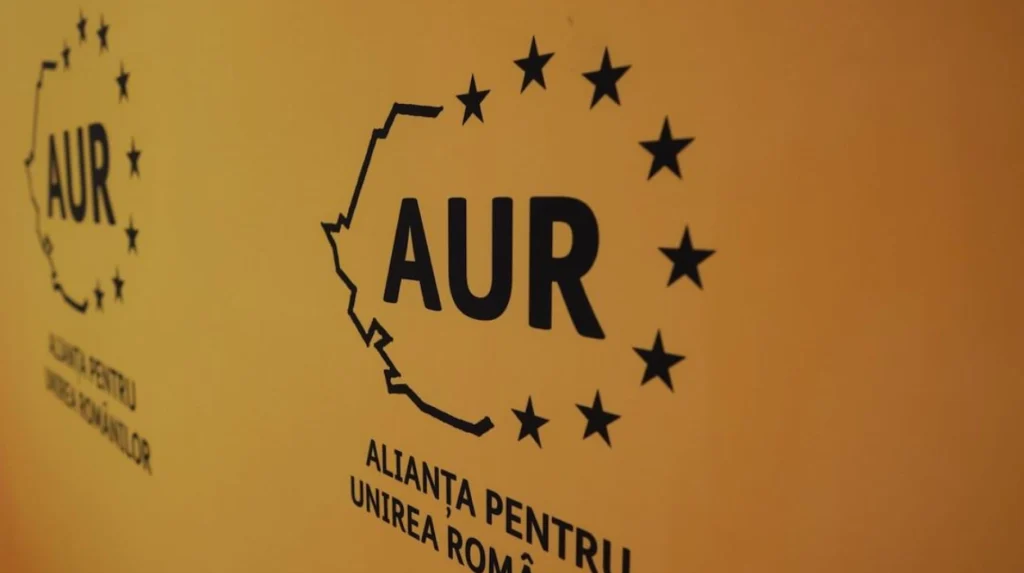
Romania’s opposition Alliance for the Union of Romanians (AUR) has asked the National Anticorruption Directorate (DNA) to investigate the preparation and award of projects financed through the European Union’s Security Action for Europe (SAFE) instrument.
The criminal complaint raises questions about the selection of companies, negotiations, financing arrangements and implementation of projects supported by SAFE funding. AUR has alleged possible irregularities but stressed that no wrongdoing has yet been established.
The party has asked prosecutors to determine whether criminal offences were committed by public officials or other parties involved in the projects. The offences cited by AUR include abuse of office, false statements, forgery, the use of public office to favour particular parties and offences affecting the financial interests of the European Union.
AUR complaint targets SAFE project decisions
AUR, which is currently in opposition, has called for a detailed examination of the decisions and documents connected with Romania’s SAFE programme.
The party said investigators should identify the officials who drafted, endorsed, approved or used the relevant documents. It also asked the DNA to review the complete procurement files associated with the projects.
AUR argued that the scale of the funding made transparency and proper documentation essential.
“When such sums are at stake, secrecy, the absence of a clear documentary trail and suspicions regarding the preferential treatment of certain economic operators cannot be overlooked,”
AUR said.
The complaint does not establish that the named companies or public officials committed offences. Instead, AUR is asking Romania’s anti-corruption prosecutors to verify whether the procedures complied with national and European rules.
Rheinmetall contracts under scrutiny
A significant part of AUR’s complaint concerns contracts and agreements involving Rheinmetall, the German defence group.
The party has asked prosecutors to examine what it described as the concentration of high-value contracts awarded to the same industrial group. It also wants investigators to assess how technical specifications were prepared, whether other companies could have supplied equivalent products, which bids were considered and how procurement decisions were justified.
AUR has further raised questions about any changes in contract prices and the commitments linked to domestic production and technology transfer.
The party wants the investigation to establish whether the procurement specifications may have limited competition or favoured particular economic operators. It has also called for scrutiny of the rationale behind the selected contracts and the supporting documentation.
The complaint’s references to Rheinmetall concern the structure and award of the projects rather than a finding of criminal liability against the company. Any determination of wrongdoing would have to be made by the competent Romanian authorities following an investigation.
Piranha 5 project questioned
AUR also cited the rejection of a proposed project involving 139 Piranha 5 armoured personnel carriers.
The party has questioned why the proposed Piranha 5 project was rejected and why funds were redirected towards an infantry fighting vehicle programme. It is asking prosecutors to investigate the administrative and technical reasoning behind that decision.
The complaint seeks to establish which officials were involved in preparing and approving the relevant documents, as well as whether the redirection of funds complied with the conditions attached to SAFE financing.
There is no indication that prosecutors have established wrongdoing or that the Romanian government has been found to have breached procurement rules. The complaint represents AUR’s request for the DNA to examine the matter.
Weapons system and OCCULT-AI project cited
The AUR complaint also refers to an individual weapons system valued at €816.6 million.
The party has asked for information about the project’s preparation, financing, procurement process and implementation commitments. It wants investigators to establish how the value was determined and whether the procurement documents adequately explained the technical and financial requirements.
Another project cited by AUR is OCCULT-AI, which the party said was awarded to Digi, a telecommunications company. The project is reportedly worth approximately €190 million to €200 million.
AUR has questioned how Digi was selected and whether sufficient public information was made available about the project. The complaint reportedly asks prosecutors to examine the relevant documents, including the criteria used to select the company and the basis for the project’s estimated value.
The allegations remain unproven. The filing is a request for an investigation and should not be treated as evidence that Digi, Rheinmetall or any public official committed an offence.
Drone and naval contracts included
The complaint is not limited to armoured vehicles and weapons systems.
AUR has also mentioned projects involving drones, counter-drone systems and naval contracts. The party has asked prosecutors to examine the procedures used to select the companies and projects in these areas.
The complaint reportedly raises broader concerns about the availability of public documentation. AUR said there was insufficient information about how companies were chosen and how the projects were prepared.
At the same time, the party acknowledged that some defence procurement information may be classified for national-security reasons. However, AUR argued that classification should not prevent prosecutors from reviewing the decisions, procurement files and supporting documents.
The central issue raised by the opposition party is whether confidential information can still be examined through lawful oversight mechanisms. AUR maintains that secrecy should not remove the possibility of verifying the legality of public spending.
Romania receives first SAFE payment
The complaint comes after Romania received its first payment under the SAFE programme at the end of August.
Romania received €2.5 billion, equivalent to 15 per cent of its total allocation of €16.68 billion. Romania has the second-largest allocation among European Union member states under the instrument.
The funds are intended to support strategic transport infrastructure as well as defence and security projects.
Approximately €4.2 billion of Romania’s allocation is earmarked for strategic road transport infrastructure. The remaining funds are intended for defence and security procurement and related infrastructure projects.
Further payments will depend on Romania meeting agreed commitments and implementation milestones. This means the country’s access to additional funding will be linked to progress under the approved programme and compliance with the conditions attached to the financing.
SAFE provides €150bn in EU loans
SAFE is a €150 billion European Union instrument designed to provide long-term loans to member states for major defence investments.
The programme places particular emphasis on joint procurement and projects involving equipment produced within the European Union. It is intended to strengthen European defence capabilities while supporting cooperation between member states and European industry.
Romania’s planned use of SAFE funding therefore includes a combination of transport infrastructure, military procurement and security-related projects. The size of the allocation has made the programme a major element of the country’s defence and infrastructure planning.
AUR’s complaint focuses on whether the decisions taken during the preparation and award of SAFE-financed projects were transparent, competitive and properly documented.
No wrongdoing established
The allegations made by AUR have not been proven, and the complaint itself does not amount to a finding of criminal conduct.
The party has asked the DNA to investigate potential offences and determine whether any officials or companies breached Romanian law or rules protecting the EU’s financial interests. Prosecutors would need to assess the documents, procurement procedures and decisions before reaching any conclusions.
There is no indication that Rheinmetall, Digi or the Romanian authorities have been found responsible for wrongdoing in connection with the allegations. Nor is there confirmation that the DNA has announced the opening of a formal criminal investigation.
The case could nevertheless lead to greater scrutiny of Romania’s SAFE programme, particularly because the projects involve billions of euros in European financing and major defence contracts.