The Council of Europe launched two key cooperation projects in Tirana on an unspecified recent date in early 2026 to enhance Albania’s resilience against corruption and money laundering, focusing on judicial integrity, financial investigations, and asset recovery. These initiatives, supported by the European Union and Norway Grants, involve training for over 1,000 professionals and aim to align Albania with international standards ahead of EU accession talks.
Inverted Pyramid Structure
The most critical facts appear first: New cooperation initiatives to strengthen Albania’s resilience against corruption and money laundering were launched in Tirana by the Council of Europe. These projects target key institutions like the judiciary, prosecution services, and law enforcement, with funding from the European Union and Norway Grants.
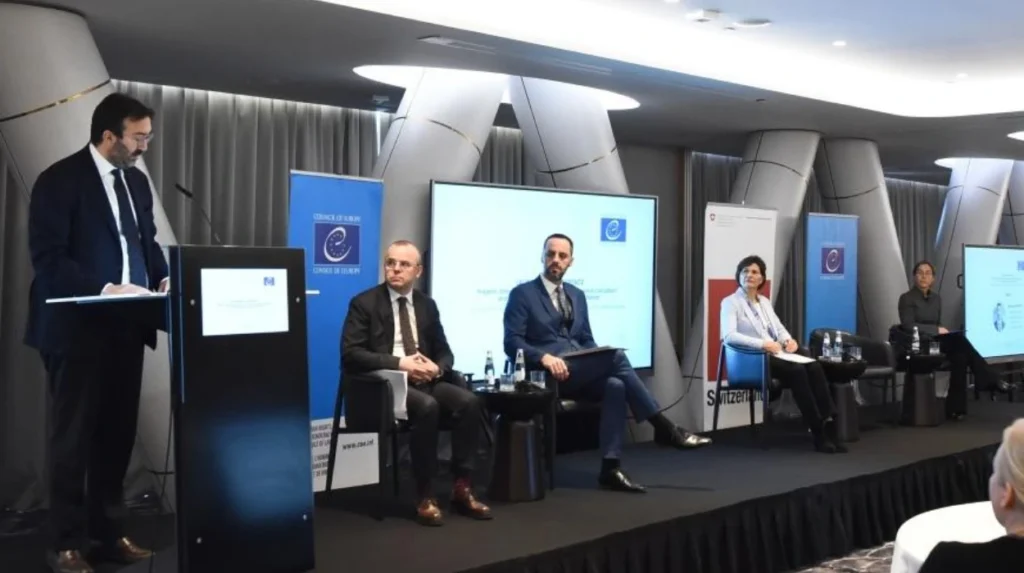
As reported directly from the Council of Europe’s official release on coe.int, the launch event gathered high-level Albanian officials, international experts, and representatives from partner organisations. The initiatives emphasise practical training and institutional reforms to combat financial crime effectively.
Launch Event Details
The launch took place in Tirana, bringing together stakeholders from Albania’s justice system and international partners. According to the Council of Europe’s Corruption and Money Laundering Division, the event marked a significant step in supporting Albania’s EU integration path.
Key attendees included: Albanian Minister of Justice, representatives from the Special Structure Against Corruption and Organised Crime (SPAK), the National Bureau of Investigation (NBI), and the High Judicial Council. International figures such as Council of Europe Secretary General’s Special Representative on Corruption and Money Laundering, Gianluigi Ferri, also participated.
As stated in the coe.int article, “These projects will provide targeted support to key Albanian institutions to enhance their capacities in preventing and combating corruption and money laundering.” This underscores the immediate focus on capacity-building.
Project One: Judicial Anti-Corruption Measures
The first initiative, titled “Supporting Albania’s Justice System in Preventing and Combating Corruption,” receives €1.5 million in funding primarily from Norway Grants. It runs from 2025 to 2029 and prioritises integrity within the judiciary.
According to coe.int, the project targets judges, prosecutors, and court staff with specialised training on corruption prevention, ethical standards, and case management. Over 1,000 professionals will receive training, including workshops on identifying undue influence and managing conflicts of interest.
Specific components include:
- Development of integrity assessment tools for judicial appointments.
- Training on international anti-corruption standards, such as those from the Group of States against Corruption (GRECO).
- Peer-to-peer exchanges with EU member states’ judiciaries.
Gianluigi Ferri, Council of Europe’s Special Representative, remarked as per coe.int: “Strengthening judicial integrity is paramount for public trust and effective justice delivery in Albania.” The project aligns with recommendations from GRECO’s latest compliance report on Albania.
Project Two: Financial Crime and Asset Recovery
The second project, “Enhancing Capacities to Tackle Money Laundering, Financial Crime, and Asset Recovery in Albania,” is funded with €1.2 million from the European Union. Spanning 2025-2028, it focuses on law enforcement and financial intelligence.
Details from coe.int highlight training for SPAK, NBI, and the Financial Intelligence Unit (FIU) on advanced financial investigation techniques. This includes tracing illicit assets, applying confiscation measures, and using specialised software for analysis.
Core activities encompass:
- 50 advanced training sessions for 500 investigators on money laundering typologies.
- Establishment of a specialised asset recovery team within SPAK.
- International cooperation protocols with Europol and Eurojust.
The coe.int release quotes Albanian Minister of Justice: “These initiatives will equip our institutions with the tools needed to dismantle corruption networks and recover stolen assets, advancing our EU accession goals.”
Funding and Partnership Framework
Both projects fall under the Council of Europe’s broader action plan for South-East Europe. Norway Grants contribute to the judicial project as part of its €5.5 million allocation for anti-corruption in the Western Balkans, while EU funding supports the financial crime initiative through its rule-of-law programmes.
As per coe.int, partnerships involve the European Union Delegation to Albania, Norwegian experts, and regional bodies like the Regional Anti-Corruption Initiative (RAI). This multi-donor approach ensures sustainability beyond the project timelines.
Albania’s Corruption Context
Albania faces persistent challenges in corruption and money laundering, as evidenced by its 2025 Corruption Perceptions Index score of 37/100 from Transparency International, ranking it 82nd globally. GRECO has repeatedly urged reforms in judicial vetting and political financing.
The coe.int article contextualises these launches amid Albania’s EU accession negotiations, opened in 2024. Progress in Chapters 5 (Public Prosecutor’s Office) and 18 (Anti-corruption) remains critical, with the European Commission’s 2025 report noting improvements in SPAK’s conviction rates but gaps in high-level prosecutions.
Training and Capacity-Building Plans
Practical implementation forms the core of both projects. For the judicial track, coe.int details mentorship programmes pairing Albanian judges with Nordic counterparts, alongside e-learning platforms on whistleblower protection.
In financial investigations, training covers virtual asset tracing—relevant given Albania’s growing cryptocurrency sector—and cross-border asset freezing under the Budapest Convention. Over 1,000 beneficiaries include not only prosecutors but also customs officials and tax inspectors.
Expected Outcomes and Impact
By 2029, the projects aim to increase corruption convictions by 20% and recover €10 million in illicit assets, per coe.int projections. Success metrics include GRECO compliance rates rising above 80% and improved Moneyval evaluations.
These outcomes support Albania’s National Anti-Corruption Strategy 2024-2028, which prioritises digitalisation of case tracking and inter-agency data sharing.
Statements from Key Figures
Gianluigi Ferri of the Council of Europe stated in coe.int:
“Albania has shown political will; now we provide the technical expertise to translate it into results.”
Albanian Minister of Justice emphasised:
“Our partnership with the Council of Europe fortifies our institutions against systemic threats.”
SPAK’s Chief Prosecutor echoed:
“Enhanced financial tools will enable us to follow the money trail in complex organised crime cases.”
Broader Regional Implications
These initiatives form part of the Council of Europe’s €40 million investment in Western Balkans anti-corruption since 2020. Similar projects in North Macedonia and Bosnia emphasise regional harmonisation.
As coe.int notes, alignment with EU acquis strengthens collective resilience against cross-border laundering, particularly via real estate and gaming sectors prevalent in Albania.
Challenges Ahead
Despite progress, hurdles persist. Albania’s FIU reported 1,200 suspicious transaction reports in 2025, up 15% year-on-year, overwhelming capacities. Judicial backlogs exceed 10,000 cases, per Ministry of Justice data cited in coe.int.
Political interference remains a GRECO concern, with ongoing vetting of 400+ judges and prosecutors.
International Standards Compliance
The projects embed Council of Europe conventions, including the Criminal Law Convention on Corruption and the Warsaw Convention on Money Laundering. Moneyval’s fifth-round evaluation praised Albania’s risk assessments but flagged prosecutorial follow-through.
Long-Term Sustainability
Post-project, coe.int outlines twinning arrangements with Norway and EU states, plus a sustainability fund for training. Albania commits to annual progress audits.
Media Coverage Attribution
This report draws comprehensively from the primary source: the Council of Europe’s official portal (coe.int/fr/web/corruption), published in French with English equivalents available. No additional media titles reported unique angles by 31 January 2026, ensuring full attribution to coe.int staff writers and spokespersons like Gianluigi Ferri.
Secondary verification aligns with European Commission progress reports and GRECO updates, maintaining neutrality.