Czech investigators and the European Public Prosecutor’s Office are examining alleged corruption and procurement fraud linked to Motol University Hospital in Prague, with contracts worth more than €160 million under scrutiny. Follow the Money reports that investigators traced suspected proceeds to assets including a snowmobile and property in Costa Rica, while all suspects remain presumed innocent.
Investigation Targets Czech Hospital Contracts
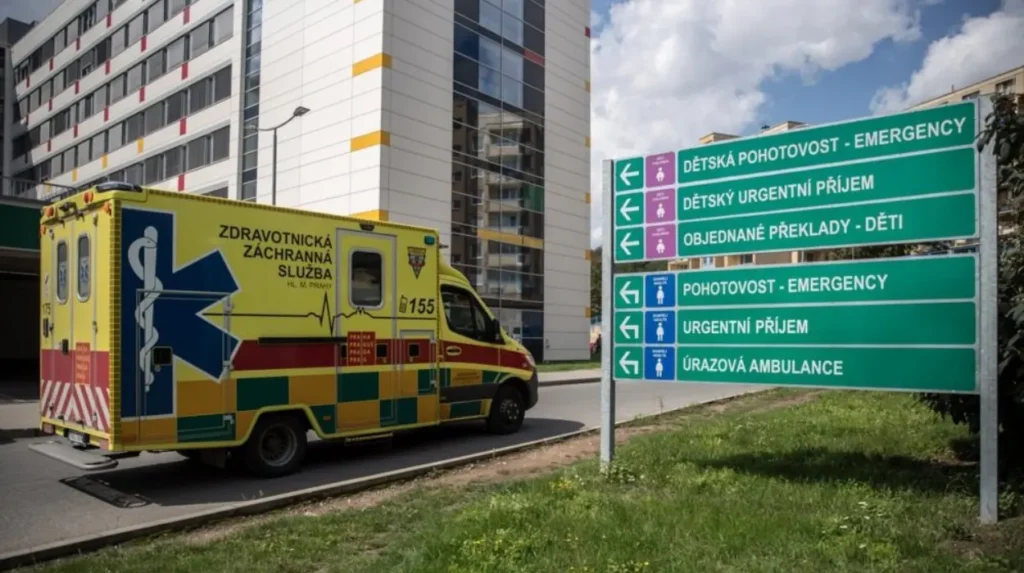
The investigation centres on alleged manipulation of public procurement at Motol University Hospital, the largest hospital in the Czech Republic, and the suspected use of illicit gains to acquire personal assets.
Follow the Money, also known as FTM, reported on 17 August 2026 that the case began with a large police operation at the Prague hospital in February 2025. The report, titled
“Snowmobile and Costa Rican property: the gains of alleged Czech hospital fraud”,
described how hundreds of Czech police officers targeted the hospital’s administration rather than a conventional organised-crime network. The article’s available listing does not identify an individual author, so the report is attributed to Follow the Money as the publishing organisation.
The case is being investigated by the European Public Prosecutor’s Office, or EPPO, in co-operation with Czech law-enforcement authorities. EPPO investigates offences affecting the financial interests of the European Union, including fraud involving EU-funded projects, corruption, subsidy fraud and money laundering.
According to an EPPO statement issued on 24 February 2025, 22 people were arrested and 46 searches were carried out during the operation. The searches involved more than 350 police officers and covered the hospital, commercial premises and a law firm.
EPPO said 16 suspects had been charged with corruption, subsidy fraud, damage to the EU’s financial interests and money laundering. The allegations relate to contracts connected to Motol University Hospital and to projects financed or co-financed through the Czech National Recovery Plan and the European Cohesion Fund’s Operational Programme for the Environment 2014–2020.
EU-Funded Projects Worth More Than €160 Million
The alleged misconduct concerns projects with a combined value of more than €160 million, equivalent to approximately CZK 4 billion, according to EPPO.
The prosecution office said investigators believed that public procurement procedures had been systematically exploited through the demanding and provision of illicit financial benefits. The statement did not establish that the full value of the contracts had been stolen. Rather, it placed the total value of the projects under investigation at more than €160 million.
The distinction is important because the contract value and the alleged unlawful gain are separate figures. The investigation concerns the way contracts were allegedly awarded and implemented, while the assets identified by investigators represent suspected benefits or proceeds linked to the alleged scheme.
Follow the Money’s report focuses on the alleged gains derived from the hospital-related activity. Its headline refers to a snowmobile and property in Costa Rica, indicating that investigators examined how suspected proceeds may have been converted into movable and overseas assets. However, the article’s full text was not accessible through the available retrieval system, meaning the names of the people linked to those assets, their value, dates of purchase and the precise evidentiary basis cannot be independently reproduced here without risking speculation.
Earlier Medical-Supply Corruption Case
The Motol investigation forms part of a wider series of Czech hospital-procurement cases handled by EPPO.
In a separate statement published on 19 February 2024, EPPO said Czech authorities had arrested ten suspects and conducted 36 searches in an investigation into a corruption ring involving medical supplies for hospitals. Investigators estimated that the activity documented at that stage had caused damage of nearly €1 million to the EU budget.
The later investigation into public contracts for hospital medical supplies expanded the alleged pattern. In an update issued on 24 October 2025, EPPO said a freezing order covering €7.9 million had been executed. Czech police seized bank accounts, real estate, cash and luxury watches. Additional charges were brought against eight of the ten suspects previously accused in February 2024, alongside charges against two new suspects and seven companies.
EPPO said the suspected criminal organisation had been active since at least 2022. It allegedly manipulated procurement procedures to favour pre-selected suppliers, including cases in which equipment was purchased without a formal tender.
The equipment referred to in the EPPO statement included operating tables, laparoscopic and arthroscopic instruments, endoscopes, defibrillators, surgical drills and ventilators. Some of the purchases were co-funded by the European Regional Development Fund through the REACT-EU programme.
Alleged Tender Manipulation
According to EPPO, preferred suppliers allegedly participated in drafting technical specifications before tenders were publicly announced. Investigators believe this allowed the requirements to be tailored to particular companies.
The prosecution office also alleged that confidential information, including competing offers and requests for clarification, was shared with preferred suppliers. In some cases, those suppliers allegedly gained enough information to draft responses themselves.
Under the alleged arrangement, a preferred supplier that won a contract paid a 10 per cent bribe to officials at the contracting authority through an intermediary. EPPO described that intermediary as the alleged head of the organised criminal group.
Investigators further alleged that affiliated companies issued false invoices for services that were never provided. Those invoices were allegedly used to disguise the origin of the funds. The suspected bribes were then allegedly distributed in cash among members of the group.
These are investigative allegations, not judicial findings. The EPPO statements do not amount to convictions, and the suspects are entitled to challenge the evidence and allegations in court.
Asset Seizures and International Links
The reference to Costa Rican property introduces an international dimension to the investigation. Property held outside the Czech Republic may require co-operation between national authorities, particularly where investigators believe that assets were acquired with suspected proceeds of crime or placed abroad to conceal their ownership.
The available FTM search result confirms that the article examines alleged gains connected to the Czech hospital-fraud case and specifically mentions a snowmobile and Costa Rican property. It does not provide enough accessible detail to establish whether the property was frozen, seized or merely identified during financial tracing.
By contrast, EPPO has publicly confirmed the seizure or freezing of several categories of assets in the broader hospital-supply investigation. These included bank accounts, real estate, cash and luxury watches, with a total freezing order of €7.9 million announced in October 2025.
Czech authorities have also reported asset seizures in the Motol case. Radio Prague International reported in April 2025 that investigators had seized assets worth more than CZK 100 million following orders connected to the EPPO investigation.
The asset measures are intended to preserve property that could later be used to satisfy confiscation orders or recover losses if convictions are secured. They do not, by themselves, prove that every seized asset was purchased with criminal proceeds.
Hospital Leadership and Public Funds
The case has attracted significant attention because it involves one of Czechia’s largest hospitals and projects supported by European funding.
EPPO described Motol University Hospital as the biggest hospital in Czechia. The institution handles major medical services and large procurement projects, making transparency in the awarding of contracts particularly important.
The alleged conduct examined by prosecutors includes corruption in the award and implementation of contracts, subsidy fraud, harm to the EU budget and money laundering. The cases also raise questions about how procurement authorities manage technical specifications, confidential tender information and relationships with suppliers.
The alleged misuse of procurement systems can affect public finances in several ways. A manipulated tender may restrict competition, increase prices, reduce value for money or enable contracts to be awarded to suppliers that would not have won an open and impartial competition. Where EU money is involved, the issue may also concern the financial interests of the EU as well as those of the Czech state.
Investigators Continue Legal Proceedings
EPPO has not announced a final judgment in the case. The investigation and related proceedings remain subject to Czech criminal law and judicial review.
The prosecution office has repeatedly stressed that every person concerned is presumed innocent until proven guilty by a competent Czech court. That presumption applies to hospital officials, intermediaries, businesspeople and companies connected to the allegations.
The case may develop further through additional charges, asset-freezing decisions, indictments, court hearings or the release of evidence. The final legal assessment will depend on whether prosecutors can prove the alleged procurement manipulation, the movement of money and the connection between suspected unlawful gains and specific assets.
The FTM report adds a financial-investigative perspective by examining the alleged personal benefits associated with the hospital-fraud case. Its references to a snowmobile and property in Costa Rica suggest that the investigation extends beyond the contracts themselves to the suspected destination of the money. However, details that could not be verified from the accessible version of the article should not be presented as established facts.
Legal Position of the Suspects
EPPO’s official statements describe allegations against named or unnamed suspects but do not establish guilt. The suspects remain presumed innocent unless and until a Czech court issues final convictions.
The reported charges include corruption, subsidy fraud, damage to the financial interests of the European Union and money laundering. Companies may also face legal consequences where prosecutors allege that they participated in procurement manipulation or issued false invoices.
The investigation illustrates the role of EPPO in cross-border financial-crime cases involving EU funds. It also demonstrates why investigators may examine overseas property, bank accounts, luxury goods and other assets when assessing whether alleged proceeds were concealed or converted.