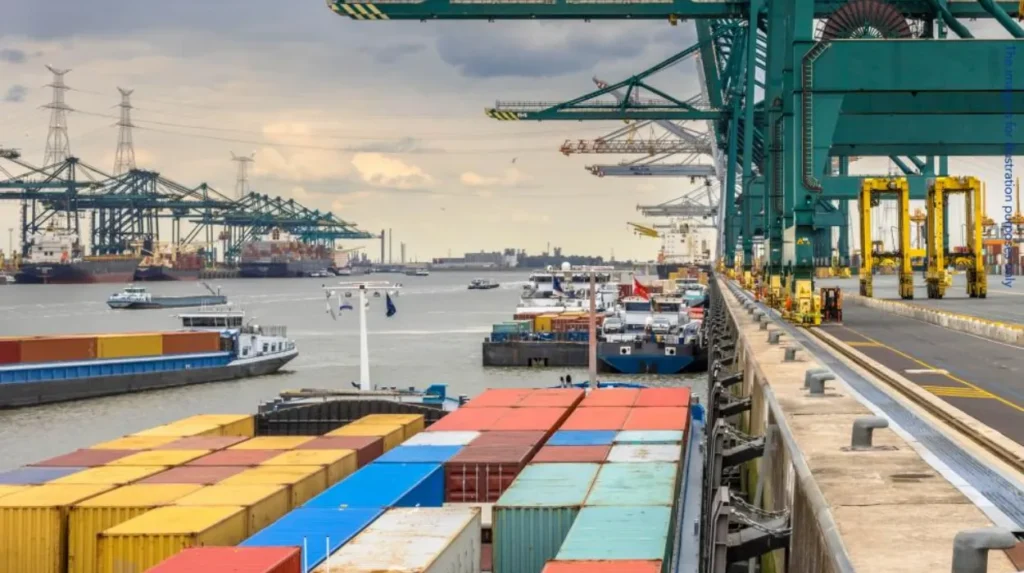
The European Public Prosecutor’s Office (EPPO) in Brussels is investigating a suspected customs fraud and corruption scheme at the Port of Antwerp, with estimated losses of more than €11.3 million in import duties. The probe, launched in 2024 and code‑named “Investigation Steamboat”, has already led to seven searches, three arrests and multiple asset seizures, while all those concerned remain presumed innocent.
EPPO outlines suspected customs fraud scheme
According to the official press communication published by the European Public Prosecutor’s Office under the title
“Investigation Steamboat: EPPO uncovers corruption and customs fraud in the Port of Antwerp”,
investigators believe a customs official and two managers of companies active in customs operations in the port worked together on a fraudulent scheme to evade import duties. The EPPO states that the scheme is suspected to have resulted in the loss of more than €11.3 million in import duties, representing potential damage to the financial interests of both the European Union and Belgium.
As set out in the same EPPO notice, the investigation focuses on alleged manipulation of customs processes through corruption and the falsification of documents, although the detailed modus operandi has not been publicly disclosed. The statement explains that the suspected offences fall squarely within the EPPO’s mandate to pursue crimes affecting the EU budget, including customs duties collected on behalf of the Union.
Raids, arrests and seizures in Antwerp operation
In its 30 January 2026 release, the EPPO explains that law enforcement actions took place on 20 January 2026 under the direction of the investigating judge in Antwerp. Seven searches were carried out at locations linked to the suspects and to the companies concerned, leading to the arrest of three individuals and the seizure of several bank accounts and cash.
The same communication notes that this coordinated action “mobilised 48 customs and police officers” from the investigation team of Belgium’s General Administration of Customs and Excise (Algemene Administratie van de Douane en Accijnzen), along with several units from the Belgian Federal Police.
Among those police units, the EPPO highlights the involvement of the Central Directorate for the Fight against Serious and Organised Economic and Financial Crime (CDBC), the Federal Computer Crime Unit (FCCU) and the Canine Support Unit.
In addition to Belgian services, the operation received support from the Dutch Fiscal Information and Investigation Service (FIOD), reflecting the cross‑border nature of many customs and financial investigations within the EU’s single market.
The mobilisation of multiple specialised units and an international partner underscores the complexity and potential reach of the alleged scheme, according to the details published in the EPPO announcement.
Origins and timeline of “Investigation Steamboat”
The EPPO states that “Investigation Steamboat” was formally opened in 2024, following a complaint lodged by Belgium’s General Administration of Customs and Excise. That complaint triggered a case within the EPPO’s Brussels office, which is competent for financial crimes affecting the Union’s budget committed on Belgian territory.
The official text indicates that, from 2024 onwards, the EPPO and Belgian partners developed evidence suggesting collusion between a customs official and two company managers in the Port of Antwerp. This work culminated in the January 2026 searches and arrests, which are described as a significant step in the ongoing investigation rather than its conclusion.
The 20 January 2026 operation therefore marks a visible public phase in a case that has been under scrutiny for at least two years, while the substance of the alleged fraud and the full identity of those involved have not been disclosed in the EPPO’s public materials. The statement stresses that further investigative measures may follow as prosecutors and investigators continue to analyse seized documents, digital material and financial transactions.
Suspects, presumed innocence and legal safeguards
In its public communication, the EPPO emphasises that
“all persons concerned are presumed to be innocent until proven guilty in the competent Belgian courts of law”.
This formulation reflects both Belgian criminal procedure and the fundamental rights protections that apply in EPPO cases across participating EU member states.
The official text does not name the customs official or the two company managers suspected of involvement, nor does it identify the companies active in customs operations that are allegedly linked to the scheme. The EPPO also refrains from providing further personal details about the three arrested individuals, in line with standard practice while an investigation is in the pre‑trial phase.
At the current stage, no information has been made public about formal charges, potential indictments or trial dates, and no court has yet ruled on the substance of the allegations. The presumption of innocence remains in place for everyone implicated, and any future judicial proceedings will take place before Belgian courts with jurisdiction over customs and corruption offences.
Role of Belgian and Dutch authorities in the case
The EPPO release stresses the central role played by Belgium’s General Administration of Customs and Excise in both launching and executing the investigation. It notes that the original complaint from this administration in 2024 set “Investigation Steamboat” in motion, and that its officers formed part of the 48‑strong investigation team involved in the January 2026 action.
The Belgian Federal Police contributed multiple specialised units, including economic crime and cybercrime teams, reflecting the mix of financial, documentary and digital evidence that typically arises in complex customs cases. The presence of the Canine Support Unit further indicates that searches may have involved the detection of cash or other concealed items, though the EPPO statement does not give operational details on specific seizures beyond the reference to bank accounts and cash.
Cross‑border support was provided by the Dutch Fiscal Information and Investigation Service, FIOD, which is often involved in tackling VAT, customs and money‑laundering offences with a Dutch link. While the EPPO does not specify how the Netherlands is connected in this case, the involvement of FIOD signals that investigators are considering possible cross‑border elements or financial flows relevant to Dutch jurisdiction.
EPPO’s mandate and focus on EU financial interests
In the same notice, the EPPO reiterates that it is
“the independent public prosecution office of the European Union”
responsible for investigating, prosecuting and bringing to judgment crimes against the financial interests of the EU. These include offences such as large‑scale VAT fraud, subsidy fraud affecting EU funds and customs fraud involving duties that accrue to the Union’s budget.
By publicising “Investigation Steamboat”, the EPPO places the Antwerp case within a broader pattern of actions aimed at uncovering complex financial schemes at Europe’s borders and ports. The office has repeatedly underlined that customs fraud can deprive the EU and its member states of large sums in revenue, undermining fair competition and public finances.
The Antwerp operation also illustrates how the EPPO works with national customs administrations, police forces and specialised financial crime units, as well as with agencies in other EU countries, to develop cases that cross jurisdictional boundaries. This joint investigative model, anchored in the EPPO’s network of European Delegated Prosecutors, is intended to close gaps that organised or systemic fraud may exploit between national systems.
Public communication and reactions to the Antwerp probe
The EPPO’s 30 January 2026 statement has been echoed in short notices and reposts by other platforms that largely reproduce the official wording. For example, a post on the European Public Prosecutor’s Office’s LinkedIn page repeats that
“the EPPO in Brussels is investigating suspected customs fraud, corruption and the forgery of documents in the Port of Antwerp”.
A similar formulation appears in an associated social media message shared on X (formerly Twitter), which highlights the same key elements without adding substantive new detail.
In parallel, compliance‑focused platforms and news aggregators have carried brief items pointing readers to the EPPO release on “Investigation Steamboat: EPPO uncovers corruption and customs fraud in the Port of Antwerp”, again without additional factual content beyond the official communication. These references mainly serve to amplify the EPPO announcement to specialist audiences concerned with anti‑money‑laundering, customs enforcement and EU financial crime.
At the time of writing, no further public statements from Belgian judicial or political authorities elaborating on the case have been officially linked to the Antwerp investigation, beyond the reference to the supervising investigating judge and the Belgian customs complaint. Any broader policy or political implications for Belgian customs controls and port oversight are likely to be debated only once more information becomes available from the ongoing proceedings.
Next steps in the “Investigation Steamboat” case
As set out in the EPPO’s communication, the Antwerp investigation remains ongoing, and the January 2026 searches and arrests are described as part of a wider evidential process. Prosecutors will now examine the seized financial assets, documents and electronic material with the assistance of Belgian customs, police and, where relevant, Dutch investigators.
If sufficient evidence is gathered, the EPPO may move towards indictments before the competent Belgian courts, which would then determine whether the suspects are guilty of customs fraud, corruption and document forgery, and what penalties might apply. Until such judicial decisions are made, the presumption of innocence continues to anchor the treatment of all individuals potentially affected by the case.
The EPPO’s handling of “Investigation Steamboat” will be followed closely by practitioners and observers of EU financial crime enforcement, given the Port of Antwerp’s status as a major gateway for international trade into the European Union. For now, the official record consists of the EPPO’s 30 January 2026 notice and its social media summaries, which together frame the operation as a significant step in the Union’s efforts to safeguard its financial interests against sophisticated customs fraud schemes.