The European Union has reiterated its strong dedication to global anti-corruption efforts at the 11th Conference of the States Parties (CoSP) to the United Nations Convention against Corruption (UNCAC) in Doha, Qatar. Key pledges include enhancing asset recovery, supporting international cooperation, and addressing emerging challenges like digital corruption, with participation from over 190 states parties.
Event Overview
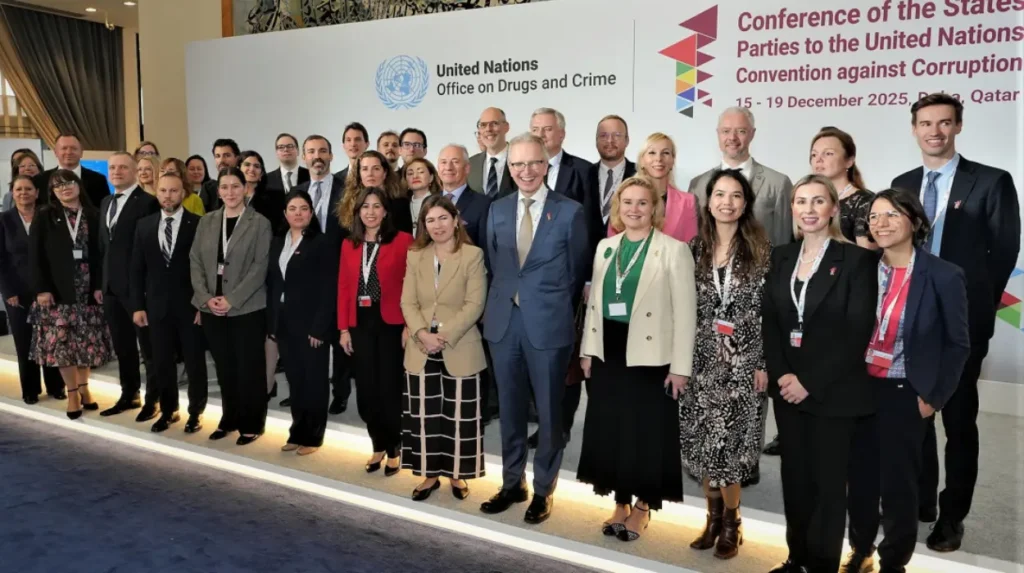
The 11th UNCAC CoSP convened in Doha, Qatar, from 10 to 14 December 2025, drawing representatives from more than 190 states parties, observer states, and international organisations. Hosted under the auspices of the United Nations Office on Drugs and Crime (UNODC), the conference served as a pivotal platform for advancing the implementation of UNCAC, the primary global treaty against corruption. As reported by the European External Action Service (EEAS) in their official statement, the European Union actively participated, reaffirming its unwavering commitment to combating corruption in all its forms.
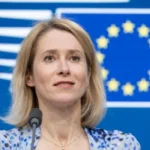
The EU delegation emphasised that corruption undermines sustainable development, erodes trust in institutions, and hampers economic growth worldwide. EU High Representative for Foreign Affairs and Security Policy, Kaja Kallas, underscored this during the session, stating,
“Corruption is a threat to our security, our prosperity, and our democracies. The EU stands ready to work with partners globally to root it out.”
EU’s Key Pledges
The European Union outlined specific commitments during the conference, focusing on UNCAC’s core pillars: prevention, criminalisation, international cooperation, and asset recovery. According to the EEAS press release authored by their Vienna delegation, the EU pledged enhanced support for asset recovery mechanisms, noting that
“returning stolen assets to their countries of origin is a priority, with over €1.5 billion recovered since 2020 through EU initiatives.”
As detailed in the statement, the EU highlighted its leadership in technical assistance, having provided €300 million in aid to UNCAC implementation projects between 2021 and 2025. Commissioner for Financial Services, Mairead McGuinness, remarked,
“We are doubling down on preventive measures, including whistleblower protections and transparency in public procurement, which account for 14% of EU GDP.”
Further, the EU committed to tackling emerging threats such as corruption in digital spaces and climate finance. A spokesperson from the EU delegation noted,
“With the rise of cryptocurrencies and AI, new vulnerabilities demand innovative responses, and the EU’s Digital Markets Act serves as a model.”
These pledges align with the conference’s adoption of resolutions on sports corruption and beneficial ownership transparency.
Conference Highlights
The CoSP featured high-level segments, roundtables, and side events addressing UNCAC’s review mechanism and the 2022-2025 implementation review cycle. Qatar, as host, stressed regional cooperation, with Minister of Justice Ibrahim bin Ali Al Mohannadi stating,
“Doha welcomes global partners to strengthen anti-corruption frameworks in the Middle East and beyond.”
UNODC Executive Director, Ghada Waly, opened the conference by reporting progress: over 190 states have ratified UNCAC, with 80% implementing preventive measures. She added, “Yet challenges persist, including impunity for high-level corruption; this CoSP marks a turning point.”
Side events included discussions on gender and corruption, youth involvement, and private sector engagement. The International Anti-Corruption Conference (IACC) Council co-hosted a session where Transparency International’s Gabrielle Hollinger observed,
“Civil society plays a crucial role; the EU’s support for NGOs amplifies our impact.”
International Participation
Over 1,500 delegates attended, including G20 representatives and civil society observers. The Group of 77 and China issued a statement emphasising developing countries’ needs, with Brazil’s delegate affirming, “Technical assistance must prioritise capacity-building in the Global South.”
The African Union and Organisation of American States reported on regional mechanisms, while the World Bank detailed €2 billion in anti-corruption lending. US Ambassador to UNODC, Melissa Schimpf, echoed EU sentiments:
“Asset recovery is non-negotiable; the US has returned $4 billion since 2004.”
Russia and China highlighted multilateralism, with China’s Vice Minister of Justice, Zhao Changfu, noting,
“UNCAC implementation requires respecting sovereignty alongside cooperation.”
Tensions surfaced mildly over review mechanisms, but consensus prevailed on 12 resolutions.
EU’s Broader Anti-Corruption Framework
The EU’s participation reflects its domestic and external strategies. The 2023 EU Anti-Corruption Report identifies gaps in high-level corruption prosecution across member states. As per the EEAS, the EU’s Global Anti-Corruption Initiative allocates €56 million for 2024-2027, targeting Indo-Pacific and Latin America.
EPPO (European Public Prosecutor’s Office) Chief, Laura Kövesi, reported 7,000 investigations since 2021, recovering €1 billion. She stated at a side event,
“Cross-border cases demand unified action, as seen in our Qatargate probes.”
The EU also supports UNCAC’s Stolen Asset Recovery (StAR) Initiative with the World Bank.
Qatar’s Hosting Role
Qatar positioned the event as a diplomatic success, investing $10 million in logistics. Prime Minister Sheikh Mohammed bin Abdulrahman Al Thani inaugurated, pledging,
“Qatar’s National Anti-Corruption Strategy aligns with UNCAC, with 90% digitalisation of public services to curb graft.”
Administrative Control and Transparency Authority head, Abdulaziz Nasser Al-Khalifa, detailed 500 probes in 2025, resulting in QR500 million recovered. Qatar’s efforts earned praise from UNODC, bolstering its post-World Cup image.
Outcomes and Resolutions
The CoSP adopted resolutions on:
- Protecting reporting persons (whistleblowers).
- Corruption in sports and emergencies.
- Beneficial ownership transparency.
- Follow-up to the 2022-2025 review.
A working group advanced the post-2025 review cycle. President of the Conference, Yussuf Ahmed Emmi of Somalia, concluded,
“These outcomes fortify UNCAC for future challenges.”
Civil Society Perspectives
Transparency International welcomed EU pledges but urged more: Executive Director, Daniel Eriksson, said,
“Stronger sanctions regimes are needed; the EU must lead by example.”
Civil society roundtables featured 200 NGOs advocating access to the review process. Human Rights Watch’s Nick Kaufman noted,
“Linkages between corruption and abuses must be centralised.”
The Doha CoSP sets the stage for the 12th session in 2027. EU Ambassador to Vienna, Sabine Standenath, affirmed,
“Expect intensified EU-UNODC partnerships, with €100 million earmarked for asset recovery tech.”
Global indices reflect progress: Corruption Perceptions Index improved in 60 countries since 2020, though averages stagnate at 43/100. UNODC’s next report, due 2026, will benchmark these commitments.
This event underscores multilateralism’s resilience amid geopolitical strains, with the EU’s role pivotal in bridging developed and developing worlds.