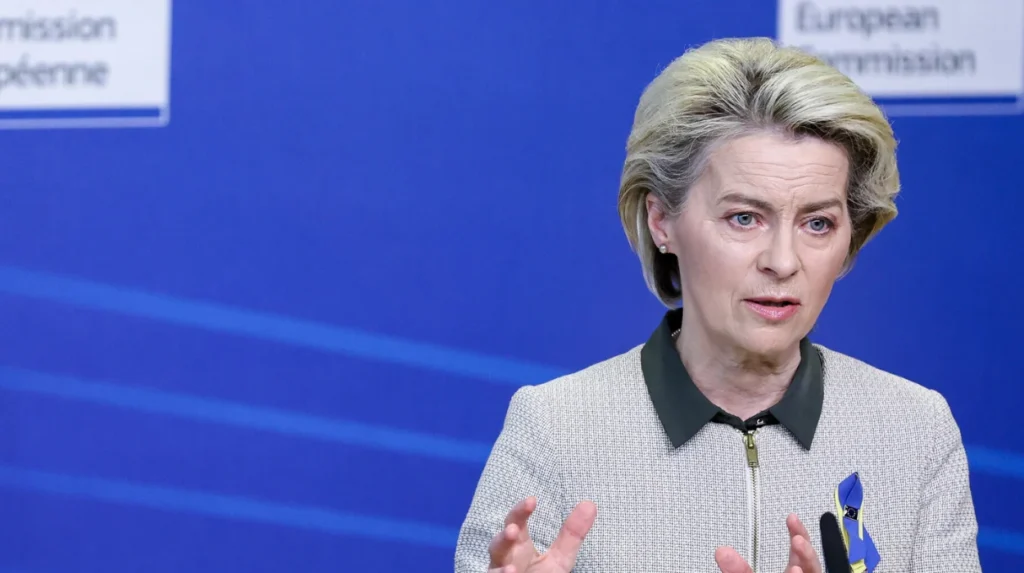
The European Commission and EU countries have jointly concluded that there are currently no immediate risks to the bloc’s oil and gas security of supply despite major disruptions in the Middle East and the closure of the Strait of Hormuz.
At the same time, Brussels has intensified monitoring, convened its Oil and Gas Coordination Groups, and warned that a prolonged crisis would trigger a fresh reassessment of Europe’s energy security.
The European Commission and EU countries have moved to reassure markets and citizens that Europe faces no immediate threat to oil and gas supplies despite severe disruptions to energy flows from the Middle East, while quietly preparing contingency measures if the regional crisis endures.
EU coordination groups confirm stable oil and gas supplies
In its official communication published on Wednesday 4 March 2026, the European Commission stated that ad hoc meetings of both the Gas Coordination Group and the Oil Coordination Group were held in the morning to review the impact of the Middle East disruptions on the EU’s energy security.
According to the Commission, EU countries informed during these exchanges that they did “not observe any immediate security of supply risks” for either oil or gas at this stage.
The Commission underlined that, since a previous Oil Coordination Group meeting on 25 February 2026, no additional strategic oil stocks had been released and that emergency reserves remained at “high” levels across the bloc.
It added that gas storage sites within the European Union remained stable, supporting the overall assessment that the immediate security of supply was not under threat.
The Oil and Gas Coordination Groups bring together representatives of EU governments, the Commission and industry stakeholders to share data and coordinate responses in case of disruption. Their activation over the past weeks reflects heightened concern about the fallout from intensifying conflict in the Middle East, but also the EU’s confidence that its crisis mechanisms and diversified import structure can absorb short‑term shocks.
Impact of Middle East conflict and Strait of Hormuz closure
The current disruption stems from a sharp escalation in the Middle East following strikes on Iran by the United States and Israel, which were widely reported to have killed Iran’s Supreme Leader Ayatollah Ali Khamenei and triggered retaliatory attacks by Tehran.
As reported by the Bruegel think tank, strikes against Iran have “reopened the most consequential energy-security issue in the global economy”: the risk of interrupted oil and gas flows through the Strait of Hormuz, the world’s most important energy chokepoint.
According to Bruegel, around 20 million barrels per day of oil and petroleum products – roughly a fifth of global consumption – transit via the Strait of Hormuz, alongside all liquefied natural gas exports from Qatar and the United Arab Emirates, equivalent to about 20% of global LNG trade. Since the first strikes on 28 February, shipping through the strait has slowed to “a near standstill”, reinforcing market fears of a prolonged disruption.
As reported by Devdiscourse News Desk in a piece titled “EU Confidence Amid Middle East Conflict: No Immediate Oil and Gas Supply Threat”, tanker owners and oil majors have halted shipments through the Strait of Hormuz following Iranian retaliatory attacks after bombings by Israel and the United States. Devdiscourse noted that oil prices jumped in response, while European policymakers stressed that the bloc’s diversified imports and high storage levels shielded it from an immediate supply crisis.
In parallel, Euronews quoted European Energy Commissioner Dan Jørgensen as describing his visit to Azerbaijan as “fruitful” in the context of the Middle East‑related disruptions. Euronews reported that the conflict has led to the “closure of the critical Strait of Hormuz” and that state‑owned QatarEnergy announced the suspension of LNG production following Iranian attacks on facilities in Ras Laffan and Mesaieed, eliminating near‑term Qatari LNG deliveries to Europe.
Commission email: “no immediate oil SOS impact”
Ahead of the formal 4 March statement, EU officials had already signalled a similar assessment in internal communications with national capitals. As reported by Reuters in a story cited by Investing.com and several European outlets, the Commission told EU governments in an email that “at this stage, we do not foresee an immediate oil SOS (security of supply) impact”.
Investing.com, quoting Reuters, reported that the email was sent to member states on Monday, as oil prices surged and markets digested news of shipping disruptions. The same email, according to outlets such as CDE News and Energy News, asked EU countries to submit their own assessments of oil security of supply by the end of the day and indicated that Brussels was considering convening a virtual meeting of the EU’s Oil Coordination Group.
Energy News, summarising the content of the internal message, reported that the Commission wrote:
“At this time, we don’t foresee any immediate impact [on] oil security of supply (SOS).”
CDE News quoted identical language, adding that Brussels was looking at calling the coordination group “later this week”. The SwingFish trade blog, referencing reporting by ForexLive, also highlighted the same line and noted that the Commission had requested member states’ SOS assessments and was considering an ad hoc Oil Coordination Group meeting.
In a subsequent briefing, a Commission spokesperson reinforced the message in public. As reported by Sahm Capital, the spokesperson told journalists:
“Our analysis is that there is no immediate security of supply concern for the European Union.”
Sahm Capital added that the spokesperson confirmed the earlier email to EU governments and stated that the EU’s oil coordination group would meet within 48 hours to assess the situation.
Current storage levels and seasonal context
The Commission’s confidence rests partly on storage data and the seasonal trajectory of demand. Sahm Capital, citing Gas Infrastructure Europe figures, reported that EU gas storage sites were around 30% full as Europe emerged from the winter heating season, with filling levels roughly 9% below the same time last year. Although lower than a year earlier, the Commission considers these levels manageable when combined with diversified pipeline supplies and LNG imports from non‑Middle Eastern sources.
In its earlier communication on 25 February regarding Russian attacks on Ukraine’s energy infrastructure and resulting interruptions via the Druzhba oil pipeline, the Commission similarly concluded that there were “no immediate security of supply risks” after an ad hoc Oil Coordination Group meeting.
That statement noted that Hungary and Slovakia had released some emergency oil stocks and increased the use of alternative supplies, illustrating how national reserves and flexible logistics can cushion localised disruptions.
A separate communication in January 2025 on the expiry of the Russian gas transit agreement via Ukraine likewise concluded that effective preparation, storage use and alternative routes meant “no security of supply concerns” for gas.
The Commission’s handling of those episodes forms part of the backdrop to its current message that Europe’s energy system has become more resilient since the start of Russia’s full‑scale invasion of Ukraine.
Diversification efforts and external partnerships
Beyond short‑term crisis management, EU officials and analysts emphasise that diversification and the energy transition remain central to reducing structural vulnerability to external shocks. In remarks to the European Parliament’s Industry Committee in 2022, Energy Commissioner Kadri Simson stressed that the EU’s preparedness “relies on our ability to substantially and effectively diversify supplies from our current main supplier and to fill in our gas storage capacities before the next winter begins”.
She highlighted the role of LNG and alternative pipeline gas in replacing missing Russian volumes, working with “trusted partners”.
Euronews reported this week that Commissioner Dan Jørgensen hailed Azerbaijan as an increasingly important gas partner as Europe navigates the sudden loss of Qatari LNG flows caused by attacks on Qatari facilities. According to Euronews, Jørgensen described his talks in Baku as “fruitful” and framed them as part of efforts to maintain stability amid the “halt in liquid natural gas production from Qatar” and the closure of the Strait of Hormuz.
Bruegel, in its analysis of the Iran conflict’s impact on European energy markets, argued that policymakers should
“plan for a potentially prolonged standoff in the Middle East, while doubling down – not backtracking – on the energy transition”.
The think tank warned that if the disruption persists, the combination of tighter oil markets and missing LNG from Qatar and the UAE could put sustained upward pressure on prices, underlining the importance of renewables, demand reduction and diversified import routes.
Market reaction and broader geopolitical context
The energy market response has been immediate, even as physical supplies to Europe remain stable. Devdiscourse reported that oil prices spiked after shipping disruptions in the Strait of Hormuz, while tanker owners and oil majors suspended transits through the corridor as a precaution.
Reuters, as summarised by Investing.com and other financial outlets, noted a roughly 9% jump in oil prices on the Monday following the escalation, driven by fears over prolonged disruption and possible military escalation.
Modern Diplomacy, citing Reuters, reported that a wave of attacks across the Middle East has forced precautionary shutdowns at key oil and gas facilities, including Saudi Arabia’s largest export terminal at Ras Tanura.
Analysts quoted by Modern Diplomacy warned that Gulf energy infrastructure is increasingly “in Iran’s crosshairs” and that further strikes could directly threaten the flow of oil from the region, translating geopolitical risk into tangible supply constraints for global markets.
ScanX News reported that the European Union has simultaneously “expressed deep concern about developments in Iran and the Middle East, warning of additional sanctions to protect EU security and interests”. According to ScanX, an EU statement emphasised that disruption of critical waterways such as the Strait of Hormuz “must be avoided” in order to preserve regional stability and global trade flows. The outlet quoted the bloc as signalling its intention to consider “additional sanctions” as part of its security response.
Continued monitoring and reassessment plans
In its 4 March communication, the Commission stressed that it would “continue to monitor the situation and keep regular communication with EU countries and market participants” as the Middle East crisis evolves. The statement made clear that, in the event of a “prolonged closure of the strait of Hormuz or further disruptions”, the EU’s security of oil and gas supply would be “reassessed”.
That language reflects both reassurance and conditionality: while current assessments point to no immediate security of supply concerns, the Commission and member states acknowledge that the outlook could change if shipping through the Strait of Hormuz remains paralysed or further infrastructure is damaged.
The Oil and Gas Coordination Groups are expected to convene again swiftly if conditions deteriorate, providing a forum for coordinated decisions on stock releases, demand‑side measures and diplomatic responses.
Outlook for EU energy security
For now, European officials insist that the combination of ample emergency oil stocks, stable gas storage and diversified import partners insulates the bloc from a short‑term energy supply shock, even as prices rise and markets remain volatile.
As Devdiscourse summarised, the Commission’s message is that
“there is no immediate threat to the EU’s oil and gas supply security”,
despite the severe disruptions to one of the world’s most critical energy corridors.
Analysts such as those at Bruegel caution that, if the conflict and disruptions in the Strait of Hormuz stretch over weeks or months, Europe will face tougher choices on stock management, alternative sourcing and potentially accelerated energy transition policies.
For now, the Commission and EU countries are presenting a united front that seeks to calm fears about physical shortages, while openly acknowledging that the situation remains fluid and subject to rapid change should the Middle East crisis deepen.