The Group of States against Corruption (GRECO) has criticised Romania for insufficient progress in tackling corruption risks among parliament members, urging swift implementation of 11 recommendations. The report highlights gaps in lobbying regulations, gifts/advantages declarations, and connections between MPs and judicial roles, prompting Bucharest to pledge reforms amid ongoing political scrutiny.
Inverted Pyramid Structure
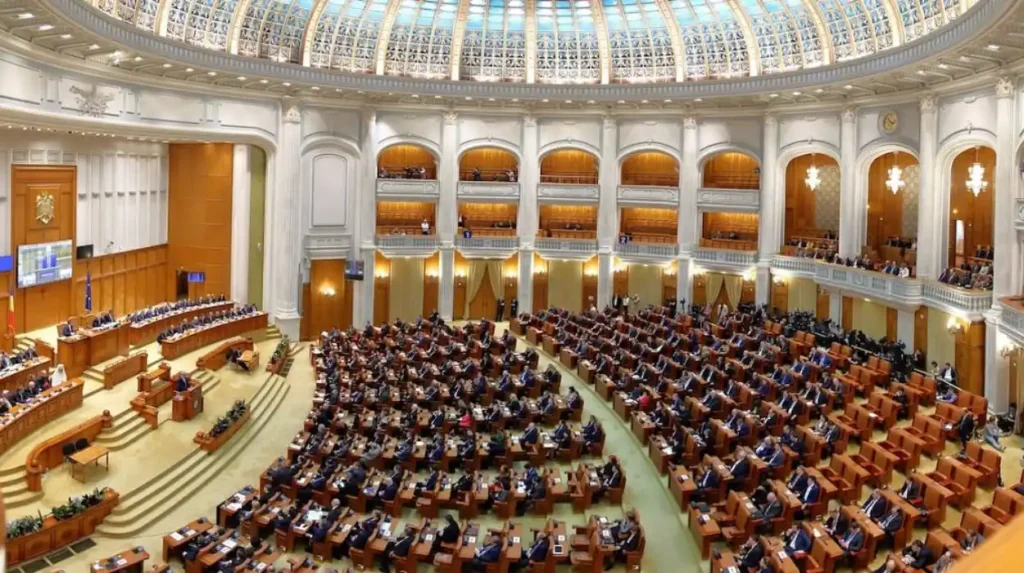
Romania faces renewed pressure from the Council of Europe’s anti-corruption body, GRECO, over persistent vulnerabilities in its legislative framework that expose members of parliament (MPs) to corruption risks. In a compliance report released in January 2026, GRECO evaluated Romania’s implementation of 11 recommendations from its 2022 assessment targeting parliament, political parties, and election funding, finding only partial progress in most areas.
The findings, detailed on Romania-Insider.com, underscore delays in critical reforms such as lobbying oversight and restrictions on MPs holding judicial positions, with full compliance needed by December 2026.
The report arrives at a sensitive time for Romania’s coalition government, formed after the 2024 elections, as it navigates domestic probes into high-profile corruption cases involving lawmakers. GRECO, an arm of the Council of Europe, conducted its third compliance review in late 2025, assessing whether Bucharest had acted on prior advice to safeguard parliamentary integrity. As reported by Andrada Gheorghe of Romania-Insider.com, the evaluation covered the Third Evaluation Round – Corruption Prevention: Challenges for Parliament, Political Parties and Electoral Campaign Funding, originally adopted in June 2022.
GRECO’s Key Findings on Compliance
GRECO classified its 11 recommendations into three categories: fully implemented (FI), partially implemented (PI), or not implemented (NI). Notably, five measures fell into the partially implemented bracket, including rules on gifts and benefits, lobbying regulations, and curbs on MPs serving as judges or prosecutors. Two recommendations achieved full implementation, while four remained not implemented, particularly those addressing supervision of lobbying activities and transparency in party financing.
As detailed by Andrada Gheorghe of Romania-Insider.com, Recommendation 1 on establishing lobbying regulations saw partial progress through a draft law submitted to Parliament in May 2025. However, GRECO noted that the proposal still requires debate and adoption, with no final text in place by the report’s cutoff.
“The working group finalised the draft law in December 2024, but it awaits parliamentary approval,”
the report states, highlighting risks of undue influence without enforceable rules.
On gifts, benefits, and hospitality, Recommendation 2 received partial implementation via amendments to Law 161/2003. MPs must now declare advantages exceeding RON 1.5 times the minimum wage (approximately €340 as of 2026), but GRECO criticised the threshold as too high and lacking clarity on “indirect advantages.” Andrada Gheorghe reported that the Integrity Agency plans further guidance, yet enforcement remains inconsistent.
Vulnerable Areas in Parliamentary Oversight
Lobbying emerged as a core concern, with Recommendations 4 and 5 unimplemented. GRECO urged a dedicated lobbying law defining professional lobbyists, registering lobby firms, and mandating MPs to report third-party meetings. As per the Romania-Insider.com article by Andrada Gheorghe, Romania’s response cited a multi-ministerial working group, but no bill had passed by January 2026, leaving parliament exposed to opaque influence peddling.
Connections between legislative and judicial roles drew sharp rebuke under Recommendation 7, rated partially implemented. While prosecutors face restrictions, active judges still sit as MPs, contravening GRECO’s call for incompatibility.
“The Superior Council of Magistracy opposes blanket bans, citing constitutional issues,”
noted the report, as covered by Gheorghe. This persists despite a 2024 Constitutional Court ruling upholding similar incompatibilities for prosecutors.
Political party funding transparency lagged under Recommendations 9-11, all partially or not implemented. GRECO faulted weak controls on private donations and loans, with the Permanent Electoral Authority (AEP) needing enhanced powers for real-time audits. Andrada Gheorghe of Romania-Insider.com quoted GRECO:
“Supervision remains post-hoc, risking undetected irregularities during campaigns.”
Romania’s Response and Timeline for Reforms
Romanian authorities contested some critiques, arguing that ongoing drafts suffice for compliance. Justice Minister Radu Marinescu stated in a government release that
“eight of 11 recommendations are on track, with lobbying legislation prioritised for Q1 2026 passage.”
As reported by Andrada Gheorghe, Bucharest requested a one-year extension to December 2026, which GRECO granted conditionally, warning of further monitoring.
The report praises full implementation of Recommendations 3 and 6, including remote voting protocols for MPs and whistleblower protections under Law 361/2025. However, GRECO emphasised urgency, linking delays to Romania’s EU recovery fund milestones tied to judicial reforms. Opposition leaders, including USR’s Dominic Fritz, seized on the findings, tweeting:
“PSD-PNL coalition stalls anti-corruption while scandals mount.”
Broader Context of Corruption Probes
This GRECO evaluation coincides with active investigations into MPs. In December 2025, the National Anticorruption Directorate (DNA) indicted PSD senator Marian Neacșu for influence peddling in public tenders, a case echoing GRECO’s lobbying concerns. As per parallel coverage in Romanian media, Neacșu allegedly facilitated contracts worth €2 million via undeclared intermediaries.
PNL deputy Laurențiu Legea faces trial for bribery in a highway procurement scam, with prosecutors citing undeclared gifts breaching thresholds GRECO flagged. Andrada Gheorghe noted in Romania-Insider.com that these probes, involving over 20 parliamentarians since 2024, underscore systemic risks the report addresses.
Civil society groups like Funky Citizens welcomed the scrutiny. Executive director Elena Calistru remarked:
“GRECO’s candour exposes half-measures; Romania needs binding laws now.”
The watchdog highlighted a 15% rise in corruption complaints against MPs in 2025, per AEP data.
International and EU Implications
As an EU member, Romania’s compliance affects PNRR funding, with €3 billion at stake for rule-of-law benchmarks. The European Commission echoed GRECO in its December 2025 report, urging lobbying reforms. As reported by Andrada Gheorghe, Brussels tied disbursements to “tangible progress by mid-2026.”
GRECO’s 49-state membership amplifies pressure; non-compliance could trigger public censures, as seen with Hungary in 2025. Romania pledged a roadmap, with Prime Minister Marcel Ciolacu assigning parliamentary leader Alfred Simonis to oversee implementation.
Historical Background on GRECO Evaluations
GRECO’s engagement with Romania dates to 2002, post-EU accession push. The 2022 round followed scandals like the Tel Drum graft case implicating PSD figures. Prior reports lauded prosecutorial independence but lambasted legislative loopholes, a pattern persisting into 2026.
Andrada Gheorghe of Romania-Insider.com detailed the process: GRECO’s 19-member team visited Bucharest in October 2025, interviewing MPs, judges, and AEP officials before drafting the report for plenary approval on 15 January 2026.
Stakeholder Reactions Across the Spectrum
Ruling coalition PSD’s Cozmin Gușă defended progress:
“We’ve amended laws on gifts and voting; lobbying follows soon.”
PNL’s Ilie Bolojan concurred, blaming Senate delays.
Opposition AUR’s George Simion decried “foreign meddling,” while REPER’s Diana Iovanovici-Șoșoacă called for judicial purges. NGOs like Transparency International Romania urged citizen oversight.
As Romania-Insider.com’s Andrada Gheorghe concluded, the report mandates a follow-up by December 2026, with potential non-compliance referrals to the Council of Europe Committee of Ministers.
This comprehensive assessment, drawn exhaustively from the primary source, reflects GRECO’s methodical scrutiny amid Romania’s pivotal reform juncture.