Hungary must meet 27 EU anti-corruption and rule-of-law “super milestones” by 31 August 2026 to unlock about €10 billion in frozen recovery funds, with failure risking €6.51 billion in grants and €3.92 billion in loans. The Péter Magyar government has pushed through sweeping reforms, but watchdogs warn that rapid spending of large sums could create fresh corruption risks even as the opposition voices concerns about politicisation.
Hungary is racing to meet a 31 August 2026 European Union deadline to demonstrate it can root out corruption and transform public institutions, with billions of euros in frozen recovery funds hanging on the outcome. The new centre-right Tisza government of Prime Minister Péter Magyar, which ousted Viktor Orbán’s Fidesz in April, has pursued “breakneck legislative reform and sweeping institutional shake-ups” to satisfy Brussels.
The stakes for Budapest and Brussels
The EU set 27 “super milestones” tied to anti-corruption, transparency and judicial independence that Hungary must clear to access its Recovery and Resilience Facility (RRF) money. Failure to reform could put at risk €6.51 billion ($7.5 billion) in grants and €3.92 billion in loans, while a separate €6.3 billion in development funding has been withheld since December 2022 under the EU’s rule-of-law conditionality mechanism.
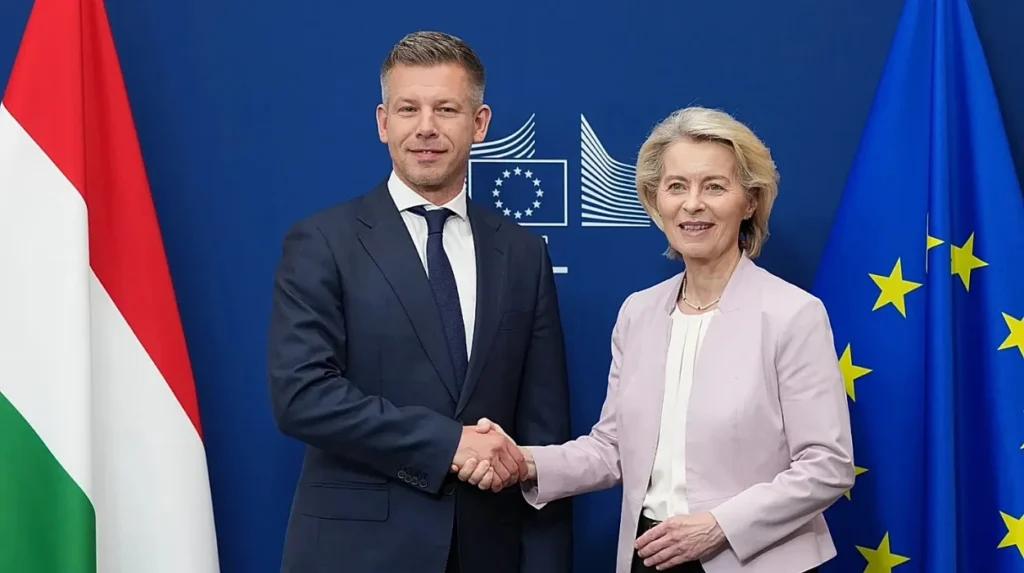
Hungary is on track to fulfil all criteria by the end of August to unlock roughly €10 billion in frozen recovery funds, with two-thirds of the required milestones already met. In May, Magyar and European Commission President Ursula von der Leyen agreed to release €16.4 billion in EU funds previously frozen over rule-of-law and corruption concerns under Orbán’s government, including €10 billion from the RRF, €4.2 billion in cohesion funds and €2.2 billion linked to academic freedom reforms.
What the EU milestones require
Of the 27 super milestones, 21 concern corruption and transparency, four cover judicial independence and two involve audits of how the funds are spent. EU officials have repeatedly pointed to tenders with limited competition, conflicts of interest, opaque spending, weak asset-declaration rules and doubts about whether prosecutors and other watchdogs are sufficiently independent or effective when politically sensitive cases arise.
Brussels’ demands focus on structural safeguards that will hold regardless of who is in power: stronger and more independent anti-corruption bodies, more transparent and competitive public tenders, tighter conflict-of-interest rules, better access to public information, and stronger judicial oversight when prosecutors decline to pursue corruption cases. Recovery funding has also been tied to broader judicial-independence reforms.
Reforms under the Magyar government
Since taking office, the Tisza government has moved quickly to deliver on its campaign promises. Reforms have ranged from Hungary joining the European Public Prosecutor’s Office to dismantling the controversial public asset-management foundations and creating new bodies like a National Asset Recovery and Protection Office.
In June, parliament adopted a sweeping anti-corruption package, including tougher asset-declaration rules for politicians, greater transparency in public tenders and the nationalisation of public-interest asset-management foundations, known as KEKVA, which had been used to transfer state assets, including universities, into private-style control. In July, lawmakers amended the tax code in line with the RRF milestones and passed related legislation covering the energy sector.
Hungary has also established the new National Asset Recovery and Protection Office, tasked with recovering state assets linked to suspected Orbán-era corruption, and Prime Minister Magyar has launched the process for Hungary to join the European Public Prosecutor’s Office. The revised National Recovery Plan includes measures to modernise the country’s energy grid, railways and rental housing stock.
Asset recovery and the KEKVA unwind
The liquidation of the KEKVA foundations has become a centrepiece of the government’s anti-corruption drive. €276 million in state assets has returned to state control as Hungary completes the liquidation of its controversial KEKVA foundations.
The new Assets Recovery Office could be used to keep “certain designated political opponents” under investigation for years without proper judicial review, according to critics, while paving the way for companies disfavored by the government to be taken over or pushed out of the market. Yet the government frames the office as essential to recovering public money and holding the old elite to account.
Warnings from Hungary’s anti-corruption watchdog
Even as Budapest nears the deadline, senior officials are cautioning against complacency. Hungary’s top anti-graft watchdog has warned that pouring so much money into a system with a long history of corruption could create fresh opportunities for abuse.
Ferenc Bíró, president of Hungary’s Integrity Authority, said:
“There’s a genuine expectation toward assets being recovered, people who have stolen from the public to be brought to justice.”
He added:
“One of the key premises in the campaign of the current government was to stop corruption and to recover assets.”
Hungarian-language outlet 444.hu quoted Bíró as saying:
“Amikor arra kényszerülsz, hogy nagy összegeket költs el, mindig lesznek olyanok, akik ezekkel a lehetőségekkel vissza akarnak élni”
(“When you are forced to spend large amounts, there will always be those who want to abuse these opportunities”).
The Hungarian government must complete fast-track reforms by 31 August for the Commission to pay out the €10.4 billion held back over rule-of-law and corruption concerns.
Opposition voices and accountability concerns
The mood of public and institutional reckoning is unsettling to some in the ranks of Fidesz. János Bóka, the head of the Fidesz parliamentary group, said: “They are formulating political expectations toward the police, toward the prosecutor’s service and the courts: What kind of procedures should be opened against whom, and what is the desired outcome of these investigations?”
Bóka said that
“some of the criticism related to democratic backsliding had some merit,”
signalling a degree of concession by the former ruling party. Yet he remains skeptical of the benefits of joining the European Public Prosecutor’s Office, calling its track record “mixed at best,” and worries that the new Assets Recovery Office could be misused.
Even so, Bóka stopped short of opposing investigations outright. He said:
“If there is a probable cause and if there are lawful, legal procedures being undertaken against individuals, then of course everybody must face the consequences of [their] actions, including legal and criminal consequences.”
Timeline, payments and what comes next
The broader timeline remains unchanged: all eligible milestones must be completed by 31 August, the final payment request must be submitted by 30 September, and Commission disbursements can be made through 31 December 2026.
If Hungary meets all its milestones by the end of August, the European Commission is expected to assess them in September, followed by a payment request and the eventual disbursement of funds later this year.
Monday midnight marked the expiry of the RRF’s key deadline, with the government fighting to save roughly €10 billion (close to 3,650 billion forints) in funding. The strategy includes reclassifying previously implemented projects under the RRF, large capital injections to the Hungarian Development Bank (MFB) and a new railway rolling-stock management company, and accounting for network development and digital investments.
Why this matters for Hungary’s EU path
The 31 August deadline represents a major test for how Hungary, which became “riddled with crony capitalism” during Orbán’s 16 years in power, will transform its democracy. Although the goals were set before Magyar won office, securing them would amount to a political win for a government that campaigned on stopping corruption and bringing Hungary closer to the EU.
At the same time, the influx of funds carries risks. Watchdogs fear that rapid spending without robust safeguards could recreate the very abuses the reforms aim to prevent. For Brussels, the Hungarian case is not just about individual scandals but whether state institutions are strong enough to prevent public money from flowing to politically connected businesses, especially through public procurement.