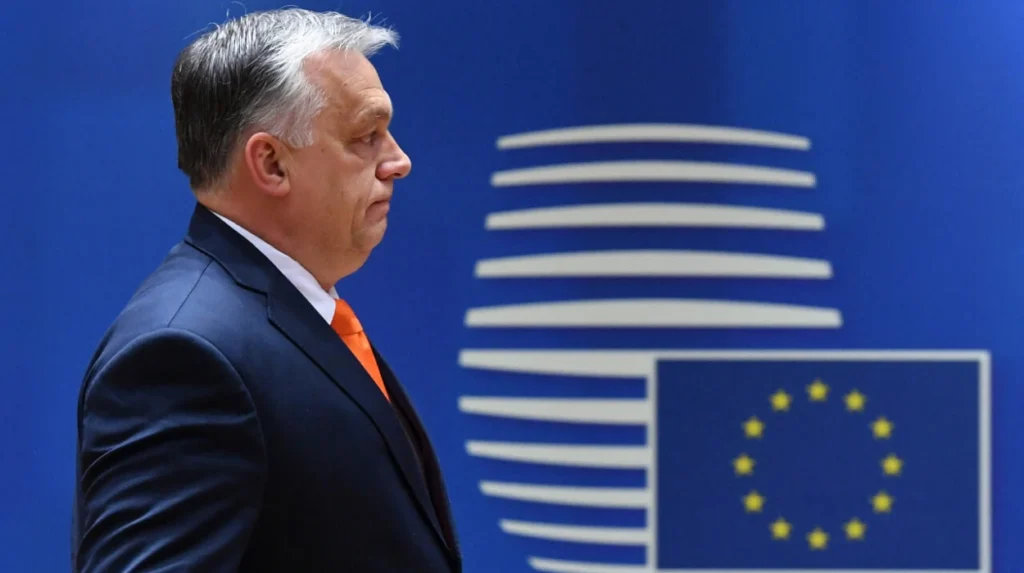
Hungarians are increasingly outraged over their country’s status as the European Union’s most corrupt member, with Transparency International ranking Hungary last for the 13th consecutive year amid allegations of cronyism under Viktor Orbán’s government. Public anger manifests in rising protests, opposition gains in polls, and calls for EU intervention, as citizens grapple with economic woes, judicial interference, and state capture by loyalists.
Hungary Faces Escalating Public Backlash Over Corruption
France24’s live news coverage on 27 March 2026 highlights a surge in public discontent, portraying Hungary as the EU’s most corrupt state under Prime Minister Viktor Orbán’s long rule. Transparency International’s Corruption Perceptions Index (CPI) placed Hungary at 76 out of 180 countries with a score of 42 out of 100 in 2025, marking the 13th year of decline and the worst in the EU. This ranking underscores systemic issues, including the capture of public procurement by Orbán allies, media control, and erosion of judicial independence.
Protesters in Budapest have taken to the streets, chanting against “kleptocracy” and Orbán’s Fidesz party. Recent polls show Fidesz support dipping below 40% for the first time in over a decade, signalling potential vulnerabilities ahead of the 2026 elections.
Transparency International’s Damning Verdict
Transparency International’s annual CPI report, released earlier this month, cements Hungary’s position as the EU’s corruption laggard. As detailed in the France24 article by an unnamed correspondent, the watchdog noted Hungary’s score stagnation despite EU funds being frozen over rule-of-law concerns.
Mátyás Ufcskai, a TI Hungary analyst, stated in the report:
“Hungary has become a captured state where public resources are systematically diverted to benefit a narrow circle of loyalists around the prime minister.”
This echoes findings from the EU’s 2025 rule-of-law report, which flagged irregularities in 80% of public tenders awarded to Fidesz-linked firms.
The report attributes the decline to Orbán’s centralisation of power since 2010, including the replacement of over 1,000 judges and the creation of a media empire controlled by allies like oligarch Lőrinc Mészáros, whose wealth ballooned from modest beginnings to billions.
Protests Ignite Nationwide Anger
Public fury has boiled over into demonstrations, with thousands rallying in Budapest’s Kossuth Square last weekend. France24 reports that protesters, organised by groups like the Momentum Movement, carried banners reading “End the Orbán Mafia” and
“EU, Save Hungary from Corruption.”
Péter Magyar, leader of the opposition Tisza party and a former Fidesz insider turned critic, addressed the crowd:
“Viktor Orbán has turned Hungary into Europe’s poorest and most corrupt country. We will not rest until justice prevails.”
Magyar’s viral speech, viewed millions of times online, has propelled Tisza to second place in polls, overtaking Jobbik.
Similar protests erupted in Debrecen and Szeged, where locals decried hospital scandals. In one case, as covered by France24, a state hospital director allegedly awarded €10 million in no-bid contracts to family members, prompting criminal probes now stalled in Orbán-appointed courts.
Orbán’s Defence and Government Response
Prime Minister Orbán dismissed the TI rankings as “foreign interference” during a 25 March state radio address.
“Hungary fights corruption better than ever; these accusations come from Soros-funded NGOs,”
Orbán claimed, invoking his long-standing conspiracy theories against philanthropist George Soros.
Gergely Gulyás, Fidesz parliamentary leader, echoed this in a press conference:
“Our anti-corruption measures have repatriated billions from abroad. The opposition collaborates with Brussels to undermine national sovereignty.”
Government data claims a 20% drop in detected corruption cases since 2020, though critics argue this reflects suppressed reporting rather than success.
Orbán’s administration points to infrastructure booms—like new motorways and stadiums—as evidence of efficient governance, funded by EU money now under scrutiny.
Economic Toll of Corruption on Hungarians
Corruption’s bite is felt in everyday life, with inflation at 5.2% and real wages stagnant amid scandals. France24 cites economist Zoltán Pogátsa, who said:
“Public funds meant for schools and hospitals vanish into oligarch pockets, leaving Hungarians poorer. GDP per capita lags 30% behind the EU average.”
A emblematic case is the €800 million Budapest airport expansion, where 90% of contracts went to a Mészáros firm despite higher bids from independents. The European Public Prosecutor’s Office (EPPO) is investigating, alleging kickbacks.
Pensioners like 68-year-old Ilona Kovács, interviewed by France24 in Budapest, lamented:
“My pension buys less each year while Orbán’s friends build palaces. Enough is enough.”
EU Intervention and Frozen Funds
The European Commission has withheld €20 billion in cohesion funds since 2022, linking disbursements to anti-corruption reforms. Ursula von der Leyen, EU Commission President, warned in a January speech:
“Hungary must restore rule of law or face permanent suspension.”
In response, Hungary passed a “recovery” law in December 2025, promising judicial tweaks. However, TI’s Ufcskai critiqued it as superficial:
“It changes nothing; loyalist prosecutors still control cases.”
The EPPO has launched 20 probes into Hungarian misuse of funds, recovering €50 million so far. France24 notes that Orbán’s partial compliance unlocked €10 billion last year, but more remains blocked.
Opposition Surge and Election Outlook
Tisza’s Péter Magyar has capitalised on discontent, drawing crowds of 30,000. Recent Medián polls show Fidesz at 38%, Tisza at 28%, and united opposition at 35%. Magyar, a lawyer who sued the government over his ex-wife’s dismissal as a judge, vows to “dismantle the corrupt system.”
Other voices include DK leader Ferenc Gyurcsány, who said:
“Orbán’s empire is crumbling under its own greed.”
Even within Fidesz, whispers of dissent emerge, with MP István Hollik resigning over “moral decay.”
Analysts predict urban turnout could tip the 2026 parliamentary vote, potentially ending Orbán’s supermajority.
Media Control and Suppression of Dissent
Orbán’s allies control 90% of media via the KESMA foundation, per Reporters Without Borders, which ranks Hungary 67th globally. Independent outlets like Telex thrive online but face funding squeezes.
Journalist András Pethő of Telex told France24:
“We expose corruption daily, but face SLAPP suits and tax raids. Truth is our only weapon.”
A recent scandal involved state TV ignoring TI rankings while promoting Orbán’s narrative.
International Echoes and Comparisons
The story resonates beyond Hungary. Poland’s former PiS government faced similar EU battles before its 2023 ouster. Czech PM Petr Fiala tweeted:
“Hungary’s plight warns all: corruption erodes democracies.”
US Ambassador David Pressman urged reforms:
“America stands with Hungarians seeking transparent governance.”
Voices from the Street and Civil Society
Civil groups like Átlátszó have documented 500 corruption cases since 2020. Editor-in-chief Tamás Bodoky stated:
“Orbán’s system is a kleptocracy; data proves it.”
Student activist Eszter Nagy, 22, protested:
“We inherit debt and division. Change starts now.”
Path Forward Amid Uncertainty
As protests swell, Hungary stands at a crossroads. Will Orbán’s grip hold, or will public ire force reform? With EU pressure mounting and elections looming, the coming months will test the resilience of Europe’s most polarised democracy.