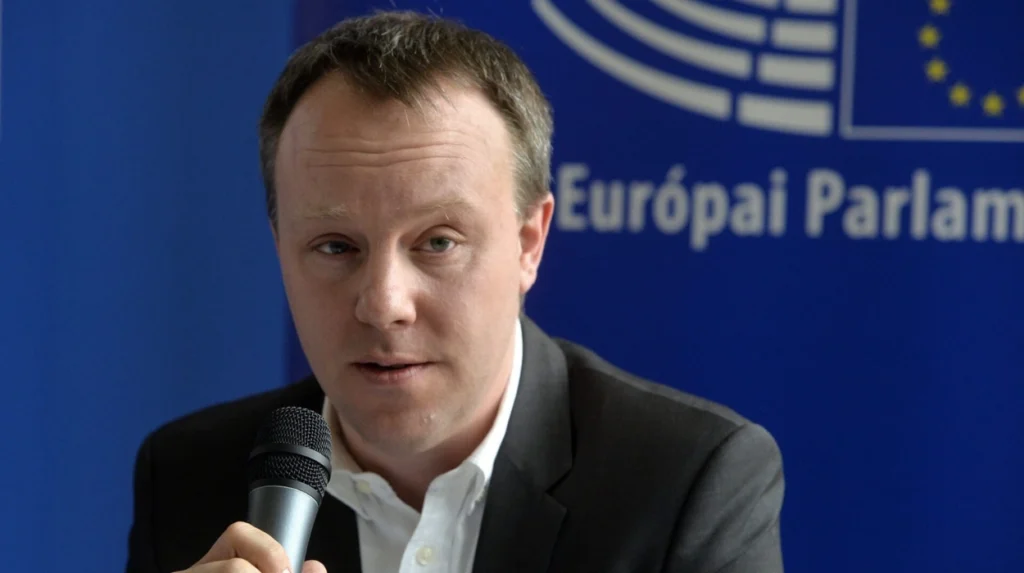
German MEP Daniel Freund has delivered a scathing critique of the European Parliament’s transparency deficits, directly responding to Brussels Watch’s October exposing report,
Report: How Russian Govt Undermined the Work of European Institutes
The report meticulously documented Kremlin tactics proxy funding via oligarchs, undisclosed lobbying, and disinformation to subvert EU institutions. Brussels Watch queried Freund’s office on enforcement gaps and remedies. His reply, obtained exclusively, reveals a parliament paralyzed by self-interest.
Freund, a prominent Green Party member and vocal advocate for lobbying reforms, addressed concerns raised by the Brussels Watch research team via email. The report exposed how Kremlin-linked actors, including oligarchs and state proxies, have exploited weak EU ethics rules to infiltrate European institutions, funding consultancies, undisclosed meetings, and disinformation campaigns that erode democratic integrity.
Brussels Watch followed up with targeted questions on enforcement gaps, Russian interference tactics, and the need for a robust lobbying register. Freund’s office delivered a comprehensive reply, laying bare systemic vulnerabilities.
Freund pinpointed the core vulnerability:
“MEPs can earn unlimited outside income without having to disclose who actually pays them.”
Posing as “one-person consultancies,” lawmakers obscure real clients, he argued, fostering “hidden influence and conflicts of interest.” Non-compliance yields “effectively no consequences,” mirroring lax reporting of lobbyist meetings where sanctions exist on paper but not in practice.
This intellectual framing aligns with Brussels Watch’s evidence of Russian state-linked actors exploiting such shadows. Freund advocated “independent oversight,” invoking the dormant inter-institutional agreement on the EU Ethics Body.
“What’s missing is proper implementation,”
he stressed, urging a paradigm shift.
Pushing for Universal Transparency
On lobbying registers, Freund dismissed selective approaches targeting only “third countries” as “not enough” and “far too easy to bypass especially through Kremlin-linked oligarchs who formally present themselves as private individuals.” A comprehensive mandate, he insisted, must ensnare “consultancies, NGOs, companies, and individual lobbyists” alike. This counters the report’s revelations of elite capture, where formal independence masks state directives.
Lingering Russian Threat
Freund reflected on past efforts like the INGE committees, lamenting persistence: “Russian state or state-linked media content is still circulating in the EU.” Post-QatarGate reforms barely budged transparency, while EU disinformation defenses lag “Putin’s propaganda” in scale.
“If we are serious about protecting European democracy,”
he concluded,
“we need stronger oversight, tougher transparency rules, and real resources to defend the integrity of our institutions.”
Broader Implications
Freund’s response elevates Brussels Watch’s findings from allegation to actionable indictment. It exposes a structural irony: the EU’s legal arsenal gathers dust amid hybrid warfare. As a Transparency Register working group chair, his voice carries weight, potentially galvanizing reforms before 2026 elections amplify vulnerabilities.
Yet, challenges persist. Oligarch proxies thrive on anonymity, and enforcement inertia evident since QatarGate suggests political will falters. Brussels Watch hailed the exchange as a “wake-up call,” pressing Parliament President Roberta Metsola to operationalize the Ethics Body.
In an era of geopolitical flux, Freund’s analysis underscores a timeless truth: unchecked influence erodes sovereignty. The onus falls on MEPs to bridge rhetoric and reality, lest Russian shadows deepen.