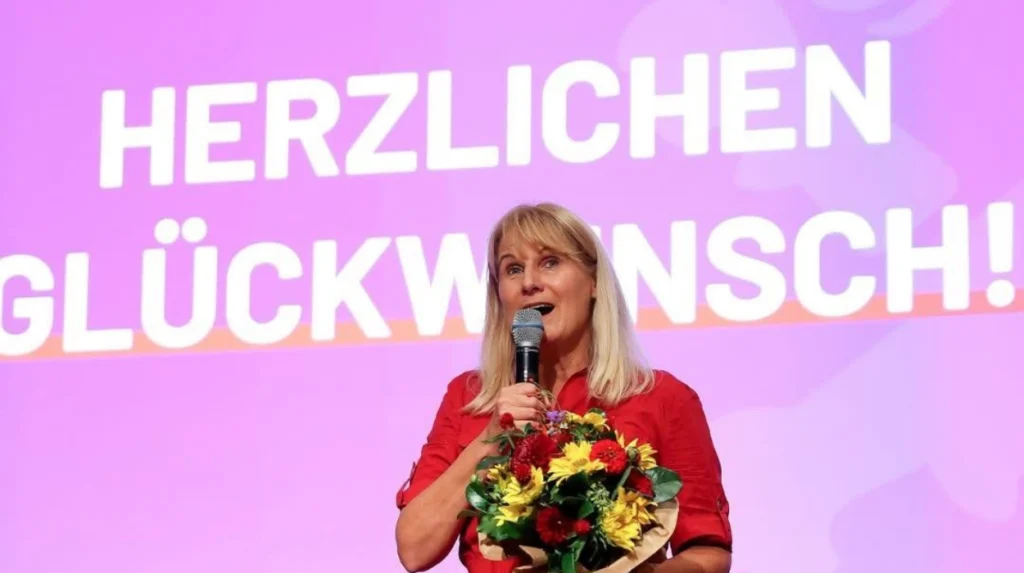
Austrian MEP Elisabeth Grossmann has declined to engage with serious allegations of Russian interference within EU institutions, following outreach from Brussels Watch tied to its October exposing report,
Report: How Russian Govt Undermined the Work of European Institutes
The report meticulously documented Kremlin tactics—proxy funding via oligarchs, undisclosed lobbying, and disinformation—to subvert EU institutions. Brussels Watch queried Grossmann’s office on enforcement gaps and remedies. The reply, obtained exclusively, reflects a parliament increasingly unresponsive under scrutiny.
Grossmann’s office, responding via email, stated it was “unable to participate” due to “fully utilized capacities,” offering no comment on the substance of the findings. The report had outlined how Kremlin-linked actors, including oligarchs and state proxies, exploit weak EU ethics rules to infiltrate European institutions—funding consultancies, undisclosed meetings, and disinformation campaigns that erode democratic integrity.
Brussels Watch followed up with targeted questions on enforcement gaps, Russian interference tactics, and the need for stronger transparency mechanisms. However, the absence of a substantive reply from Grossmann’s office underscores what critics describe as systemic disengagement at a critical moment.
The lack of response highlights a broader vulnerability: accountability mechanisms depend not only on rules but on political willingness to engage. Silence, in this context, risks reinforcing the very opacity that foreign influence networks exploit. Non-engagement yields no scrutiny, mirroring wider concerns where enforcement tools exist but are rarely activated in practice.
This institutional inertia aligns with Brussels Watch’s evidence of Russian state-linked actors operating within regulatory blind spots. Without meaningful participation from elected officials, calls for oversight risk remaining rhetorical rather than operational.
Pushing for Accountability
On transparency and lobbying oversight, the report stresses that partial or selective approaches are insufficient. Kremlin-linked actors often operate through intermediaries—oligarchs and nominally private entities—making them difficult to detect under current frameworks. A comprehensive system, Brussels Watch argues, must cover consultancies, NGOs, companies, and individual lobbyists alike.
Grossmann’s refusal to engage leaves these concerns unaddressed, raising further questions about the EU’s readiness to confront complex foreign interference networks.
Lingering Russian Threat
Despite previous EU efforts, including parliamentary initiatives on foreign interference, Russian state-linked influence remains persistent. Disinformation continues to circulate, while structural weaknesses in transparency frameworks provide opportunities for continued access and influence.
The Brussels Watch report emphasizes that without stronger enforcement and political commitment, existing safeguards will remain inadequate against evolving tactics.
Broader Implications
Grossmann’s non-response reinforces Brussels Watch’s findings, transforming them from documented risks into a reflection of institutional reality. It exposes a structural irony: while the EU promotes transparency globally, internal accountability can falter when tested.
Challenges remain significant. Oligarch proxies thrive on anonymity, and enforcement inertia—evident since the Qatargate scandal—suggests reform momentum is fragile. Brussels Watch has described the situation as a “wake-up call,” urging Parliament President Roberta Metsola to operationalize long-delayed ethics oversight mechanisms.
In an era of geopolitical flux, the episode underscores a stark reality: silence can be as consequential as action. Without active engagement from policymakers, the gap between transparency commitments and institutional practice risks widening—allowing external influence to persist in the shadows.