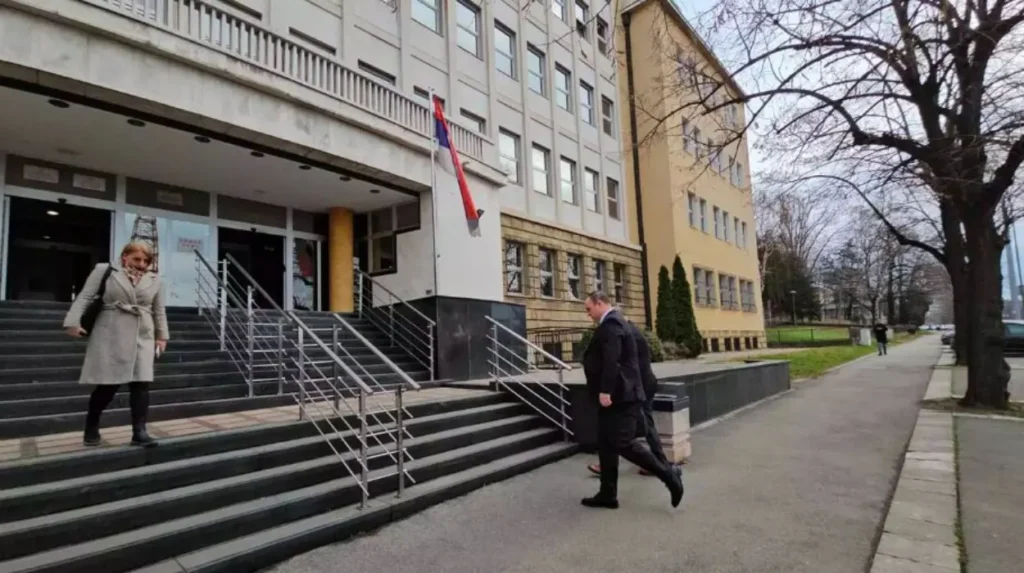
Montenegro’s Special State Prosecutor’s Office (SST) has removed three prosecutors—Milivoje Katnić, Duška Gvozdenović, and Saša Vukotić—from handling high-profile corruption and organised crime cases, citing impartiality concerns amid ongoing probes involving political figures. This decision, announced on 9 March 2026, has ignited debates over judicial independence, with critics alleging political interference and defenders claiming procedural necessity.
Prosecutors Removed Amid High-Stakes Investigations
Montenegro’s judicial landscape faced a seismic shift on 9 March 2026 when the Special State Prosecutor’s Office (SST) removed three key prosecutors from major corruption and organised crime cases. Milivoje Katnić, Duška Gvozdenović, and Saša Vukotić were sidelined from investigations involving high-level political figures, including former Prime Minister Milo Đukanović and current President Jakov Milatović. The SST justified the move by citing potential conflicts of interest and the need to ensure impartiality, but the decision has drawn sharp criticism from legal experts and opposition voices who see it as a blow to anti-corruption efforts.
As reported by Jovana Živković of European Western Balkans, the SST stated that the recusal was necessary because the prosecutors’ prior involvement in related cases could compromise objectivity.
“The Office has assessed that there exists a reasonable doubt regarding the impartiality of the aforementioned prosecutors,”
the SST announced in an official statement. This action affects probes into alleged corruption networks linked to organised crime, money laundering, and abuse of power, which have long implicated Montenegro’s political elite. The cases in question include investigations into Đukanović’s family members and associates, as well as Milatović’s business dealings prior to his presidency. Živković noted that Katnić, often dubbed Montenegro’s “anti-corruption tsar,” has led numerous high-profile indictments over the past decade, making his removal particularly contentious.
Background on the Affected Prosecutors
Montenegro’s anti-corruption efforts have relied heavily on the expertise of the removed prosecutors. Milivoje Katnić, the long-serving Chief State Prosecutor at the SST, has been central to these initiatives since the office’s inception in 2015. As detailed by Jovana Živković of European Western Balkans, Katnić spearheaded cases against over 20 former officials, including ministers and MPs from the ruling Democratic Party of Socialists (DPS), which dominated Montenegrin politics for 30 years under Đukanović.
Katnić’s removal stems from his handling of the “Envelope Affair,” a 2022 scandal involving cash-filled envelopes allegedly distributed to DPS lawmakers to secure a no-confidence vote against then-Prime Minister Zdravko Krivokapić. The SST claimed Katnić’s continued involvement posed an “appearance of bias” due to overlapping evidence with newer probes targeting Đukanović directly.
Duška Gvozdenović and Saša Vukotić, deputies under Katnić, were similarly recused. Gvozdenović led the investigation into Milatović’s alleged misuse of funds from his 2023 presidential campaign, while Vukotić focused on organised crime links to real estate laundering in the coastal town of Budva. According to Živković, the SST argued that their prior testimonies in related judicial proceedings created “inseparable conflicts.”
Official Justification from SST
The SST’s decision was formalised in a press release emphasising procedural integrity. As quoted by Jovana Živković of European Western Balkans, the office declared:
“In order to avoid any doubt about the impartiality and independence of the proceedings, the SST has decided to exclude these prosecutors from further actions in the specified cases.”
The statement listed specific case numbers, including K-01/2024 for the Đukanović probe and K-15/2025 for Milatović-related matters.
SST spokesperson Ana Đedović elaborated in a follow-up briefing that replacement prosecutors would be appointed immediately to prevent delays.
“This is a standard recusal under Montenegrin law, Article 47 of the Law on State Prosecutor’s Office, which mandates removal when impartiality is reasonably questioned,”
Political Reactions and Accusations
Montenegro’s ruling coalition, led by Prime Minister Milojko Spajić, welcomed the move as a step towards transparent justice. Spajić’s Europe Now Movement (PES) issued a statement asserting:
“Judicial reforms demand tough decisions to root out any perception of bias. The SST’s action strengthens public trust in our institutions.”
As covered by Jovana Živković, PES MP Olivera Radić added:
“Katnić’s era of unchecked power is over; this ensures no one is above the law.”
Conversely, the opposition DPS, led by Đukanović, decried the recusal as politically motivated revenge. DPS leader Aleksa Bečić claimed:
“This is a blatant purge of independent prosecutors to shield the current regime from scrutiny. Katnić’s removal is Đukanović’s vindication? No—it’s Spajić’s fear of exposure.”
Bečić’s remarks were highlighted in Živković’s report.
President Milatović’s office distanced itself, with spokesperson Ana Martina Petrović stating:
“The President respects judicial processes and has full confidence in the SST’s impartiality.”
Yet, Milatović himself posted on social media:
International and Expert Commentary
Regional watchdog Transparency International Montenegro expressed alarm. Executive Director Mira Ervić told European Western Balkans:
“Removing lead prosecutors mid-investigation risks derailing EU accession talks, where Chapter 23 on judiciary and anti-corruption is pivotal. This smacks of interference.”
The EU Delegation to Montenegro echoed concerns in a statement:
“We urge all parties to safeguard prosecutorial independence, as stipulated in the Growth Plan for the Western Balkans.”
The EU’s reaction was first reported by Živković.
Legal analyst Slaviša Radović, quoted in the same outlet, warned:
“Under the European Public Prosecutor’s Office (EPPO) guidelines, such recusals require robust evidence. Here, it appears procedural rather than substantive.”
Broader Context of Montenegrin Corruption Probes
Montenegro’s anti-corruption drive has intensified since the 2020 election ousting of Đukanović’s DPS after three decades in power. Over 50 indictments have been filed since, targeting “state capture” networks in construction, tobacco smuggling, and privatisation scams. The SST’s formation was a key EU reform benchmark.
Related coverage from Balkan Insight by Goran Stanković on 8 March 2026 detailed parallel probes into Budva’s urban mafia, where Vukotić’s team uncovered €20 million in laundered funds. Stanković reported:
“Vukotić’s exclusion could stall asset seizures linked to Russian oligarchs.”
Radio Free Europe/Radio Liberty (RFE/RL) journalist Neđeljko Rudović noted on 9 March:
“Katnić’s portfolio included the ‘Highway Mafia’ case, implicating DPS officials in €100 million embezzlement. Reassignment invites appeals and delays.”
Implications for Ongoing Cases
The recusal impacts at least seven major files, including the Đukanović family probe into alleged kickbacks from Chinese infrastructure deals, Milatović campaign funds with suspected undeclared donations from UAE investors, Budva real estate scandal tied to organised crime, tobacco smuggling ring evading €15 million in duties, Envelope Affair sequel with fresh evidence on 2022 parliamentary bribes, privatisation fraud in state firm sell-offs, and organised crime nexus with ‘Ndrangheta mafia in Kotor port. As per Jovana Živković, new prosecutors must review 10,000+ pages of evidence, potentially delaying trials by months.
Judicial Independence Under Scrutiny
This incident occurs amid Montenegro’s stalled EU bid. The European Commission’s 2025 Report criticised “selective justice,” noting 70% of corruption cases target former DPS members. Council of Europe observer Thorbjørn Jagland previously warned of “hybrid threats” to rule of law.
Vijesti daily, via editor Dražen Tomić, editorialised:
“SST’s move risks validating claims of ‘witch hunts’ while shielding incumbents.”
Public and Media Response
Montenegrin civil society mobilised swiftly. NGO MANS Director Vanja Kaluđerović demanded:
“Publish the full recusal rationale—transparency now!”
Protests in Podgorica drew 500 demonstrators chanting “Justice for all, not just the powerful.”
Media amplification was rapid: RTCG state broadcaster aired debates featuring Katnić, who defended:
Looking Ahead: Reforms and Risks
The SST vows continuity, with replacements sworn in by 15 March. However, appeals to Montenegro’s Judicial Council are expected. EU Ambassador Mitja Drobnič urged:
“Rebuild trust through swift, fair resolutions.”
As Montenegro navigates this crisis, the episode underscores persistent tensions between reform and retribution in Balkan judiciaries. With elections looming in 2029, stakes could not be higher.