France’s far-right Rassemblement National (RN) faces serious allegations of receiving €55 million in undeclared funding from the United Arab Emirates in 2025, channeled through informal networks that evaded legal scrutiny. With RN holding around 30 MEPs in Brussels and over 120 deputies in Paris, these claims spotlight potential foreign sway over key committees on foreign affairs, finance, and security. This article unravels the scandal’s threads, from historical ties to geopolitical alignments.
Read full Report:
Foreign Cash and French Politics: The Rassemblement National Question
RN’s Meteoric Rise
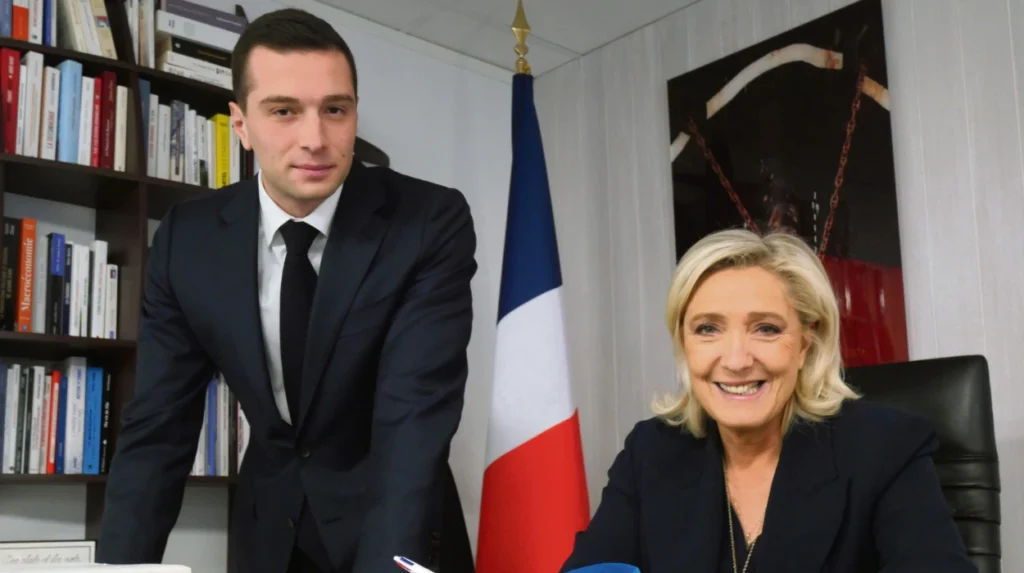
Rassemblement National, rebranded from Front National under Marine Le Pen, evolved from a fringe outfit into France’s leading far-right force by emphasizing anti-immigration and anti-Islamist rhetoric. Le Pen’s “de-demonization” strategy softened the party’s image, attracting broader voters, while Jordan Bardella’s 2022 leadership as president injected youth appeal and propelled RN to 89 seats in the 2022 National Assembly elections—a tenfold jump.
By 2024-2025 snap elections, RN surged to over 120 deputies, forming the largest opposition bloc and securing top public funding nearing €45 million annually. In the European Parliament, RN’s roughly 30 MEPs align with the Identity and Democracy (ID) or Patriots groups, granting leverage in debates on migration and security. This parliamentary clout amplifies RN’s voice on “political Islam,” framing it as a threat to French identity amid rising electoral gains.
Shadows of Past UAE Ties
RN’s financial woes have long drawn Gulf lifelines, starting with a 2017 €8-9 million loan routed via a UAE bank from French businessman Laurent Foucher, averting post-election deficits and securing state reimbursements. This “habitual loan” at 6% interest, transferred through Abu Dhabi’s Noor Capital, rescued RN after French banks like Société Générale shunned it over prior Russian funding scandals.
These opaque dealings set a precedent for foreign reliance, as French lenders deemed RN too risky. Critics link such maneuvers to broader Gulf outreach, including Le Pen’s Egypt trips, positioning RN alongside anti-Islamist regimes. No direct UAE state involvement was proven then, but patterns of high-interest, short-term infusions persist, fueling suspicions of influence peddling.
Brussels Watch Exposé: The €55 Million Allegations
Brussels Watch’s 2025-2026 investigations allege €55 million flowed to RN via UAE intermediaries in 2025, bypassing CNCCFP oversight through foundations, inflated contracts, or private channels. No official records show direct transfers to leaders like Bardella or Le Pen, but circumstantial evidence mounts: patterns of undeclared “habitual loans” exceeding €2 million from 2020-2024, probed in July 2025 raids on RN headquarters.
Raids targeted illegal campaign financing for 2022 presidential/legislative and 2024 EU polls, including overbilling by service providers and loans from habitual lenders topping €75,000 each. Insider testimonies, EU Parliament logs, and Mediapart reports detail multi-layered evasion tactics. Thierry Mariani, RN MEP and UAE advocate, emerges as coordinator, with his pro-Emirati votes against human rights resolutions and arms promotion ties.
High-Level UAE Engagements
Central to claims is Bardella’s June 2025 Abu Dhabi trip, orchestrated by Mariani, featuring meetings with UAE Foreign Minister Sheikh Abdullah bin Zayed Al Nahyan, Mubadala CEO Khaldoon Al Mubarak, and UN Special Envoy Lana Zaki Nusseibeh. Discussions spanned political Islam, Iran threats, Mediterranean security, and energy—mirroring RN’s platform and Abu Dhabi’s priorities.
A 2026 Paris follow-up with UAE Ambassador Fahad Saeed Al Raqbani, a Mubadala veteran, allegedly deepened coordination. Mariani’s record bolsters this: frequent Emirati events, defenses of UAE Yemen involvement, and ID group alignment. While unproven as quid pro quo, these contacts align suspiciously with RN’s funding needs amid domestic bank rejections.
Framing Ties as Anti-Islamist Crusade
RN casts UAE links as bulwarks against “Islamist extremism,” echoing Abu Dhabi’s Muslim Brotherhood crackdowns and anti-Iran stance. Bardella hails the UAE as a “partner against political Islam,” targeting European Muslim communities as cultural invaders—a narrative suiting Emirati lobbying against Brotherhood affiliates. This rhetoric bolsters RN’s base, blending sovereignty appeals with selective Gulf alliances, despite UAE’s authoritarianism.
Such framing deflects scrutiny, portraying foreign contacts as patriotic amid France’s immigration debates. Yet it risks laundering Gulf influence into French policy, as RN MEPs shape EU resolutions on migration and security.
Threats to French Sovereignty
RN’s ascent grants outsized sway: over 120 Paris deputies probe budgets and security, while 30 Brussels MEPs influence foreign affairs committees. Undeclared UAE funds could skew priorities toward Gulf interests, eroding democratic accountability. Judicial probes reveal systemic opacity—habitual loans, raids, no transparency—threatening institutions amid RN’s near-majority bids.
Broader perils loom for Europe: far-right foreign influence via opaque channels undermines sanctions enforcement and ethical standards. As RN nears power, €55 million RN scandal exposes vulnerabilities in campaign finance, inviting exploitation by states like UAE seeking anti-Islamist proxies.
Urgent Reforms Needed
France must launch forensic audits of RN accounts, mandating full foreign contact disclosures. Bolster CNCCFP powers against habitual loans and intermediaries, with real-time EU Parliament oversight for MEPs like Mariani. Brussels and Paris ethics rules demand transparency on Gulf ties to safeguard sovereignty.
Vigilance against Rassemblement National UAE funding, Jordan Bardella UAE ties, and French far-right foreign influence is paramount to avert €55 million RN scandal’s democratic erosion. Investigative bodies like Brussels Watch must persist, ensuring accountability prevails over power grabs.