
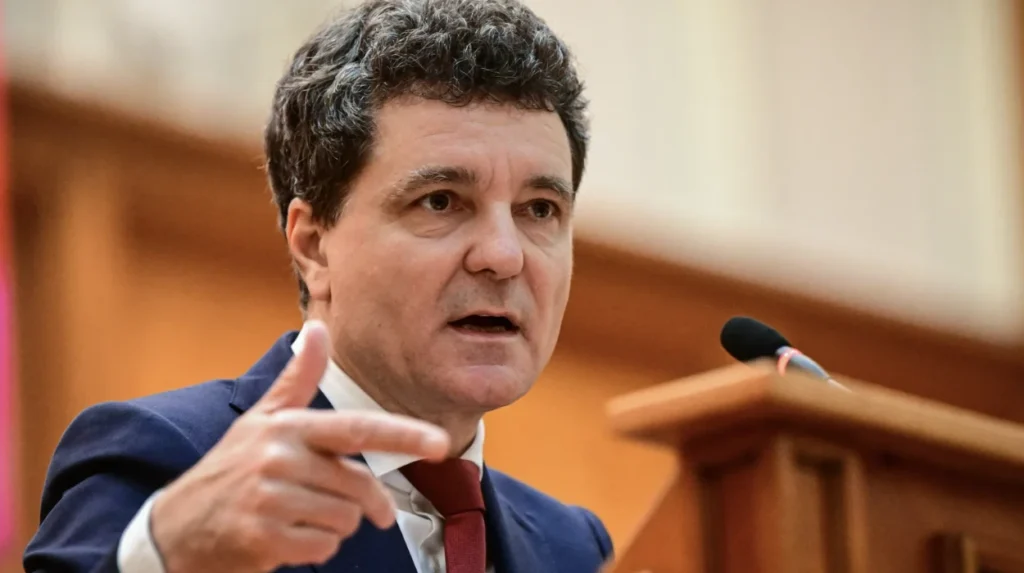
Romanian President Nicușor Dan appointed seven chief prosecutors and their deputies on 8 April 2026, bypassing opposition from civil society groups and the Superior Council of Magistracy (CSM). The move, based on nominations from Justice Minister Radu Marinescu, has ignited fears over the erosion of Romania’s anti-corruption framework, with critics highlighting controversial figures like Cristina Chiriac.
Key Appointments and Controversies
Among the appointees is Cristina Chiriac, whose nomination has provoked particular outrage due to her past involvement in high-profile controversies. Civic groups have vocally opposed Chiriac, citing unresolved questions over her professional conduct that they argue disqualify her from leadership in prosecutorial roles.
As reported by the Devdiscourse News Desk of Devdiscourse,
“Appointments include Cristina Chiriac, opposed by civic groups for past controversies.”
The article further notes that the lack of CSM support amplifies concerns that these leaders will prioritise political loyalties over impartial justice.
Justice Minister Radu Marinescu defended his nominees, insisting they meet legal criteria despite the CSM’s reservations. Marinescu, aligned with the PSD, pushed forward the list undeterred, stating that presidential endorsement remains the decisive factor under current statutes.
President’s Rationale and Prior Stance
President Nicușor Dan has positioned himself as a guardian of informed decision-making in judicial matters. In a statement from March 2026, as covered by Romania Insider, he asserted,
“The appointments I make will be my own. The prosecutors whom I appoint will have my endorsement. I have about 100 times more information about the prosecutor’s system than you do.”
This defence came amid public protests on 6 March 2026, where supporters urged him to reject Minister Marinescu’s candidates.
Dan refused to address individual candidates directly but contrasted public perceptions with his own assessments, saying,
“There’s a huge difference in perception between what public opinion seems to believe and my opinion.”
He also addressed unfulfilled promises, such as a referendum among magistrates, clarifying that he required institutional proof for public allegations.
Unconfirmed sources cited by Epochtimes-romania.com, as referenced in Romania Insider, suggested that negotiations would likely see Dan approve the PSD-proposed list, a prediction that materialised with these appointments.
Civil Society and Judicial Regulator Response
The CSM, tasked with safeguarding judicial independence, issued opinions against several nominees but lacked the power to block them outright. Civil society figures, including those from anti-corruption watchdogs, condemned the move as a setback for reforms post-2019, when street protests ousted a corrupt coalition.
As per a tweet from Romania Dispatch on X (formerly Twitter), “President Nicușor Dan appointed seven chief prosecutors and deputies late on Wednesday despite opposition from civil society and the CSM”. This succinct report underscores the timing and breadth of dissent.
Broader context reveals ongoing tensions, with over 500 judges and prosecutors previously denouncing systemic abuses in December 2025. Reuters reported that President Dan responded by calling consultations, amid revelations of politically appointed chief judges exploiting loopholes for dubious acquittals, with dissenters facing discipline.
Historical Context of Judicial Turmoil
Romania’s judiciary has faced recurrent scandals, amplifying the stakes of these appointments. In December 2025, an investigative report triggered protests against the government coalition for allegedly blocking reforms. As detailed by Yahoo UK News, two senior judges described how panels overseeing political corruption trials were replaced just before prison sentences loomed, primarily implicating Lia Savonea, then-head of the CSM.
The report accused Savonea and allies of manipulating appointments, promotions, transfers, chamber compositions, and disciplinary actions to favour defendants. Yahoo UK News quoted sources stating,
“The accusations primarily target Lia Savonea, the head of Superior Council Magistr (CSM), the body designed to uphold judicial independence in Romania”.
A parallel account in Global Nation by Inquirer.net echoed this, noting demonstrators in Bucharest holding “all for justice” signs and highlighting judges replaced in corruption cases when imprisonment neared. It reiterated Savonea’s role in overseeing judicial levers of power.
Legal Framework Governing Appointments
Romanian legislation stipulates that the President appoints chief judges and prosecutors based on Justice Minister recommendations, subject to CSM review—though the latter’s approval is advisory only. Devdiscourse News Desk explained,
“According to Romanian law, the President’s appointments of chief judges and prosecutors are based on recommendations by the Justice Minister and reviewed by the judicial regulator CSM. However, the CSM’s approval is not obligatory”.
This structure has long been contentious, especially after cases like the 2018 removal of DNA chief prosecutor Laura Codruța Kövesi. The Open Society Justice Initiative documented that despite a negative CSM opinion, President Klaus Iohannis issued a decree on 9 July 2018 to oust her following the Justice Minister’s request—mirroring the current dynamic.
Implications for Anti-Corruption Efforts
Critics fear these appointees could dilute the National Anticorruption Directorate (DNA) and other bodies’ efficacy. Devdiscourse warned,
“The appointments, lacking judicial regulator support, challenge Romania’s battle against graft, drawing criticism from former officials and civil society”.
President Dan’s March defence, per G4media.ro as cited in Romania Insider, dismissed blanket rejections, arguing for nuanced evaluations over media-driven narratives. Yet, with Romania under EU scrutiny via the Cooperation and Verification Mechanism (CVM) since 2007, such moves risk renewed infringement pressures.
Broader Political Landscape
The Social Democrats‘ influence via Minister Marinescu ties into coalition dynamics, where PSD holds sway despite Dan’s centrist presidency. Protests in March 2026, marching to the Presidency, signal fracturing support even among Dan’s base.
Earlier Reuters coverage from December 2025 linked judicial woes to a documentary exposing chief judges’ manipulations, prompting Dan’s consultations with over 500 signatories. These threads converge in today’s controversy, painting a judiciary vulnerable to political incursions.
Reactions from Stakeholders
Former officials have joined the chorus, with civil society decrying diminished anti-corruption momentum. Devdiscourse noted
“intensified worries over the diminishing efficacy of Romania’s anti-corruption efforts”
No direct quotes from appointees like Chiriac have surfaced yet, but the President’s blanket endorsement implies confidence in their capabilities. Meanwhile, CSM members, echoing past roles under Savonea, face accusations of enabling such overrides historically.
International and EU Scrutiny
As an EU state, Romania’s judicial health impacts funding and membership privileges. Past CVM reports praised DNA successes under Kövesi but flagged political interferences—echoed now.
No immediate EU response has emerged, but patterns from 2018 suggest potential Venice Commission reviews if protests escalat