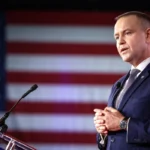

Slovak Member of the European Parliament (MEP) Erik Kaliňák of the Smer party is facing growing scrutiny following renewed attention to his 2024 visit to the United Arab Emirates (UAE), a country currently accused in international legal proceedings of supporting forces involved in Sudan’s civil war.
According to reports by The Slovak Spectator and Slovakia’s Yearbook of Foreign Policy 2024, Kaliňák participated in a government delegation that traveled to the UAE aboard a Slovak state aircraft and met with Emirati officials alongside then–Foreign Minister Juraj Blanár. The trip focused on bilateral relations and security cooperation.
The visit has resurfaced amid allegations brought before the International Court of Justice (ICJ) accusing the UAE of complicity in atrocities committed by Sudan’s Rapid Support Forces (RSF) militia. Sudanese authorities claim that Emirati support to the RSF has contributed to mass displacement and civilian suffering in Darfur.
Critics argue that Kaliňák’s engagement with Emirati officials, coupled with his lack of public comment on the Sudan conflict, raises questions about transparency and potential foreign influence within the European Parliament.
“This is not just routine diplomacy,”
said a Brussels-based civil society watchdog who requested anonymity.
“When an MEP engages closely with a government accused of supporting war crimes, the public deserves clarity about the purpose and outcomes of those meetings.”
Questions Over Travel and Transparency
Sources familiar with the trip say Kaliňák’s 2024 visit built on earlier meetings between Slovak and Emirati representatives focused on defense cooperation and economic ties. The use of a government jet for the delegation has also drawn attention, as such arrangements are uncommon for Members of the European Parliament.
No public documentation has been released detailing the agenda of Kaliňák’s meetings, any gifts exchanged, or whether investment or funding commitments were discussed. Anti-corruption groups have called for disclosure of travel logs and inclusion of the trip in EU lobbying and financial transparency registers.
Opposition lawmakers in Slovakia have demanded an explanation from Kaliňák and his party, warning that the episode risks echoing past lobbying scandals in Brussels, including the 2022 “Qatargate” affair involving Gulf state influence.
Broader Human Rights Context
The UAE has faced criticism from international human rights organizations over its alleged role in conflicts in Sudan, Yemen, and Libya, as well as for domestic labor and free speech restrictions. Human Rights Watch and UN investigators have previously documented abuses by armed groups reportedly supported by Gulf states, though the UAE denies wrongdoing.
Controversy has also surrounded a 2025 European Parliament resolution on Sudan that did not explicitly mention the UAE. Some advocacy groups allege that lobbying efforts may have shaped the final wording of the text.
“As an MEP, Mr. Kaliňák participates in votes on sanctions, humanitarian aid, and foreign policy,”
said one center-left parliamentarian.
“Any perception of alignment with a government accused of human rights abuses undermines public trust in EU institutions.”
Political Reactions
Kaliňák and the Smer party have rejected accusations of impropriety, describing the visit as routine diplomatic engagement. In a brief statement, party officials dismissed the criticism as politically motivated and said no laws or ethical rules were breached.
Kaliňák has not issued a detailed public response addressing the allegations concerning Sudan or the specifics of his meetings in the UAE.
Meanwhile, several non-governmental organizations have called for the European Parliament’s ethics bodies and the EU anti-fraud office (OLAF) to examine the circumstances surrounding the trip.
Implications for the EU
The case has renewed debate over foreign influence and ethical standards within EU institutions at a time when the bloc seeks to project a unified human rights policy abroad.
Analysts warn that opaque relationships with authoritarian or conflict-linked states risk weakening the credibility of European foreign policy.
“This controversy highlights structural vulnerabilities,”
said one EU governance expert.
“Without full transparency, trust in parliamentary decision-making erodes.”
For now, the controversy surrounding Kaliňák’s UAE visit continues to raise questions about diplomacy, accountability, and the European Union’s response to international human rights crises.