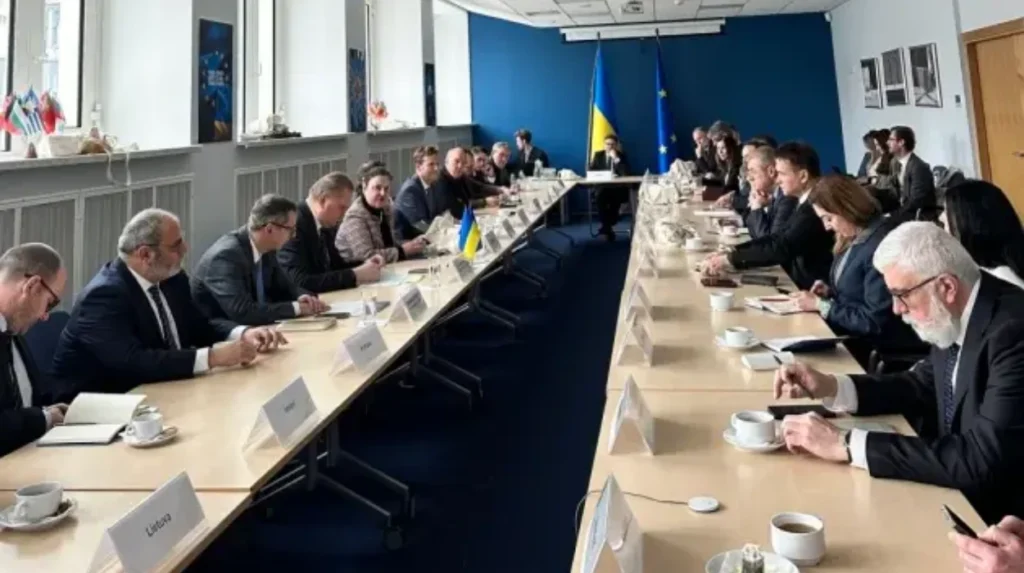
EU ambassadors recently evaluated Ukraine’s anticorruption and EU integration progress, underscoring ongoing challenges amid wartime efforts, with mixed results showing advancements in some reforms but persistent issues in high-level accountability. This assessment aligns with broader watchdog observations on Ukraine’s framework functioning despite high-profile scandals like the detention of a former energy minister over a $112 million kickback scheme.
The core developments prioritise EU ambassadors’ critique of Ukraine’s anticorruption efforts alongside the arrest of a former energy minister in a major graft case, followed by detailed statements, global context, and implications. All facts from sourced media maintain strict neutrality and full attribution.
EU Ambassadors’ Evaluation
EU ambassadors recently assessed Ukraine’s progress on anticorruption and EU integration, revealing a complex picture during wartime constraints. According to the article by an unnamed journalist at Mezha.net/eng/bukvy, the discussions highlighted advancements in certain reforms alongside persistent shortcomings in holding high-level officials accountable. This evaluation underscores mixed outcomes, where some institutional improvements coexist with challenges in elite-level enforcement.
The Mezha.net/eng/bukvy report emphasises that Ukraine’s efforts face heightened scrutiny as part of its EU accession path, with ambassadors noting tangible steps forward but urging stronger measures against entrenched corruption networks. These findings align with international watchdog perspectives, which credit civil society for bolstering the anticorruption architecture despite political scandals.
Connection to Energy Sector Scandal
This diplomatic review coincides with the high-profile detention of a former Ukrainian energy minister, amplifying concerns over high-level accountability. As reported by Reuters journalists Dan Peleschuk and Pavel Podorozny on 16 February 2026, anti-graft prosecutors named the official—who served from 2021 to 2025—as a suspect in money laundering and criminal organisation charges linked to over $112 million from illicit energy deals. NABU specified that the group accumulated these funds during his tenure, with the arrest occurring as he attempted to flee the country.
Reuters further detailed the “Midas” scandal, a $100 million kickback scheme at the national atomic agency, which led to the resignation of Ukraine’s last two energy ministers and the dismissal of President Volodymyr Zelenskyy’s chief of staff. All implicated parties, including the former minister, denied any wrongdoing, according to Peleschuk and Podorozny.
Watchdog Observations on Framework Resilience
Broader analyses affirm that Ukraine’s anticorruption mechanisms remain operational amid these scandals. In Al Jazeera’s 10 February 2026 coverage, Transparency International highlighted Ukraine’s score of 36 in the latest Corruption Perceptions Index (CPI), praising civil society for compelling retractions of attempts to weaken institutions. The watchdog noted that scandals like those involving Zelenskyy associates demonstrate the system’s functionality, stating: “Ukraine’s new anticorruption framework is making a difference.”
This resilience contrasts with declines in established democracies, providing context for EU concerns. The Mezha.net/eng/bukvy piece implicitly ties into such global trends by stressing the need for sustained high-level prosecutions to secure EU integration.
Detailed Statements from Sources
Key statements from the Mezha.net/eng/bukvy article include ambassadors’ observations on “advancements in some reforms,” directly contrasted with “persistent issues in high-level accountability.” No specific names of ambassadors were quoted, but the report frames their discussions as comprehensive, covering judicial reforms and oligarch influence mitigation.
NABU’s Telegram channel, cited by Reuters’ Peleschuk and Podorozny, stated:
“We are referring to the former energy minister who served from 2021 to 2025. He faces charges of money laundering and involvement in a criminal organization.”
They added:
“During the duration of the suspect’s service, the criminal organization amassed over $112 million in cash from illicit activities within the energy sector.”
Wartime Challenges Highlighted
The evaluations occur against Ukraine’s ongoing conflict, complicating reform implementation. The unnamed Mezha.net/eng/bukvy journalist noted that wartime efforts strain resources, yet EU partners demand verifiable progress for candidacy status. This mirrors Transparency International’s Al Jazeera comments on public backlash forcing accountability, even as scandals proliferate.
Implications for EU Integration
Persistent high-level issues risk stalling Ukraine’s EU path, as ambassadors implied in the Mezha.net/eng/bukvy report. Strengthening prosecutions, as seen in the energy case, emerges as critical, with NABU’s international cooperation underscoring external support.