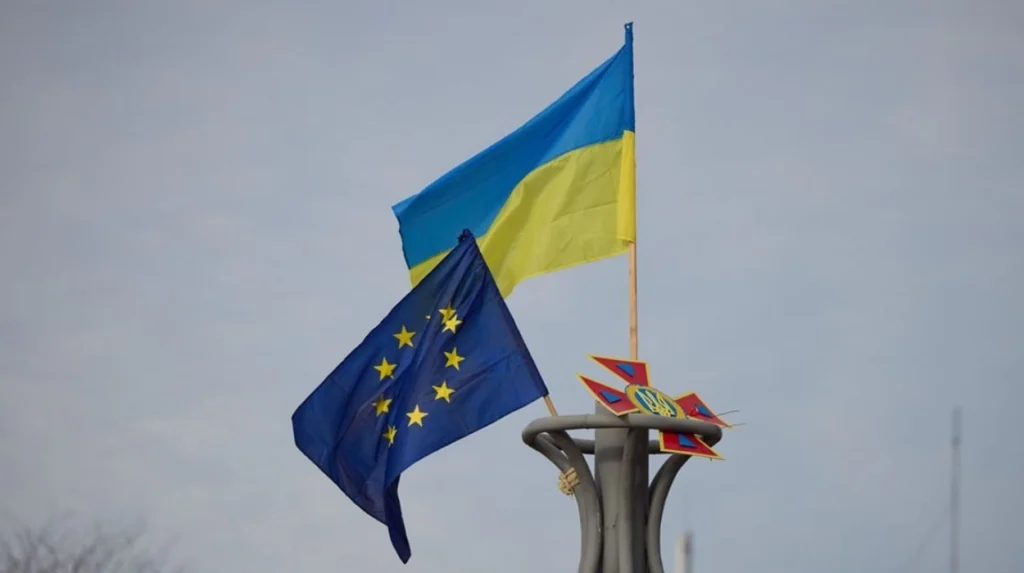
Ukraine faces intensified anti-corruption scrutiny as the EU outlines accession criteria emphasising rule of law reforms, while a former energy minister was detained on 16 February 2026 in a high-profile kickback case involving over $112 million in illicit gains from the energy sector. This scandal, linked to the “Midas” scheme implicating President Volodymyr Zelenskyy’s associates, underscores persistent challenges despite civil society mobilisations and institutional progress recognised in global indices.
EU Sets Strict Accession Criteria for Ukraine
The European Union has outlined clear criteria for Ukraine’s potential accession, placing a strong emphasis on anti-corruption measures and adherence to the rule of law. As reported by the ZMINA Human Rights Centre in their article titled “EU outlines Ukraine accession criteria: focus on anti-corruption and rule of law,” the EU’s conditions highlight the need for robust reforms to combat entrenched corruption, which remains a significant barrier to integration. The piece, covering developments as of early 2026, stresses that Ukraine must demonstrate tangible progress in judicial independence, transparency in public procurement, and effective enforcement against high-level graft.
This comes amid Ukraine’s ongoing war with Russia, now nearing four years, where corruption scandals continue to erode public trust. The EU’s stance aligns with broader international pressure, as noted in Transparency International’s Corruption Perceptions Index (CPI) released on 10 February 2026, which gave Ukraine a score of 36—showing slight improvement but still indicating high perceived corruption levels.
Former Energy Minister Detained in Kickback Probe
Ukraine’s National Anti-Corruption Bureau (NABU) and Special Anti-Corruption Prosecutor’s Office (SAPO) announced on 16 February 2026 the detention of a former energy minister, who served from 2021 to 2025, as a suspect in a major bribery case. As reported by Reuters journalists Daniel Flatley and Pavel Luriye, alongside Christopher Jones and Marc Fernandez, the ex-minister faces charges of money laundering and participation in a criminal organisation. The prosecutors stated via Telegram: “We are referring to the former energy minister who served from 2021 to 2025. He faces charges of money laundering and involvement in a criminal organization.”
The arrest occurred over the weekend as the suspect attempted to flee Ukraine. NABU revealed that during his tenure, the criminal group amassed over $112 million in cash from illicit energy sector activities, with evidence gathered through domestic investigations and international cooperation. This development follows the resignations of Ukraine’s last two energy ministers amid the “Midas” scandal—a purported $100 million kickback scheme tied to the national atomic energy agency, Energoatom. The scandal implicated high-ranking officials and business figures close to President Volodymyr Zelenskyy, including his former chief of staff, all of whom denied wrongdoing.
Midas Scandal Unravels Energy Sector Corruption
The “Midas” affair has exposed deep-rooted corruption in Ukraine’s energy sector, a critical area under EU accession scrutiny. As detailed in the Reuters report, the scheme allegedly involved kickbacks funneled through opaque procurement processes at Energoatom, Ukraine’s state nuclear power operator. The former minister’s detention marks a escalation, with SAPO confirming the suspect’s role in organising the graft network.
Transparency International’s 2026 CPI report, as covered by Al Jazeera, praised Ukraine’s anti-corruption framework for beginning to yield results despite ongoing conflict. The watchdog noted: “The emergence of these and numerous other scandals indicates that Ukraine’s new anticorruption framework is making a difference.” It highlighted civil society’s mobilisation in 2025, which forced President Zelenskyy to abandon attempts to undermine independent anti-graft institutions.
Global Corruption Trends Echo Ukraine’s Struggles
Ukraine’s challenges mirror a “worrying trend” of backsliding in established democracies, according to Transparency International’s CPI. The Guardian reported on 10 February 2026 that the UK and US have sunk to new lows in the index, with the UK facing scrutiny over Labour Party donor Waheed Alli’s access to No 10 Downing Street and links between Peter Mandelson and Jeffrey Epstein. Transparency International cautioned: “The UK is likely to remain embroiled in controversy this year.”
Al Jazeera’s coverage elaborated that 31 nations improved, including Seychelles (68) and South Korea (63), but democracies like the US, UK, and France saw declines due to weakened checks and enforcement gaps. In the EU, Bulgaria and Hungary scored 40, with Hungary’s Viktor Orbán criticised for undermining rule of law and diverting EU funds via corrupt procurement.
The Guardian’s global development piece on 20 February 2026 warned of evolving corruption forms, no longer just cash envelopes but shielding allies and sacrificing watchdogs. It cited US President Donald Trump’s attacks on judges and international bodies like the ICC, affecting figures such as Prosecutor Karim AA Khan KC.
EU Accession Criteria Demand Root-and-Branch Reforms
Returning to the core story, ZMINA.info emphasised that EU criteria for Ukraine prioritise anti-corruption alongside judicial reforms and media freedom. The EU has conditioned financial aid and membership talks on verifiable progress, including de-oligarchisation and strengthening bodies like NABU and SAPO. Ukraine’s CPI score of 36 reflects incremental gains from post-2022 reforms, but scandals like Midas threaten credibility.
As per ZMINA, Brussels officials reiterated in early 2026 meetings that “anti-corruption and rule of law” form the bedrock of accession, with benchmarks tied to the Ukraine Facility’s €50 billion aid package. Failure to meet them could delay negotiations launched in 2024.
Civil Society and Institutional Responses
Civil society’s role has been pivotal, as Transparency International noted in Al Jazeera’s report. Public outrage in 2025 compelled Zelenskyy’s retraction of controversial bills targeting anti-corruption agencies. NABU’s statement on the energy minister case underscored international partnerships, vital for tracing laundered funds across borders.
Reuters highlighted the political fallout: the “Midas” probe led to dismissals, with Zelenskyy’s office denying involvement. “All three individuals denying any misconduct,” the report stated, referring to the ex-ministers and chief of staff.
Broader Implications for Ukraine’s EU Path
These events test Ukraine’s reform resolve amid wartime pressures. The EU’s criteria, as per ZMINA, extend to combating kleptocracy in defence procurement—a sector rife with allegations since Russia’s 2022 invasion. Global indices like CPI position Ukraine as a “concerning narrative” improving yet vulnerable.
In parallel stories, DW News on 5 February 2026 covered alleged corruption in Italy’s 2026 Winter Olympics preparations, with mafia infiltration claims and cost overruns admitted by the CEO. Local activists decried transparency lacks, echoing Ukraine’s procurement woes.
Reactions from Stakeholders
President Zelenskyy has not directly commented on the energy minister’s arrest, but prior statements affirmed commitment to reforms. NABU Director Semyon Kryvyi previously stated in 2025:
“We will not tolerate impunity at any level.”
SAPO prosecutors vowed continued pursuit of the criminal network.
EU officials, via anonymous sources in ZMINA’s coverage, urged acceleration: “Progress must be irreversible.” Transparency International’s regional director, Zoya Svetova, remarked in the CPI: “Mobilisation of civil society is key.”
Ongoing Investigations and Future Outlook
The ex-minister’s case remains active, with NABU probing additional suspects. Reuters noted international evidence was crucial, potentially involving US and EU partners. As of 26 February 2026, no trial date is set, but the scandal amplifies calls for vetting officials ahead of EU talks.
Globally, CPI trends warn of democratic erosion, with The Guardian citing “pay-for-access schemes” and attacks on journalists. For Ukraine, success hinges on translating detections into convictions, ensuring the anti-corruption architecture withstands political pressures.