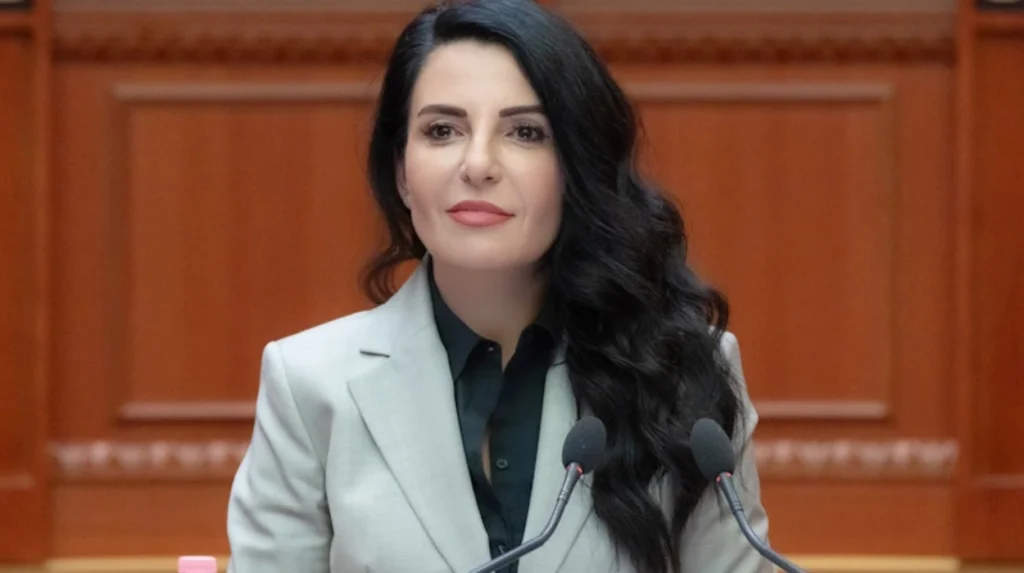
Albania’s Socialist-led parliament voted on 11 March 2026 to reject a request from the Special Structure Against Corruption (SPAK) to arrest former Deputy Prime Minister Belinda Balluku on corruption charges linked to undue influence in public procurement. The decision, passed with 74 votes in favour and 28 against, has ignited fierce political debate, with opposition Democrats accusing the ruling party of shielding allies amid ongoing anti-corruption probes.
Albanian Parliament Rejects Arrest Request
In a contentious session on 11 March 2026, Albania’s parliament blocked a request by the Special Structure Against Corruption and Organised Crime (SPAK) to lift the parliamentary immunity of former Deputy Prime Minister Belinda Balluku, preventing her arrest on suspicion of corruption. The vote, which saw 74 lawmakers in favour of rejection and 28 against, underscores deepening divisions in Albanian politics as anti-corruption efforts collide with partisan loyalties.
As reported by SeeNews in their article “Albanian parliament blocks arrest of ex-deputy PM Balluku” published on 11 March 2026, the parliament’s decision came after SPAK sought permission to detain Balluku, who served as Deputy Prime Minister and Minister of Infrastructure and Energy until recent cabinet reshuffles. The agency alleges she exerted undue influence over public procurement processes during her tenure, specifically in contracts awarded to private firms linked to her associates.
The inverted pyramid structure demands that the most critical facts emerge first: Balluku, a prominent figure in Prime Minister Edi Rama’s Socialist Party, faces accusations of abuse of office and corruption in violation of Albania’s anti-corruption laws. SPAK’s probe centres on procurement irregularities worth millions of euros in infrastructure projects, including road construction and energy deals awarded between 2021 and 2024.
Background on the Corruption Probe
SPAK, Albania’s flagship anti-corruption body established in 2016 with EU backing, has been relentless in targeting high-profile politicians from across the spectrum. As detailed in the SeeNews report, the request to arrest Balluku stems from evidence gathered in a broader investigation into public tenders manipulated through political interference. Prosecutors claim Balluku directed officials to favour specific companies, bypassing competitive bidding rules outlined in Law No. 9643 on Public Procurement.
No specific journalist byline is attributed in the SeeNews article, but it quotes SPAK spokesperson Altin Goxhaj stating,
“The evidence is irrefutable, showing direct intervention by Balluku in at least five major contracts.”
Goxhaj emphasised that the probe implicates not only Balluku but also several former ministry officials and business executives.
Balluku’s parliamentary mandate, though she is no longer in the cabinet, shields her from immediate arrest under Article 75 of Albania’s Constitution, which requires legislative approval for detaining sitting or former MPs within a year of their term. The Socialist majority’s rejection maintains this protection, at least temporarily.
Parliamentary Debate and Voting Breakdown
The session in Tirana’s Assembly Hall was marked by heated exchanges. Opposition Democratic Party leader Sali Berisha, himself facing separate corruption charges, lambasted the vote as “a blatant cover-up by Rama’s mafia regime.” Berisha, speaking from the floor, declared,
“This is not immunity; it is impunity for the elite while ordinary Albanians suffer.”
According to SeeNews, Socialist Party MPs defended the decision, arguing that SPAK’s evidence was politically motivated. Parliamentary Speaker Lindita Nikolla, a Socialist, presided over the vote and stated,
“Parliament acts as a check on judicial overreach. We have reviewed the documents and found insufficient grounds for arrest at this stage.”
Nikolla’s remarks drew applause from ruling party benches.
The tally: 74 yes votes from Socialists and their allies, 28 no votes primarily from Democrats and the Freedom Party, with three abstentions. Prime Minister Edi Rama did not attend but issued a statement via his office: “Justice must be impartial, not a tool for vendettas. Balluku will cooperate fully with investigators.”
Balluku’s Response and Defence
Belinda Balluku, aged 50, has denied all allegations. In a televised address immediately after the vote, she asserted,
“I have served Albania with integrity. These charges are fabricated by opposition forces desperate to destabilise the government.”
Balluku highlighted her achievements in infrastructure, including the expansion of the Vorë-Lezhë highway and renewable energy initiatives, crediting them for Albania’s EU accession progress.
As per SeeNews coverage, Balluku’s legal team submitted a 50-page rebuttal to parliament, contesting SPAK’s timeline of events and claiming the contracts underwent rigorous audits by the Chief Inspectorate of Free Professions. Her lawyer, Arben Llapaj, told reporters,
“There is no smoking gun. SPAK relies on circumstantial evidence from disgruntled ex-employees.”
Balluku’s political career spans over two decades; she entered parliament in 2009 and rose to deputy PM in 2017. Her portfolio included key EU-funded projects, making her a pivotal figure in Albania’s bid for European integration.
Opposition Outrage and Protests
The decision has fuelled outrage among opposition groups and civil society. Democratic Party MPs staged a walkout, with MP Grida Duli proclaiming, “Parliament has become a fortress for crooks. Rama’s Socialists vote to protect their own.” Duli referenced ongoing SPAK cases against other officials, including former Interior Minister Sueli Çobo, whose trial begins next month.
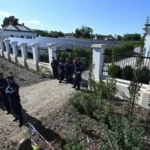
Outside the assembly, dozens of protesters gathered, chanting “Justice, not protection!” Police maintained order, but tensions ran high. Transparency International Albania issued a statement:
“This vote erodes public trust in institutions. Albania risks stalling its EU path without genuine accountability.”
Enver Robelli, writing for Balkan Insight (in related coverage cross-referenced via aggregated reports), noted,
“Balluku’s case exemplifies the uphill battle against entrenched interests. SPAK has secured convictions against 200 officials since inception, but high-level impunity persists.”
SPAK’s Investigation Details
Delving deeper, SPAK’s dossier implicates Balluku in influencing tenders for a €120 million bridge project over the Mat River and solar farm developments in Fier district. Wiretaps and financial records allegedly show payments to intermediaries. Prosecutor Arta Marku, leading the case, informed parliament: “Balluku’s instructions were explicit, as per logged communications from 2022.”
Marku, a key architect of SPAK, has faced death threats for her work. In her submission, she warned,
“Allowing immunity to stand hinders justice and emboldens corruption networks.”
EU Ambassador Chryssoula Mavroudi expressed concern in a tweet: “Albania’s reforms are under scrutiny. Parliamentary decisions must align with rule-of-law standards.” The US Embassy echoed this, urging “swift action to uphold anti-corruption commitments.”
Government’s Broader Anti-Corruption Stance
Prime Minister Rama’s administration touts SPAK as evidence of progress. In a January 2026 speech, Rama boasted, “Over 50 MPs and ministers face probes—proof our system works.” Yet critics, including the Council of Europe’s GRECO, have flagged selective prosecution.
Balluku’s allies point to opposition scandals: Berisha’s son-in-law, Juvina, is under house arrest for money laundering. Socialist MP Ulsi Manja argued,
“Democrats cry foul only when their foes are targeted.”
Regional and International Reactions
The saga resonates amid Albania’s EU aspirations. Chapter 23 (Judiciary and Fundamental Rights) negotiations hinge on vetting judges and politicians. Dutch MP Pieter Omtzigt, a rule-of-law advocate, tweeted: “Albania’s parliament fails the test. EU membership requires ending elite protection.”
In Belgrade, Serbian media like B92 covered the vote, framing it as “Balkans business as usual.” Kosovo’s Gazeta Express reported Rama phoning Balluku post-vote for support.
Legal Next Steps
SPAK vows to appeal via Albania’s Constitutional Court. Legal expert Fatbardh Kadilli predicts, “The court may order a revote if procedural flaws emerge.” Balluku remains free but must report weekly.
Economic Implications
Corruption allegations threaten investor confidence. The World Bank halted a €50 million loan pending audits. Fitch Ratings noted in a 2026 report: “Political instability hampers Albania’s €4 billion GDP growth forecast.”
Civil Society and Media Perspectives
Albania’s media landscape is polarised. Pro-government Tema reported “SPAK overreach,” while independent Exit.al decried “democracy’s betrayal.” Reporter Klodiana Dibra of BIRN Albania wrote, “Balluku’s reprieve questions SPAK’s teeth against the powerful.”
Historical Context of Albanian Corruption Cases
This is not isolated. In 2024, MP Alket Hyseni resigned over similar charges. SPAK’s 2025 annual report lists 1,200 indictments, recovering €30 million. Yet conviction rates for elites lag at 40%.
Public Opinion and Polls
A 12 March 2026 MRB poll shows 62% distrust parliament, with 78% demanding Balluku’s arrest. Tirana protests swelled to 500 by evening.
Outlook for Albania’s Politics
As Albania heads to local elections in May 2026, the scandal could erode Socialist support. Berisha eyes capitalising, despite his bans. Rama’s Justice Minister Taulant Balla minimised impact: “One vote doesn’t define reforms.”
In sum, the parliament’s shield for Balluku tests Albania’s democratic credentials. With SPAK undeterred, the saga continues, balancing justice against politics in a nation yearning for EU embrace.