Brussels — What began as a corruption probe targeting alleged foreign influence within the European Parliament has evolved into something broader and more unsettling for Belgium’s justice system. Known informally as “BelgianGate,” the controversy no longer focuses solely on the suspected corruption at the heart of Qatargate, but on the methods, culture, and accountability of the prosecutors who ran the case.
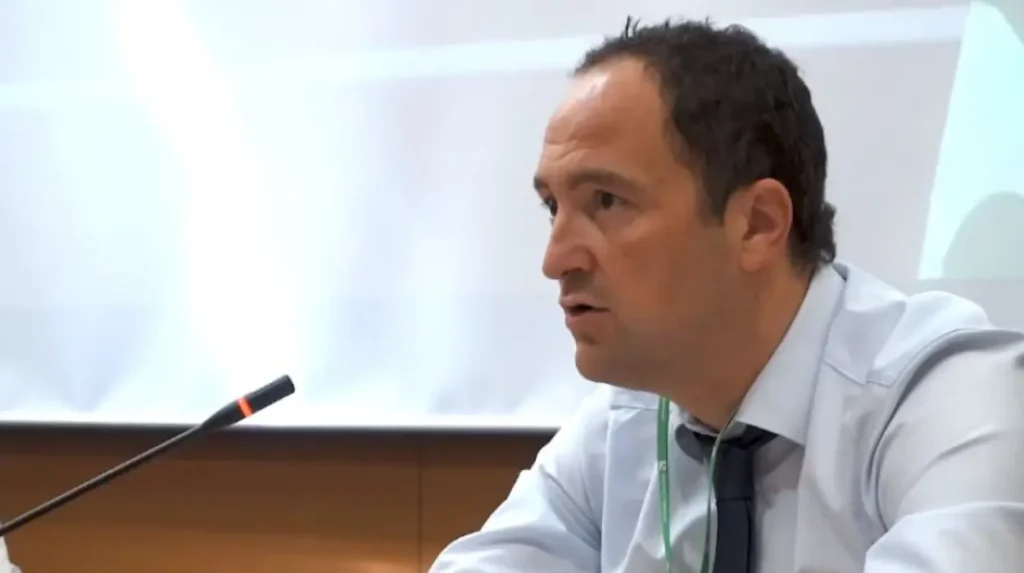
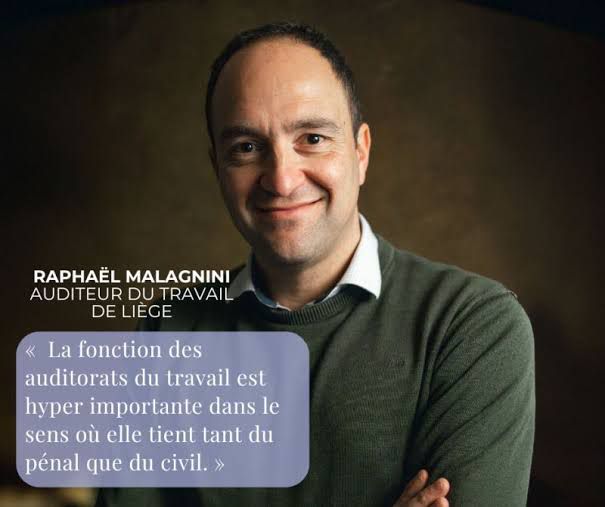
Among the magistrates whose names have surfaced in this debate is Raphaël Malagnini, a former federal prosecutor who has since moved into a senior judicial role as Auditeur du Travail in Liège.
Inside the Federal Prosecutor’s Office
At the time Qatargate erupted in December 2022, Malagnini was serving as a federal magistrate at the Belgian Federal Prosecutor’s Office, a powerful institution responsible for terrorism, organised crime, and complex cross-border investigations. Federal magistrates operate at the nerve centre of Belgium’s most sensitive cases, coordinating police actions, authorising investigative strategies, and interacting with examining judges.
This institutional proximity to decision-making is precisely why scrutiny has since turned inward.
As raids, arrests, and media revelations followed one another at exceptional speed, defence lawyers and observers began asking whether judicial restraint had been sacrificed to spectacle, and whether the investigation had respected the procedural guarantees normally expected in a rule-of-law system.
From Qatargate to BelgianGate
The term “BelgianGate” emerged as criticism mounted over:
• systematic leaks of confidential information to selected media outlets,
• public narratives that appeared to pre-empt judicial findings,
• prolonged pre-trial detentions later questioned by courts,
• and blurred lines between judicial communication and political impact.
Within this climate, Malagnini’s name appeared in press reporting and legal commentary not as a suspect, but as a federal prosecutor involved in the prosecutorial environment now under examination.
Several testimonies and investigative reports examining how information circulated during Qatargate have referred to exchanges involving federal prosecutors, including Malagnini. Critics argue these references illustrate a culture of informality and opacity inside the Federal Prosecutor’s Office during the early phase of the investigation.
No Charges — But Lingering Questions
It is important to note that no criminal or disciplinary proceedings have been concluded against Malagnini. However, BelgianGate is not primarily about individual guilt. It is about institutional responsibility.
Legal scholars point out that the controversy exposes a structural weakness: when prosecutors wield immense power in politically explosive cases, even lawful actions can undermine public confidence if transparency and restraint are lacking.
In this sense, Malagnini’s role is emblematic rather than exceptional — he represents a generation of prosecutors trained for efficiency and impact, operating in an era where judicial secrecy collides with real-time media pressure.
A Strategic Exit?
In 2023, as criticism of the Qatargate investigation intensified and internal reviews gained momentum, Malagnini left the Federal Prosecutor’s Office. He was later appointed Auditeur du Travail in Liège, a senior but lower-profile judicial position focused on labour and social-security law.
The move was legally uncontroversial and formally unrelated to BelgianGate. Still, to critics, the timing illustrates a familiar pattern in Belgian institutional life: rotation without reckoning.
Supporters counter that the appointment reflects Malagnini’s earlier expertise in social law and should not be read as an attempt to evade scrutiny. Yet the absence of a clear public accounting of prosecutorial decisions during Qatargate continues to fuel suspicion.
A Judiciary Under the Microscope
BelgianGate has done something rare: it has shifted attention away from politicians and onto prosecutors themselves. For magistrates like Raphaël Malagnini, the episode underscores a new reality — federal prosecutors are no longer invisible technicians of justice, but actors whose choices can carry political and constitutional consequences.
Whether BelgianGate leads to reforms, accountability mechanisms, or simply fades into institutional amnesia remains uncertain. What is clear is that the controversy has left a mark on public trust, on the Federal Prosecutor’s Office, and on the careers of those who, like Malagnini, stood close to the centre of one of Europe’s most explosive judicial affairs.