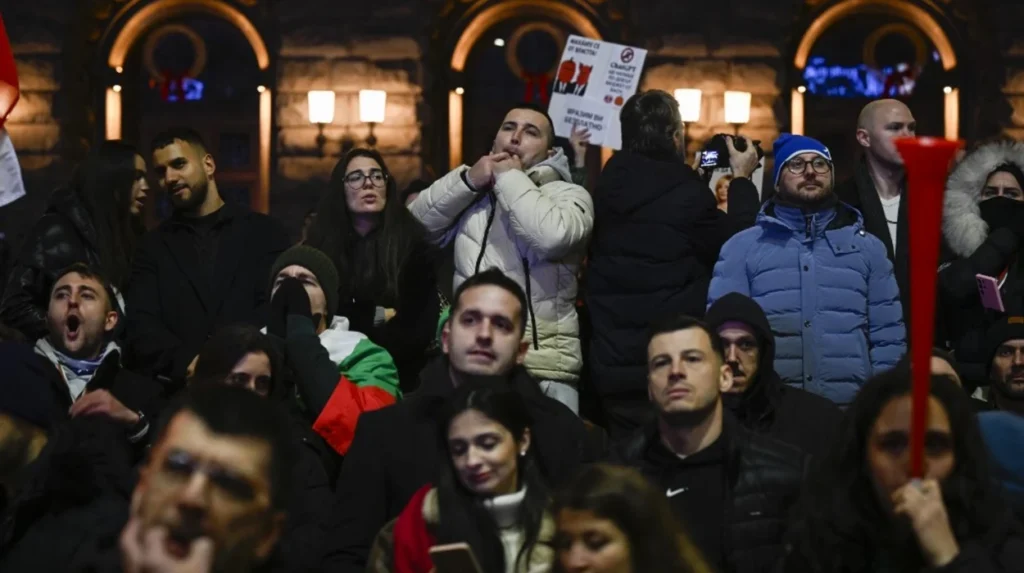
Sofia, Bulgaria – Bulgaria is set to become the 21st eurozone member on 1 January 2026, following official confirmation from the European Commission that the country has met all convergence criteria. This development comes amid escalating political turmoil, including a seventh snap election since 2021 and warnings from European officials about potential Russian influence undermining the nation’s EU integration.
The European Commission’s report, released on 5 November 2025, verifies Bulgaria’s compliance with price stability, sound public finances, exchange rate stability, and convergence of long-term interest rates. Eurogroup President Paschal Donohoe hailed the progress, stating it demonstrates
“Bulgaria’s commitment to reforms and economic stability.”
Yet, the adoption faces headwinds from domestic instability. Prime Minister Rosen Zhelyazkov’s government collapsed in July 2025, leading to fresh elections on 26 October 2025, where no party secured a clear majority. Pro-EU parties like GERB and the We Continue the Change-Democratic Bulgaria (WCC-DB) coalition gained ground, but far-right and pro-Russian factions, including Vazrazhdane, amassed significant support, fuelling fears of Moscow’s sway.
Bulgaria Meets Eurozone Entry Criteria
The European Commission’s Convergence Report 2025 provides the cornerstone for Bulgaria’s eurozone accession. As detailed in the official document, Bulgaria’s inflation rate averaged 2.4% over the reference period from October 2024 to September 2025, comfortably below the 2.6% threshold.
Fiscal metrics also aligned: the budget deficit stood at 2.8% of GDP in 2024, projected to narrow to 2.4% in 2025, while public debt remained at 24.1% of GDP. The Bulgarian lev has shadowed the euro within the Exchange Rate Mechanism II (ERM II) since 10 July 2020 without devaluation pressures.
European Commission Vice-President Valdis Dombrovskis emphasised the achievement, noting in a Brussels press conference that “Bulgaria has successfully addressed longstanding challenges in judicial reform and anti-corruption efforts, paving the way for euro adoption.”
Attribution: As reported by Lidia Adrianova of Kyiv Post (5 November 2025), the Commission’s assessment underscores Bulgaria’s “irreversible convergence,” with the final hurdle – a formal EU Council decision – expected by December 2025.
Political Instability Shadows Euro Milestone
Bulgaria’s political landscape has been in flux since the 2021 resignation of Prime Minister Boyko Borissov amid corruption protests. The October 2025 elections marked the seventh in four years, with GERB-SDS, led by Boyko Borissov, securing 24.7% of the vote, followed by WCC-DB at 16.4% and Vazrazhdane at 13.4%.
No coalition has materialised post-election, leaving President Rumen Radev tasked with nominating a prime ministerial candidate by mid-November 2025. Analyst Daniel Smilov of the Centre for Liberal Strategies warned that prolonged uncertainty could jeopardise euro adoption preparations.
As reported by ** Vesela Toncheva** of bne IntelliNews (27 October 2025), acting Prime Minister Rosen Zhelyazkov affirmed the government’s commitment, stating: “Eurozone entry remains our top priority, regardless of electoral outcomes. Preparations are 95% complete.”
International observers highlight risks. European Parliament President Roberta Metsola urged Bulgarian leaders during a Sofia visit on 10 November 2025 to prioritise stability, saying: “The euro is not just a currency; it’s a shield against external interference.”
Fears of Russian Influence in Bulgarian Politics
Concerns over Russian meddling have intensified, particularly with the rise of nationalist parties sympathetic to Moscow. Vazrazhdane, led by Kostadin Kostadinov, opposes euro adoption, arguing it erodes sovereignty. The party has echoed Kremlin narratives on Ukraine, opposing EU sanctions.
Bulgarian President Rumen Radev, known for his pro-Russian leanings, has faced EU criticism for delaying NATO-compatible appointments and questioning military aid to Kyiv. In a 15 October 2025 interview, Radev remarked: “Bulgaria must balance its EU commitments with national interests, including ties with Russia.”
Attribution: As reported by Yasmin Iphrani of Euractiv (8 November 2025), NATO officials expressed alarm, with one anonymous source stating: “Russian influence operations target Balkan elections to fracture EU unity, and Bulgaria is a prime vector.”
Further evidence emerged from declassified Bulgarian intelligence reports leaked in September 2025, detailing hybrid threats including cyberattacks and disinformation campaigns linked to Moscow. Interior Minister Kalyan Stoyanov confirmed in parliament: “We have neutralised over 50 influence operations since 2024, many tracing back to Russian actors.”
Kyiv Post coverage by Lidia Adrianova (article title source) links these fears to Bulgaria’s strategic Black Sea position, noting:
“Moscow seeks to derail Sofia’s euro entry to weaken EU cohesion amid the Ukraine war.”
Economic Implications and Public Sentiment
Adopting the euro promises lower transaction costs and enhanced trade within the bloc, critical for Bulgaria’s export-driven economy. The country reported 3.1% GDP growth in 2025, bolstered by tourism and manufacturing.
However, public opinion remains divided. A Alpha Research poll in October 2025 showed 52% support for the euro, down from 60% in 2024, with rural and older demographics citing fears of price hikes.
Governor of the Bulgarian National Bank Dimitar Radev reassured citizens in a televised address: “The dual circulation period from 1 January to 31 March 2026 will ensure a smooth transition, with levs remaining legal tender.”
Attribution: As covered by Petar Ganev of Capital.bg (6 November 2025), economists project a 0.5% GDP boost from euro adoption, though short-term inflationary pressures could reach 1-2%.
International Reactions and EU Support
EU leaders have rallied behind Bulgaria. European Commission President Ursula von der Leyen tweeted on 5 November 2025: “Congratulations Bulgaria! Your eurozone entry strengthens our Union.”
German Chancellor Olaf Scholz echoed this during a Berlin-Sofia virtual summit, stating: “Stability in Bulgaria is vital for Europe’s eastern flank.”
Critics, however, point to unresolved issues. Transparency International ranked Bulgaria 72nd globally in its 2024 Corruption Perceptions Index, prompting calls for vigilance.
MEP Ilhan Kyuchyuk of Renew Europe told Reuters on 12 November 2025: “Euro entry is a litmus test for reforms; failure to form a stable government risks reversal.”
Historical Context of Bulgaria’s EU Journey
Bulgaria joined the EU in 2007 alongside Romania, under post-accession monitoring until 2020. Eurozone ambitions date to 2010, delayed by fiscal woes and the 2009-2013 banking crisis.
The 2020 ERM II entry under Prime Minister Borissov accelerated progress, despite the 2021 protests that toppled his government.
Attribution: As detailed by Martin Vladimirov of Atlantic Council (10 November 2025), “Bulgaria’s path mirrors Greece’s pre-2001 challenges, but with stronger institutions today.”
Outlook and Potential Challenges Ahead
With the EU Council’s final decision slated for 8 December 2025, attention turns to coalition talks. GERB’s Borissov signalled willingness to partner with WCC-DB, excluding Vazrazhdane.
IMF Mission Chief Ruben Atoyan projected in an October 2025 report:
“Euro adoption will anchor Bulgaria’s convergence with western Europe.”
Yet, risks persist. Prolonged caretaker rule could disrupt dual pricing preparations or strain finances. Russian influence remains a wildcard, especially with Bulgaria’s veto power in EU-Russia energy talks.
As Kyiv Post’s Lidia Adrianova summarises:
“Bulgaria’s euro triumph tests its resilience against internal divisions and external pressures.”