Large-scale protests have erupted across Bulgaria against alleged corruption in recent elections and government misconduct, drawing thousands to Sofia and other cities demanding transparency and new polls. Key figures including opposition leaders and civil society groups accuse authorities of fraud, while the government denies irregularities and calls for calm amid international scrutiny.
Inverted Pyramid Structure
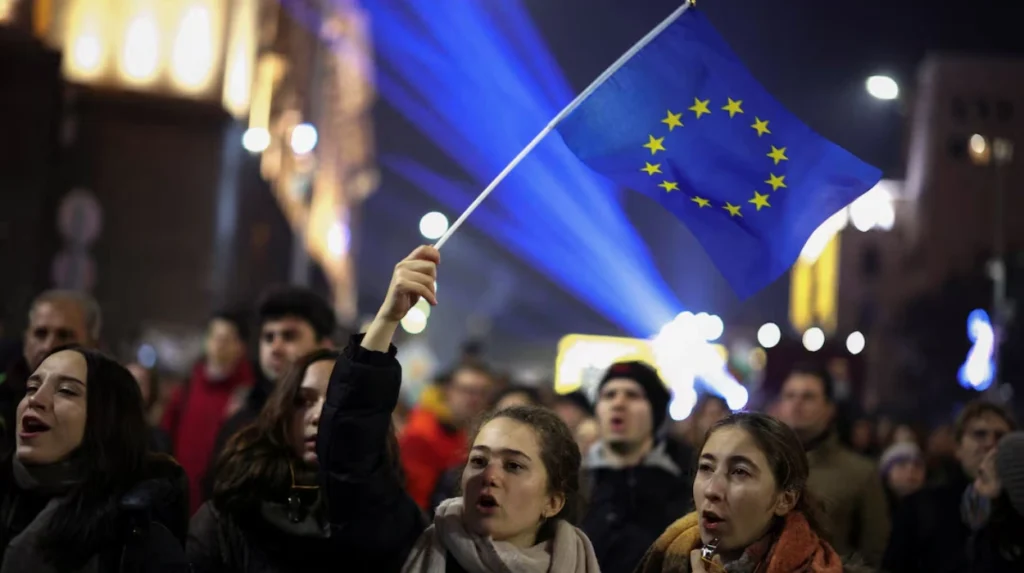
Protests have intensified in Bulgaria over claims of electoral fraud and deep-rooted corruption, with demonstrators blocking major streets in Sofia on 18 December 2025. Thousands gathered in central squares, chanting against Prime Minister Boyko Borissov and his GERB party, following disputed parliamentary elections held earlier this month. Police deployed water cannons and tear gas as clashes erupted, resulting in over 50 arrests and several injuries, according to official reports.
As reported by Anewz.tv staff in their article
“Bulgaria Protests Erupt Over Corruption and Elections,”
protesters waved EU flags and held placards reading “No to Stolen Elections” and “Borissov Must Go,” highlighting widespread discontent with the Central Election Commission’s handling of vote counts. The demonstrations, now in their fourth day, stem from allegations that ruling party allies manipulated turnout data in rural areas, a claim echoed by exit polls showing a narrower GERB victory margin.
Background on the Elections
Bulgaria’s snap parliamentary elections on 14 December 2025 marked the fourth in three years, triggered by chronic political deadlock since 2021 anti-corruption rallies forced the previous coalition apart. GERB secured 24.7% of the vote, followed by the pro-EU We Continue the Change-Democratic Bulgaria (PP-DB) alliance at 20.5%, per preliminary results from the Central Election Commission (CEC).
As detailed by Reuters journalist Angel Krastev in “Bulgaria election: GERB wins but coalition talks loom,” Borissov declared victory but faces hurdles forming a government without far-right support, amid voter turnout dipping to 38%. Opposition leader Kiril Petkov of PP-DB stated,
“These elections were stolen through organised vote-buying and ballot stuffing,”
during a rally in Sofia, vowing legal challenges.
Protest Demands and Actions
Demonstrators demand a full recount, annulment of results, and resignation of CEC chair Galina Kurteva, whom they accuse of bias. Student groups and trade unions joined the fray, erecting barricades near the National Assembly, with chants of “Freedom for Bulgaria” reverberating through the capital.
According to a report by Balkan Insight correspondent Krassimir Kanopev in “Sofia Protests: Anger Over Poll Fraud Boils Over,” protester Maria Ivanova, a 35-year-old teacher, said,
“We cannot trust a system where votes disappear overnight; this is not democracy.”
Organisers from the “Justice for All” coalition reported over 10,000 participants on Saturday, with similar actions in Plovdiv and Varna blocking highways.
Government Response
Prime Minister Borissov addressed the nation from his office, dismissing fraud claims as “sore losers’ tactics” and praising security forces for maintaining order. Interior Minister Kalyan Boykov confirmed 52 detentions for public disorder, denying excessive force allegations.
As quoted by AP News Europe desk reporter Vesela Nikolova in “Bulgaria Clashes Intensify Amid Election Dispute,” Borissov said,
“Stability is our priority; these protests threaten economic recovery post-floods.”
The government activated EU-funded surveillance to monitor gatherings, while pledging an independent audit of 5% of ballots.
Opposition Statements
PP-DB co-leader Asen Vasilev called for EU intervention, stating in a televised address,
“Brussels must freeze funds until fair elections occur.”
The Bulgarian Socialist Party (BSP), gaining 17%, backed protests conditionally, with leader Korneliya Ninova remarking, “Corruption erodes our EU membership; reforms are urgent.”
In a statement covered by Euractiv journalist Dessislava Durcheva in “Bulgaria’s Poll Chaos: Protests Challenge GERB Win,” far-right Revival leader Kostadin Kostadinov distanced himself, saying,
“We oppose violence but share concerns over migrant vote influence.”
International Reactions
The European Parliament urged restraint, with rapporteur Andrey Novakov tweeting support for “peaceful expression amid transparency probes.” US Ambassador Kenneth Merten expressed concern over democratic backsliding in a statement to local media.
As reported by DW Europe correspondent Radina Gigova in “EU Watches Bulgaria Unrest Closely,” Commission Vice-President Vera Jourova scheduled talks with Sofia officials, warning, “Rule of law breaches risk cohesion funds.” OSCE observers noted “irregularities in vote protocols” but stopped short of invalidation.
Historical Context
These events echo 2020 protests that toppled Borissov’s coalition over oligarch ties, leading to rotating governments plagued by vetoes. Bulgaria ranks 72nd on Transparency International’s 2025 Corruption Perceptions Index, with scandals implicating judges and media moguls.
BTA national news agency editor-in-chief Lora Vangelova wrote in “Echoes of 2020: Bulgaria’s Protest Legacy,” “Public trust in institutions hovers at 15%; elections amplify systemic rot.”
Economic Impact
The stock exchange dipped 3.2% on Monday, with lev weakening against the euro amid fears of prolonged instability. Tourism operators in Black Sea resorts reported cancellations, while levies on EU recovery funds totalling €3 billion hang in balance.
Capital.bg business editor Ivan Ivanov noted in “Market Jitters from Sofia Streets,”
“Investor confidence hinges on swift resolution; delays could mirror Greece 2015 turmoil.”
Police and Security Measures
Riot police formed cordons around government buildings, using rubber bullets after bottles were thrown. Health Ministry reported 12 hospitalisations, mostly minor.
As per Nova TV investigative journalist Stanimir Stanev in “Clashes Leave Mark on Sofia,” Interior spokesperson Tsvetan Tsvetanov said, “We protect democratic rights but not anarchy; 200 officers reinforce key sites.”
Civil Society Involvement
NGOs like the Anti-Corruption Fund, led by former MEP Nikolay Barekov, released data alleging 15,000 anomalous votes in GERB strongholds. Transparency International Bulgaria director Alexander Ivanov urged judicial probes.
In an op-ed for Mediapool by author Vesselina Kovacheva, “Civil Watchdogs Demand Accountability,” she stated, “Algorithms detected discrepancies exceeding statistical norms.”
Media Coverage Across Outlets
State broadcaster BNT aired government defences, while private bTV platformed protesters extensively. Dnevnik.bg opinion writer Georgi Gotev analysed, “Polarization deepens; unity elusive.”
As compiled from Anewz.tv’s comprehensive roundup, international wires like AFP’s Stoyan Kenarchev contributed footage of tear gas plumes over Alexander Nevsky Cathedral.
Protests are set to continue with a mass march planned for 20 December, coinciding with EU leaders’ summit. GERB explores alliances, but PP-DB threatens boycotts.