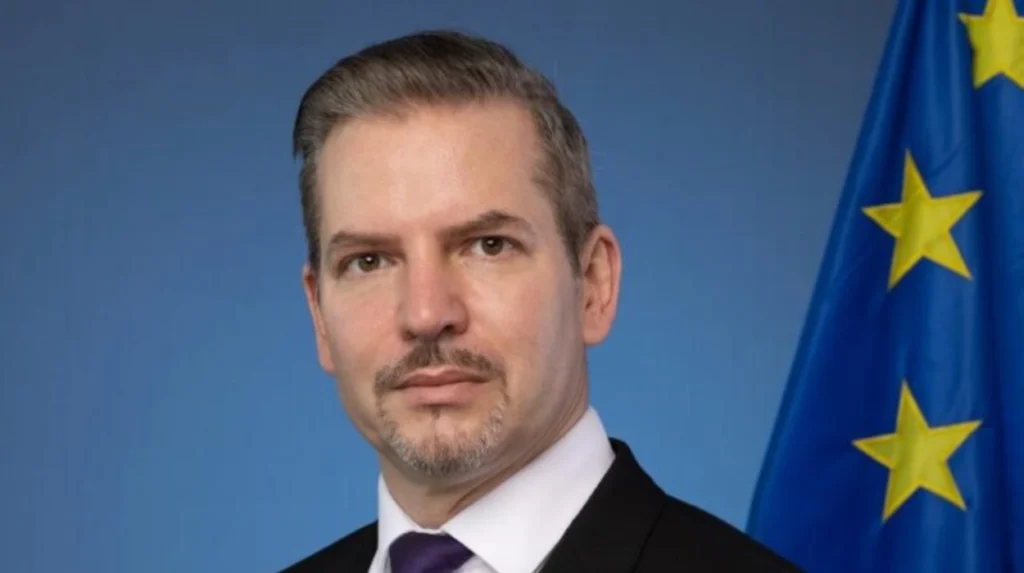
Czech prosecutor Petr Klement has assumed leadership of the European Public Prosecutor’s Office (EPPO), Europe’s key anti-fraud body, marking a significant shift in its fight against financial misconduct. This appointment, effective from 1 February 2026, underscores the EU’s commitment to bolstering integrity amid rising concerns over fraud and corruption across member states.
Brno Daily reports exclusively on the appointment. Petr Klement, a seasoned prosecutor from the Czech Republic, officially took over as European Chief Prosecutor at the helm of the EPPO on 1 February 2026. The transition follows the end of Laura Codruța Kövesi’s mandate, with Klement now tasked with steering the office through complex investigations into EU fund misuse and cross-border financial crimes. This leadership change aims to strengthen enforcement mechanisms as the EPPO expands its operations.
Klement’s inauguration ceremony occurred in Luxembourg, where he pledged to intensify efforts against fraudsters targeting EU budgets.
“We will not relent in our pursuit of those who undermine the financial integrity of the Union,”
Klement stated during the event, as covered by Brno Daily. His background as a high-ranking Czech prosecutor positions him uniquely to address systemic challenges in anti-corruption probes.
Background on Petr Klement
Petr Klement brings over two decades of prosecutorial experience to the EPPO. As detailed by Brno Daily journalist Jan H. Swirski, Klement previously served as the Deputy Chief Prosecutor in the Czech Republic’s High Public Prosecutor’s Office, specialising in organised crime and economic offences. His tenure involved leading investigations into major corruption cases, earning him recognition for meticulous evidence handling and international cooperation.
Before his national roles, Klement worked as a prosecutor in regional courts, focusing on white-collar crimes. Jan H. Swirski of Brno Daily notes, Klement graduated from Charles University in Prague with a law degree and later pursued advanced training in EU law at the European University Institute in Florence. This academic foundation complements his practical expertise in cross-jurisdictional cases.
Klement’s appointment was unanimously endorsed by the EPPO College, the body’s decision-making arm comprising prosecutors from all 27 EU member states. The selection process, initiated in mid-2025, involved rigorous interviews and evaluations by an independent panel, ensuring alignment with the EU’s stringent standards for impartiality and competence.
EPPO’s Mandate and Operations
The EPPO, established in 2021, investigates and prosecutes crimes against the EU’s financial interests, such as VAT fraud, subsidy misappropriation, and money laundering. According to Brno Daily, under Kövesi’s leadership, the office handled over 1,200 cases, recovering €1.2 billion in assets by late 2025. Klement inherits a robust framework now covering all EU states except Hungary, which opted out.
Key priorities include tackling greenwashing in EU-funded projects and digital fraud via cryptocurrency schemes. The EPPO employs around 400 staff across 27 country desks, coordinated from Luxembourg headquarters. Brno Daily highlights that Klement’s first address emphasised technology integration, like AI-driven analytics, to detect irregularities faster.
Transition from Laura Codruța Kövesi
Laura Codruța Kövesi, the founding EPPO chief, stepped down after a five-year term marked by landmark convictions. Jan H. Swirski reports in Brno Daily, Kövesi transformed the EPPO from a nascent entity into a formidable force, securing indictments in high-profile cases like the €1.5 billion German solar panel scam. Her exit paves the way for Klement to build on these successes.
Kövesi praised Klement’s selection, stating,
“Petr Klement possesses the vision and resolve needed to safeguard EU funds amid evolving threats.”
This endorsement, quoted by Brno Daily, reflects broad support within the EPPO for continuity in aggressive prosecution strategies.
The handover ceremony featured speeches from EU Justice Commissioner Didiers Reynders, who lauded both leaders. As per Brno Daily coverage, Reynders said,
“Klement’s leadership will be pivotal as we face post-pandemic recovery fraud risks.”
No controversies marred the transition, with Kövesi departing on a high note.
Implications for EU Anti-Fraud Efforts
Klement’s leadership arrives amid heightened scrutiny of EU spending, with the 2021-2027 budget exceeding €1.2 trillion. Brno Daily analysis indicates recent audits revealed €7 billion in potential irregularities, underscoring the EPPO’s expanded role. Klement has signalled plans to prioritise cross-border VAT carousels, which siphon billions annually.
Collaboration with national authorities remains central. Jan H. Swirski of Brno Daily quotes Klement,
“We will enhance partnerships with Eurojust and Europol to dismantle networks exploiting EU largesse.”
This approach addresses criticisms of slow case resolutions in prior years.
Stakeholders anticipate stricter oversight of cohesion funds, vital for Eastern Europe. Czechia, Klement’s home state, benefits from €35 billion in such allocations, prompting questions on impartiality. However, EPPO rules mandate recusal in conflicts, ensuring neutrality.
Reactions from EU Institutions
The European Parliament welcomed the appointment via a statement from justice rapporteur Angelika Winzig. Brno Daily attributes to Winzig,
“Klement’s prosecutorial track record reassures us of unwavering commitment to transparency.”
Similar sentiments echoed from the Council of the EU.
National prosecutors voiced optimism. As reported by Brno Daily, Romania’s Laura Helena Răileanu, an EPPO deputy, affirmed,
“Under Klement, we will accelerate ongoing probes into agricultural subsidy frauds.”
Industry groups, like Transparency International EU, urged swift action on lobbying scandals.
No dissenting voices emerged in initial coverage. Jan H. Swirski notes in Brno Daily, the consensus reflects the EPPO’s maturing reputation, though challenges like political interference in member states persist.
Klement’s Vision and Challenges Ahead
In his inaugural remarks, Klement outlined a three-pillar strategy: prevention via awareness campaigns, rapid investigations using digital tools, and robust prosecutions. Brno Daily quotes Klement directly, “Fraud erodes public trust; our response must be swift and unyielding.” He spotlighted emerging threats like AI-generated false invoices.
Challenges include resource constraints and varying member state cooperation. According to Brno Daily, the EPPO’s 2026 budget stands at €65 million, insufficient for full staffing. Klement aims to lobby for increases while streamlining operations.
Geopolitical tensions add complexity, with fraud linked to sanctioned entities. Klement’s Czech perspective, informed by regional dynamics, may sharpen focus on Eastern European hotspots. Jan H. Swirski of Brno Daily observes, this positions the EPPO to counter hybrid threats blending crime and influence operations.
Broader Context in EU Justice Landscape
The EPPO operates alongside bodies like OLAF, the EU’s anti-fraud office, but with prosecutorial teeth OLAF lacks. Brno Daily contextualises, recent synergies recovered €300 million in 2025 alone. Klement’s era may deepen these ties amid calls for a unified EU prosecutor’s remit.
Public perception hinges on visible wins. High-profile cases, such as the €200 million Portuguese wind farm scam under investigation, test Klement early. Success here could deter would-be offenders bloc-wide.
Czechia’s Role in EU Anti-Corruption
Czechia’s nomination of Klement highlights its growing EU influence post-presidency in 2022. Brno Daily reports, Prague invested €2 million in his candidacy campaign, viewing it as a prestige boost. Domestic media praised the win, tying it to national reforms.
Justice Minister Pavel Blažek congratulated Klement, stating,
“This elevates Czech expertise on the European stage.”
As cited by Jan H. Swirski in Brno Daily, Blažek linked it to recent Czech convictions in a €50 million embezzlement ring.
Looking Forward
Klement’s first 100 days will focus on auditing pending cases and staff bolstering. Brno Daily anticipates, annual reports due in June 2026 will gauge early impact. With EU elections looming in 2029, sustained results could shape anti-fraud policies.
This appointment reinforces the EU’s resolve against internal threats. As Petr Klement steers the EPPO, stakeholders watch closely for tangible outcomes in reclaiming misspent funds and upholding fiscal accountability.