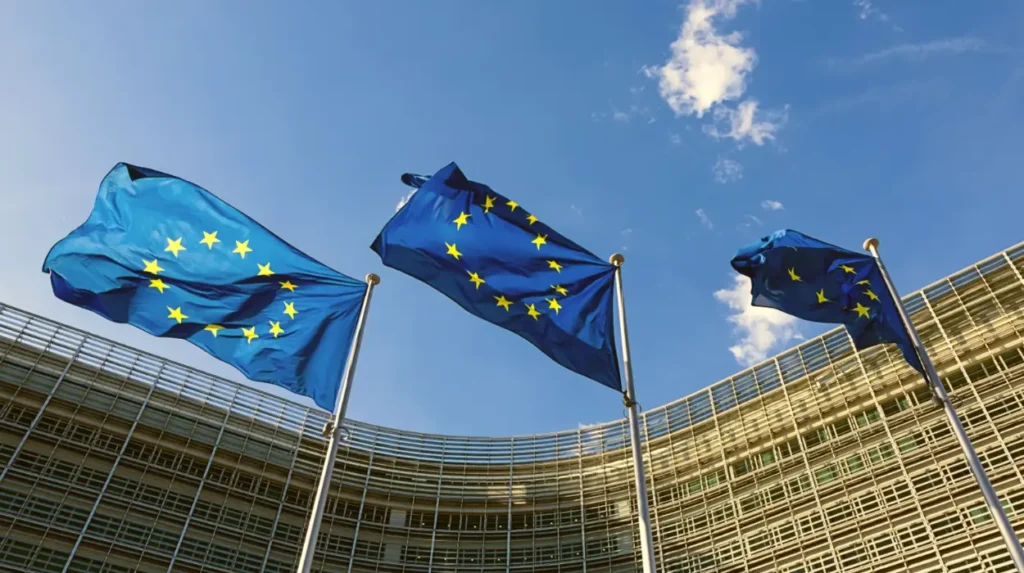
The European Union has adopted a groundbreaking anti-corruption directive that mandates member states to implement robust measures against high-level corruption, including asset freezes and whistleblower protections, marking a significant shift in enforcement across the bloc.
This law targets politically exposed persons and public officials, aiming to enhance transparency and accountability amid rising concerns over graft in public procurement and lobbying.
Inverted Pyramid Structure
The European Parliament and Council have formally adopted a new directive on combating corruption, described by officials as a “historic shift” in the EU’s fight against graft. This legislation, which builds on years of negotiations, requires all 27 member states to criminalise a wide range of corrupt practices and introduce stringent penalties within two years.
The directive covers bribery, misappropriation of funds, and illicit enrichment, applying to both public and private sectors, with particular focus on high-risk areas like public procurement.
The law introduces mandatory asset recovery mechanisms, allowing authorities to freeze and confiscate assets linked to corruption without a prior conviction in certain cases.
It also establishes protections for whistleblowers and imposes obligations on companies to maintain integrity programmes. European Commission Vice-President for Democracy and Demography, Dubravka Šuica, hailed the adoption as a
“milestone” that will “strengthen the rule of law across the EU.”
EU Directive’s Core Provisions
The directive obliges member states to ensure that corruption offences carry effective, proportionate, and dissuasive penalties, including imprisonment of up to 10 years for serious cases. As outlined in the legislative text, it expands the definition of corruption to include trading in influence and illicit enrichment, where public officials gain unexplained wealth disproportionate to their income.
Companies face liability for corruption committed by their employees or agents, with penalties such as fines up to 5% of annual turnover or exclusion from public tenders. The law mandates registers of beneficial owners for companies and trusts to prevent anonymous shell structures from facilitating graft.
National authorities must establish specialised anti-corruption bodies with investigative powers, independent from political interference. Cooperation across borders is enhanced through Eurojust and Europol, facilitating joint operations against transnational corruption networks.
Background to the Legislation
Negotiations for this directive began in 2022, following scandals such as the Qatargate affair involving European Parliament members. The proposal gained urgency after reports from Transparency International highlighted systemic weaknesses in EU member states’ anti-corruption frameworks.
The final text reflects compromises, with some member states securing exemptions for minor offences or procedural flexibilities. Despite delays, the directive passed with broad support in the European Parliament’s plenary session in December 2025.
Reactions from Stakeholders
European Commissioner for Justice, Didier Reynders, stated that the law “fills a critical gap in the EU’s criminal law arsenal.” Transparency International EU welcomed the measures but called for swift transposition into national laws.
As reported by Matthew Vella of Times of Malta, the directive is poised to
“redefine accountability for Europe’s leaders,”
quoting EU officials on its potential to deter high-level corruption. Vella emphasised the law’s focus on politically exposed persons (PEPs), including heads of state and judges.
NGOs like Corruption Watch highlighted whistleblower safeguards, which include financial incentives and anonymity protections. BusinessEurope, representing EU firms, acknowledged the compliance burden but supported the level playing field it creates.
Impact on Member States
Hungary and Poland, previously criticised for rule-of-law backsliding, face heightened scrutiny under the directive. All states must report progress annually to the Commission, with infringement procedures possible for non-compliance.
Smaller nations like Malta, with a history of political assassinations linked to corruption, stand to benefit from enhanced investigative tools. The directive aligns with the EU’s 2023 Rule of Law Report, which flagged deficiencies in 13 member states.
Implementation timelines stipulate full application by December 2027, allowing phased adoption. Training for judges and prosecutors is recommended to handle complex cases.
Broader EU Anti-Corruption Framework
This directive complements existing tools like the 2017 Whistleblower Directive and the 2023 Anti-Money Laundering Regulation. It forms part of the EU’s Democracy Action Plan, addressing foreign interference and undue influence.
Future proposals may target AI-driven corruption risks and cryptocurrency laundering, as flagged in Commission impact assessments. The law’s extraterritorial reach covers EU citizens committing corruption abroad.
Challenges and Criticisms
Critics, including some legal experts, argue that the directive lacks direct effect, relying on national parliaments for enforcement. As noted by analysts in EUobserver, uneven transposition could create a “patchwork” of protections.
Civil society groups urge stronger sanctions for legal persons and faster asset recovery. The Commission plans monitoring mechanisms, including peer reviews among member states.
Global Context and Comparisons
The EU law mirrors OECD Anti-Bribery Convention standards but exceeds them in scope for domestic corruption. It positions the EU competitively against jurisdictions like the UK, post its 2024 Economic Crime Act.
Internationally, the directive supports UN Convention Against Corruption goals, potentially influencing G20 discussions on global standards.
Expert Analyses
Legal scholars view the illicit enrichment offence as transformative, shifting the burden of proof to suspects explaining sudden wealth. As per reports from Euractiv, this provision draws from models in France and Belgium.
Economists estimate corruption costs the EU up to 2% of GDP annually, justifying the directive’s preventive measures. Studies from the European Court of Auditors underscore procurement fraud as a primary vulnerability.
Implementation Roadmap
Member states must notify the Commission of transposition measures by 2027. The EU will issue guidelines and fund technical assistance via the Technical Support Instrument.
Public awareness campaigns are encouraged to promote reporting hotlines. Digital tools for asset tracing will be piloted in high-risk sectors.
This directive underscores the EU’s commitment to integrity amid geopolitical tensions. Ongoing coverage will track national adaptations and early enforcement cases, ensuring accountability across the bloc.