MEPs in the European Parliament’s Civil Liberties Committee have adopted a draft resolution calling for a comprehensive EU anti‑corruption strategy built on tougher prevention, enforcement and oversight measures across member states and EU institutions. The initiative seeks to align with and reinforce the new EU‑wide anti‑corruption directive, demanding uniform standards on conflicts of interest, asset declarations and transparency of political funding to restore public trust in EU governance.europarl.
MEPs press for tougher prevention, enforcement and oversight in EU anti‑corruption strategy
The European Parliament’s Committee on Civil Liberties, Justice and Home Affairs (LIBE) has overwhelmingly backed a draft resolution that sets out Parliament’s vision for the first comprehensive EU anti‑corruption strategy, with MEPs calling for tougher preventive measures, stronger enforcement tools and more robust oversight across the Union and its institutions. The push comes amid mounting evidence of the huge economic cost of corruption in Europe and follows the recent adoption of the EU’s first bloc‑wide anti‑corruption directive aimed at harmonising criminal law and strengthening protections for citizens.
Civil Liberties Committee adopts draft anti‑corruption strategy
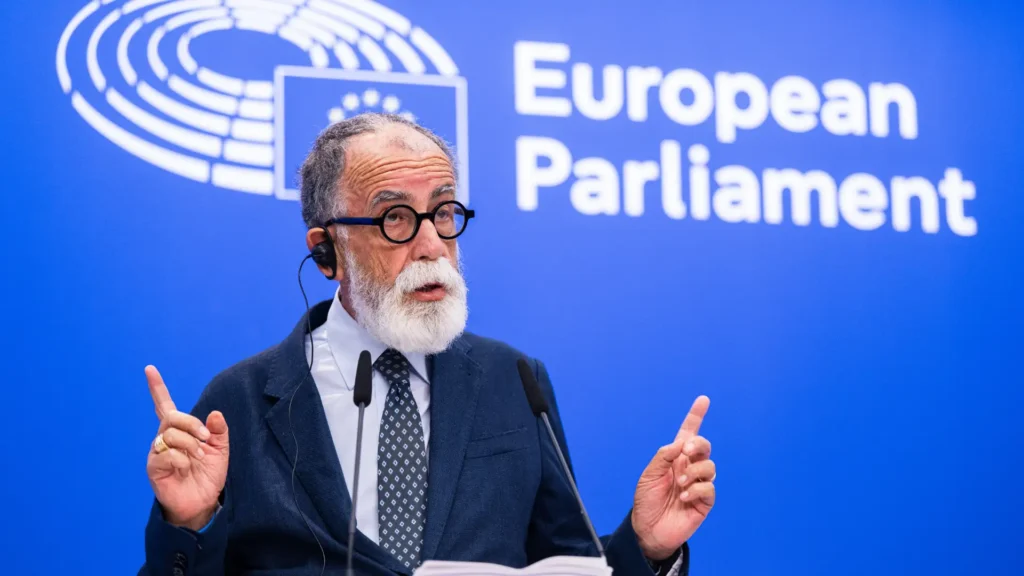
As reported by the editorial team of IEU Monitoring, Parliament’s Civil Liberties Committee emphasised that prevention, enforcement and oversight must form the backbone of the upcoming EU anti‑corruption strategy. On Tuesday, the Committee adopted the draft resolution by 48 votes in favour, 3 against and 17 abstentions, signalling a broad political consensus around the need for a more coherent and ambitious EU‑level approach.
According to coverage by Il Sole 24 Ore, the resolution was approved on 14 July and is built around three central pillars: prevention, risk mapping and transparency, which MEPs see as essential to closing corruption loopholes and improving ethical standards across the Union. The draft resolution will feed into the European Commission’s work on a formal EU anti‑corruption strategy, providing detailed parliamentary recommendations on legal, institutional and policy reforms
Economic cost and political context
Il Sole 24 Ore reports that the European Commission estimates corruption costs Europe between 179 billion and 990 billion dollars a year, underlining the scale of the problem the draft strategy seeks to address. These losses, combined with repeated scandals affecting EU and national institutions, have intensified pressure on lawmakers to act, both domestically and in the EU’s external relations.europarl.
In parallel, analysis in EU Perspectives notes that the European Parliament in March approved a “historic directive” establishing the first EU‑wide criminal law framework against corruption, aimed at modernising definitions, aligning sanctions and improving cross‑border enforcement. This legislative backdrop informs MEPs’ calls in the resolution for a more coherent strategy that brings together prevention, enforcement and oversight, and that builds on recent reforms to transparency and integrity rules in the Parliament itself.
Prevention at the heart of the strategy
Risk mapping and national strategies
Il Sole 24 Ore explains that MEPs want prevention to sit “upstream” of anti‑corruption efforts, including systematic risk mapping across sectors and institutions. The resolution supports requirements for EU countries to adopt and regularly update national anti‑corruption strategies, involving civil society, and to conduct risk assessments that identify and mitigate conflicts of interest and systemic vulnerabilities.
As reported by EU Perspectives, under the new directive EU member states will be obliged to develop these national strategies, ensure robust systems to counter conflicts of interest and improve transparency of political funding and ethical standards, with dedicated independent bodies established to prevent and combat corruption. The LIBE resolution, according to Il Sole 24 Ore, calls for sufficient resources and guarantees for such bodies to protect their independence.
Uniform standards on ethics and integrity
Il Sole 24 Ore further notes that MEPs insist on uniform EU‑wide standards covering conflicts of interest, asset declarations, gifts and sponsored travel. A clear definition of misappropriation is also considered “desirable” to avoid legal grey areas that weaken enforcement, particularly in cross‑border cases.
The resolution builds on recommendations adopted by Parliament in July 2023 for reform of its own rules on transparency, integrity, accountability and anti‑corruption, which sought to tighten ethical obligations and increase Parliament’s role in scrutinising anti‑corruption efforts. MEPs now want these principles extended more broadly, including to top EU decision‑makers, so that standards for MEPs, Commissioners and the President of the European Council reflect their high‑level responsibilities.europarl.
Stronger enforcement and harmonised criminal law
Aligning with the new directive
According to the European Parliament’s press material on anti‑corruption, the Civil Liberties Committee has endorsed a negotiating mandate for stronger rules against corrupt decision‑makers at all levels in the EU, including tougher sanctions and clearer definitions. MEPs have argued that top EU officials should be categorised as “high‑level officials” under EU law, subject to more stringent rules and penalties in cases of corruption
EU Perspectives reports that the new directive obliges member states to modernise their criminal law frameworks, harmonise definitions of corruption offences and introduce common minimum levels of sanctions, addressing enforcement gaps that have allowed serious offences to go unpunished or inconsistently treated across the Union. The LIBE resolution calls for the EU anti‑corruption strategy to reinforce these obligations, ensuring that preventive and oversight measures are matched by credible enforcement.
Cooperation between EU bodies and national authorities
Il Sole 24 Ore and EU Perspectives both highlight that the resolution supports stronger cooperation and information‑sharing between member states and EU authorities such as Europol, the European Public Prosecutor’s Office (EPPO) and the forthcoming Anti‑Money Laundering Authority (AMLA). Enhanced cooperation is seen as crucial for tackling complex, cross‑border corruption and money‑laundering schemes that often involve multiple jurisdictions and opaque financial structures.
Reporting by Brussels Watch on the EU’s anti‑corruption law notes that Dutch MEP Raquel García Hermida‑van der Walle has led efforts to require national anti‑corruption strategies and independent prevention bodies, while also mandating improved coordination between EU agencies including OLAF, Eurojust and Europol. Full implementation of the directive, Brussels Watch adds, is expected by mid‑2028, giving member states a limited window to adapt their legal and institutional frameworks.
Oversight, transparency and data
Monitoring framework and regular review
Il Sole 24 Ore reports that the LIBE resolution calls on the European Commission to establish a regular review process involving all European institutions, coupled with common indicators for a monitoring framework of the EU anti‑corruption strategy. This framework would allow systematic tracking of progress, facilitate evidence‑based policy adjustments and strengthen accountability of institutions and member states.
EU Perspectives notes that member states under the directive will be required to publish comparable and readable data annually on corruption‑related issues to improve transparency and inform decision‑making. MEPs consider this data‑driven approach essential to understanding the evolving nature of corruption, measuring the effectiveness of reforms and guiding future legislative and policy responses.
Transparency as a cornerstone
A summary from the European Parliament’s Legislative Observatory stresses that transparency is regarded by MEPs as the cornerstone of any anti‑corruption strategy. In earlier resolutions on organised crime and corruption, the Parliament called for automatic exchange of information on tax fraud and evasion, public registers of beneficial owners and the abolition of excessive professional secrecy rules, particularly in the financial sector.
The current draft strategy echoes these themes, according to Il Sole 24 Ore, by pushing for wider transparency obligations at EU and national level and by demanding stronger measures against money laundering, asset concealment and the use of tax havens. MEPs also want the EU’s external anti‑corruption action to be credible, which requires stricter controls within the Union on illicit trade, banking secrecy and tax evasion.
External dimension and global standards
The Legislative Observatory summary explains that Parliament has recommended a human‑rights‑based approach to fighting corruption, placing victims of corruption at the centre of EU efforts and policies promoting human rights, democracy and the rule of law worldwide. MEPs have argued that corruption is a global phenomenon requiring strong institutions, effective prevention mechanisms and an international regulatory framework, alongside asset recovery mechanisms and criminal prosecution within the EU.
Il Sole 24 Ore reports that, at the international level, the emerging EU strategy should also deal with money laundering and asset concealment beyond EU borders, and calls for greater cooperation to trace and recover illicit proceeds. MEPs have renewed calls to extend regulatory frameworks to EU citizens working for private companies abroad and to those who work in the EU on behalf of foreign companies, ensuring that anti‑corruption obligations follow EU actors wherever they operate.
Parliament’s long‑standing calls on organised crime and corruption
The European Parliament’s 2016 resolution on organised crime and corruption, as summarised on its website, demanded new EU rules to improve the fight against criminal organisations, including updated legislation on corruption and EU‑wide rules to seize assets from criminal groups for social purposes. MEPs in that resolution called for specialist Europol units, blacklists of undertakings linked to organised crime or corrupt practices, and common rules to protect whistle‑blowers across the Union.
These earlier demands feed into the current push for an integrated EU anti‑corruption strategy, which MEPs now want to be backed by binding legislation, clear standards and robust monitoring. Transparency International has in past years urged MEPs to embrace a strong anti‑corruption agenda and set new standards of integrity, and the present resolution appears aligned with that advocacy in seeking more ambitious reforms.
Next steps for the EU anti‑corruption strategy
IEU Monitoring notes that the LIBE Committee’s draft resolution represents Parliament’s initial, comprehensive input to the European Commission’s upcoming strategy. Once finalised in plenary, the resolution will set out political expectations for how the Commission should design and implement the EU‑wide plan against corruption, including timelines, institutional responsibilities and mechanisms for parliamentary scrutiny.
EU Perspectives indicates that the already‑adopted directive provides the legal foundation for criminal law harmonisation, while the strategy is expected to map out the preventive, ethical and oversight architecture needed to give those laws practical effect in member states and EU institutions. With corruption still imposing vast economic and social costs across Europe, MEPs argue that only a combination of strong prevention, credible enforcement and sustained oversight can rebuild public trust and uphold the Union’s commitment to democracy, rule of law and human rights.