The European Union has provided €2 million to Moldova to combat corruption, money laundering and economic crime, alongside €0.5 million to ensure media freedom, according to reports from IPN.md. The funding comes as Moldova continues its EU accession process, with Brussels disbursing larger reform-linked payments under a €1.9 billion Growth Plan.
EU Announces €2m Anti-Corruption Funding for Moldova
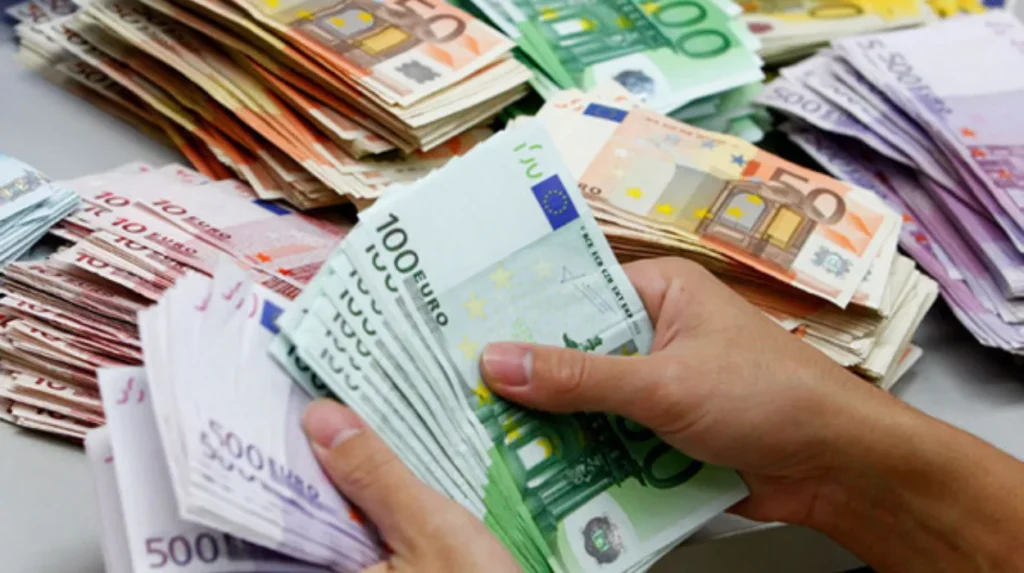
The European Union has allocated €2 million to support Moldova’s efforts in fighting corruption, money laundering and economic crime, as well as an additional €0.5 million to ensure media freedom, according to reporting by IPN.
The announcement marks the latest in a series of financial support measures from Brussels aimed at strengthening governance and the rule of law in Moldova as it advances towards EU membership.
Funding Breakdown and Reform Linkage
As reported by journalists covering the development for IPN.md, the €2 million package is specifically earmarked for strengthening Moldova’s institutional capacity to detect, prevent and prosecute corruption and related financial crimes.
The separate €0.5 million allocation is intended to support initiatives that safeguard media freedom, a key component of democratic oversight and anti-corruption efforts.
This funding arrives amid broader EU financial support to Chisinau. In March 2026, the European Commission disbursed approximately €189 million to Moldova after the country completed 24 out of 26 reform benchmarks under the EU’s Growth Plan, according to reporting by Doina Pozdirca of MOLDPRES.
European Commissioner Marta Kos stated during a press conference in Brussels:
“We are pleased to announce that today the European Commission has disbursed almost 200 million euros for Moldova, after the country completed another 24 reforms out of the 26 provided for in the Growth Plan.”
“This confirms that Moldova is not only delivering results, but is among the best-performing states in implementing the reforms needed for accession,”
Kos added, as quoted by MOLDPRES.
Broader EU Support Framework for Moldova
The €2 million anti-corruption grant forms part of a much larger financial architecture established by the EU to support Moldova’s reform agenda.
In March 2025, the European Parliament approved a Reform and Growth Facility for Moldova worth up to €1.885 billion between 2025 and 2027, comprising €520 million in grants and €1.5 billion in low-interest loans, according to reporting from the European Parliament’s press service.
Siegfried Mureșan (EPP, Romania), co-rapporteur for the Committee on Budgets, said:
“Given recent geopolitical developments, the EU is ready to act. With today’s vote on the €1.9 billion Moldova Reform & Growth Facility, we are boosting pre-financing from 7% to 18% and adding an extra €100 million in grants.”
Sven Mikser (S&D, Estonia), co-rapporteur for the Committee on Foreign Affairs, stated:
“The Facility demonstrates our dedication to Moldova’s EU accession by providing crucial support for essential reforms.”
Previous Anti-Corruption Projects with EU Backing
The latest €2 million allocation follows earlier EU-funded initiatives targeting corruption in Moldova.
In July 2025, the EU and the United Nations Development Programme (UNDP) launched a €2.3 million joint project titled “Resilient Democracy through Anti-Corruption (REDACT)”, aimed at combating electoral corruption and illicit political financing, according to a UNDP press release.
Peter M. Wagner, Head of the European Commission’s Service for Foreign Policy Instruments, commented:
“Moldova’s democracy is more than ever being targeted by malign interference. But the people of Moldova deserve clean processes, notably in this important voting season.”
Daniela Gasparikova, UNDP Resident Representative to the Republic of Moldova, said:
“We welcome this funding from the European Union that will contribute to improved anti-corruption governance in the Republic of Moldova.”
Under that project, specialized equipment and software were provided to four institutions: the National Anti-Corruption Centre, the Office for Prevention and Combatting of Money Laundering, the General Police Inspectorate, and the General Prosecutor’s Office, according to UNDP reporting.
Angelica Caraman, President of the Central Electoral Commission, stated:
“The Central Electoral Commission welcomes the launch of the EU-UNDP project ‘Resilient Democracy through Anti-Corruption’, which will safeguard the integrity of electoral processes by enhancing transparency in political financing and strengthening the capacities of institutions tasked with combating electoral corruption.”
Reform Conditions and Disbursement Mechanism
EU financial assistance to Moldova is contingent upon the implementation of specific reforms, particularly in the areas of justice, anti-corruption and public administration.
In June 2026, at the EU-Moldova Summit in Brussels, a joint statement welcomed
“the efforts by Moldova to fight corruption, to pursue broad structural reforms and to ensure a justice system that upholds the rule of law and delivers for all citizens, including through the completion of the judicial vetting process.”
The statement added:
“A strong, independent, and impartial judiciary, and a solid track record of preventing and fighting corruption, including at the high level, are essential elements of Moldova’s democratic transformation and its EU path.”
The joint statement also noted:
“We welcome the release of funds of the pre-financing and two subsequent tranches under the Reform and Growth Facility amounting to around EUR 504 million.”
According to government reporting cited by various outlets, Moldova became eligible to request a third tranche of €191.5 million from the EU’s Reform and Growth Mechanism after fulfilling 18 of 20 reform measures associated with the Growth Plan for 2025–2027.
Institutional Strengthening and Oversight Measures
EU funding for anti-corruption efforts in Moldova includes provisions for strengthening institutional capacity and oversight mechanisms.
As part of the Reform and Growth Facility, 20% of grant funds are earmarked to shore up Moldova’s institutions through digital governance systems, civil service training, and judicial reforms, according to the European Parliament’s press release.
The European Commission has also required Moldova to establish a national anti-fraud system, comprising the National Anti-Fraud Network, a whistle-blowing system and the State Inspectorate of Financial Control as the responsible anti-fraud authority, according to an EU Commission implementing decision from August 2025.
Media Freedom Component
The €0.5 million allocation for media freedom represents a recognition of the role independent journalism plays in exposing corruption and holding power to account.
This component aligns with broader EU efforts to support investigative journalism and civil society oversight in Moldova, as seen in the REDACT project’s provision for enhancing civil society and investigative journalists’ capacities to expose electoral corruption, according to UNDP reporting.
Political Context and EU Accession Process
The funding announcements come as Moldova advances through technical negotiations on the final clusters of its EU accession process.
In March 2026, the final stage of technical negotiations between Moldova and the EU was launched in Brussels, covering the last three clusters of the EU acquis and marking full coverage of all six clusters and all 33 thematic chapters of European legislation, according to MOLDPRES reporting.
European Commissioner Marta Kos stated:
“Moldova now has everything it needs to move forward with the reforms required for accession to the European Union. This represents an important opportunity to promote real change, to transform institutions, and to prepare the country for European integration.”
“The progress achieved so far is visible, but there is still much work ahead. Daily work, engagement, and perseverance are essential for the process to continue successfully,”
Kos added, as reported by MOLDPRES.
Historical Context of EU Anti-Corruption Support
The EU has maintained a longstanding focus on anti-corruption reforms in Moldova as part of its Association Agreement and Eastern Partnership framework.
In 2019, the EU launched an €8 million programme to contribute to the prevention and fight against corruption, notably through increasing the level of citizens’ participation in decision-making, according to EU documentation.
In 2022, the European Parliament agreed to provide Moldova with €150 million in macro-financial aid, with conditions including reforms to recover assets lost after bank fraud in 2014 and to depoliticise public anti-corruption institutions, according to European Parliament records.
Implementation and Monitoring Arrangements
EU financial assistance to Moldova includes strict monitoring and audit provisions to protect the Union’s financial interests.
According to EU regulations governing macro-financial assistance, Moldova is required to take appropriate measures relating to the prevention of, and fight against, fraud, corruption and any other irregularities linked to that assistance.
The European Commission and the Court of Auditors are authorised to perform audits during and after the availability period of Union assistance, including document audits and on-the-spot operational assessments, according to EU legal texts.
Regional and Geopolitical Considerations
The EU’s financial support to Moldova is framed within the broader context of regional stability and resilience against external interference.
The Reform and Growth Facility is designed to mitigate the profound impact on Moldova of Russia’s war of aggression against Ukraine and to strengthen Moldova’s resilience against Russian hybrid attacks and interference targeting its democratic processes and institutions, according to the European Parliament’s press release.
At the June 2026 EU-Moldova Summit, European leaders stated: “The EU will continue to support Moldova in this endeavour” of fighting corruption and pursuing structural reforms, according to the joint statement.