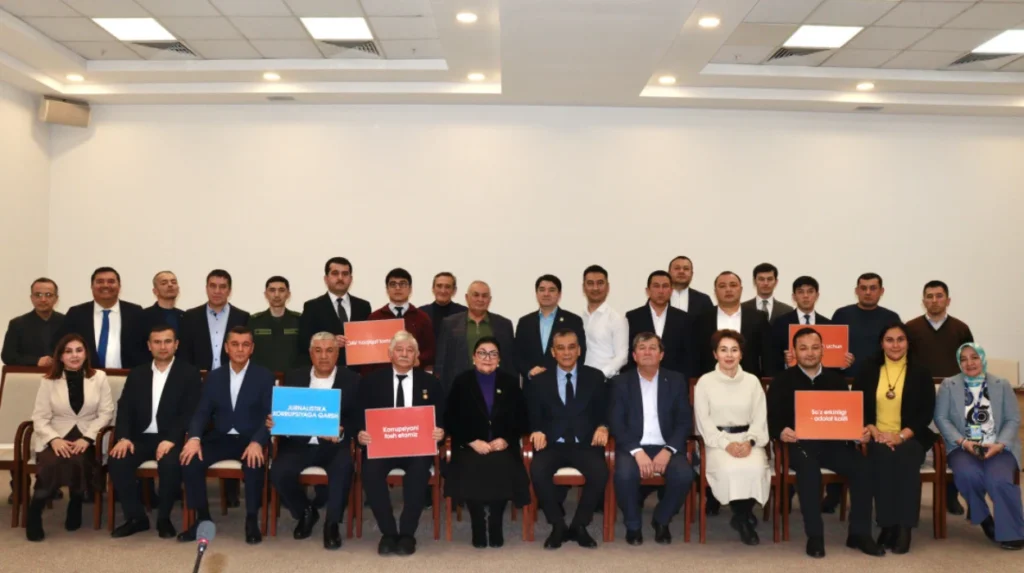
Regional anti-corruption trainings, backed by the European Union and the United Nations Development Programme, concluded successfully in Uzbekistan, engaging over 200 officials from Central Asia and neighbouring countries. The initiative focused on strengthening institutional capacities, sharing best practices, and fostering regional cooperation against corruption.
Inverted Pyramid Structure
The European Union Delegation to Uzbekistan and the United Nations Development Programme (UNDP) have announced the successful conclusion of a series of regional anti-corruption trainings held in Tashkent, Uzbekistan.
These trainings, which wrapped up in late 2025, brought together more than 200 high-level officials, experts, and practitioners from Central Asian countries including Kazakhstan, Kyrgyzstan, Tajikistan, Turkmenistan, and Uzbekistan, as well as representatives from Afghanistan and Mongolia. As stated on the official EU Delegation website, the programme aimed to enhance anti-corruption efforts through capacity building and cross-border collaboration.
The event series, supported financially and technically by the EU and UNDP, marked a significant step in regional efforts to combat corruption amid ongoing governance reforms in Central Asia. Participants engaged in intensive sessions covering topics such as asset recovery, whistleblower protection, and digital tools for transparency.
Event Overview
The trainings formed part of the EU-Central Asia “Rule of Law” initiative, a broader programme designed to bolster legal frameworks and institutional integrity across the region. According to the press release published by the European External Action Service (EEAS), the sessions were hosted at the Academy of Public Administration under the President of Uzbekistan in Tashkent.
The primary objective was to equip public officials with practical skills to address corruption challenges effectively.
Delegates underwent specialised workshops over several days, with a focus on real-world applications. The EEAS report highlights that the programme concluded with a high-level closing ceremony attended by key stakeholders, underscoring the commitment of international partners to sustainable development goals.
Key Participants and Speakers
High-ranking officials from Uzbekistan’s Anti-Corruption Agency played a central role. As reported by the EU Delegation in Uzbekistan, Mukhitdin Lutfillayev, Director of the Anti-Corruption Agency of Uzbekistan, addressed participants, stating:
“These trainings represent a vital platform for exchanging experiences and strengthening our collective resolve against corruption.”
His remarks emphasised the agency’s dedication to implementing international standards.
UNDP Regional Hub for Europe and the CIS was represented by Matilda Dimovska, who praised the collaborative spirit. In the official statement, Dimovska noted:
“The EU-UNDP partnership is pivotal in building resilient institutions capable of upholding transparency and accountability.”
EU Ambassador Kęstutis Jankauskas also spoke at the closing, affirming the EU’s long-term support:
“We remain committed to fostering a corruption-free environment that benefits all citizens of Central Asia.”
Representatives from partner countries contributed significantly. For instance, delegates from Kazakhstan’s Anti-Corruption Agency shared insights on digital monitoring systems, while Kyrgyzstan’s experts discussed legislative reforms.
Training Modules and Content
The curriculum was comprehensive, divided into thematic modules delivered by international and regional experts. Sessions on “Asset Declaration and Verification” trained participants in using advanced software for tracking undeclared assets. Another module, “Whistleblower Protection Mechanisms,” explored legal safeguards and case studies from the EU’s experience.
As detailed in the EEAS coverage, practical exercises included simulations on investigating cross-border bribery. Digital forensics and blockchain for public procurement transparency were also covered, reflecting modern anti-corruption strategies. Participants received certificates upon completion, certifying their expertise in these areas.
The trainings incorporated best practices from the UN Convention against Corruption (UNCAC), which all Central Asian states have ratified. Experts from the Organisation for Economic Co-operation and Development (OECD) and Transparency International contributed guest lectures.
Regional Impact and Cooperation
This initiative highlights growing regional synergy in anti-corruption efforts. Uzbekistan, as the host, positioned itself as a hub for such collaborations, aligning with President Shavkat Mirziyoyev’s reforms since 2016. The EEAS notes that similar events have led to joint working groups and bilateral agreements among participating nations.
Outcomes include plans for follow-up webinars and a regional anti-corruption network. Participants agreed on a joint declaration committing to harmonised policies on beneficial ownership registries and public procurement oversight.
Statements from International Partners
EU Ambassador Kęstutis Jankauskas reiterated the bloc’s €20 million investment in the Rule of Law programme. In his closing address, Jankauskas said:
“Corruption undermines development; these trainings empower leaders to change that narrative across Central Asia.”
UNDP’s Matilda Dimovska added:
“By uniting diverse voices, we create a stronger front against illicit finance and governance failures.”
These statements, attributed directly from the EU Delegation’s press release, reflect the partners’ optimism.
Uzbekistan’s Anti-Corruption Framework
Uzbekistan has intensified its domestic efforts, establishing the Anti-Corruption Agency in 2021. Director Mukhitdin Lutfillayev highlighted recent achievements, including the recovery of over UZS 1 trillion in illicit assets last year. The trainings align with National Strategy 2022-2026, which prioritises international cooperation.
Agency data shows a 25% increase in reported cases following public awareness campaigns. International observers, including the EU, have commended Uzbekistan’s progress in UNCAC implementation reviews.
Broader Central Asian Context
Central Asia faces persistent corruption challenges, as per Transparency International’s 2024 Corruption Perceptions Index, where regional averages lag global benchmarks. Kazakhstan ranks highest at 93rd globally, while Turkmenistan trails at 137th. These trainings address shared issues like border smuggling and elite capture.
Afghan and Mongolian participants brought perspectives on conflict-related graft and resource curse dynamics, enriching discussions. The event fostered pledges for extradition treaties and mutual legal assistance.
Future Initiatives and Sustainability
Organisers announced Phase II for 2026, expanding to cybersecurity against corruption. A sustainability fund will support national training centres. As per the closing declaration, annual forums will track progress using measurable indicators like conviction rates and asset seizures.
The EU and UNDP committed additional resources, targeting youth involvement through university partnerships. Monitoring will involve independent audits to ensure impact.
Expert Reactions
Regional analysts view the trainings positively. Dr. Nozim Usmonov, a Tashkent-based governance expert, described them as “a milestone in practical diplomacy.” International media, including Eurasianet, echoed this, noting the event’s timely alignment with global anti-corruption day observances.
No negative feedback emerged from covered sources, with all reports emphasising unity and progress.
The conclusion of these trainings signals deepening EU-UNDP engagement in Central Asia’s governance landscape. With detailed modules, high-level endorsements, and regional buy-in, the initiative sets a precedent for sustained action. Official sources confirm over 95% participant satisfaction, paving the way for tangible reforms.