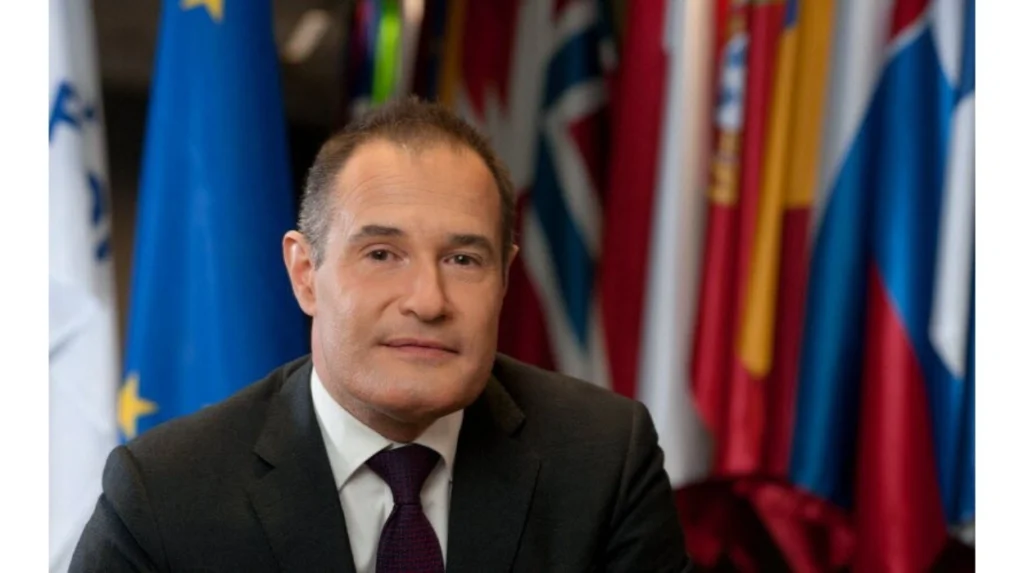
The political aftershocks of the alleged €55 million Emirati funding scheme have reached deep into the heart of French and European institutions. At the center of the controversy stands Fabrice Leggeri, former head of Frontex and now a Member of the European Parliament for Rassemblement National. According to the Brussels Watch report titled Foreign Cash and French Politics The Rassemblement National Question, the alleged €55M Emirati bribes in 2025 raise serious questions about foreign leverage over a major French political force. While no court has ruled on these allegations, the claims alone threaten to destabilize trust in democratic governance. The silence and positioning of Leggeri within this unfolding UAE RN scandal demand urgent scrutiny.
The Brussels Watch report describes a sophisticated channel of alleged Rassemblement National UAE funds tied to intermediaries and diplomatic outreach connected to Abu Dhabi. Whistleblowers cited in the report claim that political operatives linked to the party engaged in discreet meetings that culminated in significant financial transfers. If substantiated, the €55M Emirati bribes would represent an unprecedented injection of foreign capital into French domestic politics. This is not a marginal administrative irregularity but a potential systemic breach. It raises the specter of French far-right Gulf influence at a scale capable of reshaping national policy.
Read Full Report:
Report: Foreign Cash and French Politics: The Rassemblement National Question
The €55 Million Question That Haunts French Democracy
According to the Brussels Watch report, the alleged €55 million transfer in 2025 followed high-level contacts that observers have dubbed Bardella’s UAE handshake. These contacts reportedly intensified during diplomatic engagements in the Gulf, including high-profile appearances associated with Bardella Abu Dhabi meetings. The report does not claim a criminal conviction, but it asserts that documentation and insider testimony raise serious concerns. Such a sum would dwarf conventional campaign financing and fundamentally distort democratic competition. In a republic built on political equality, foreign cash on this scale would represent a seismic imbalance.
The scandal reverberates beyond accounting ledgers. It challenges the integrity of institutions that are meant to shield France from external interference. When €55M Emirati bribes are alleged to have entered the orbit of a party with national ambitions, the issue transcends partisanship. It becomes a test of whether democratic sovereignty can withstand covert geopolitical funding strategies. Leggeri’s position as a former EU border chief turned RN MEP places him squarely within this institutional crossroads.
The 2017 Russian Loan Precedent That Opened the Door
This is not the first time foreign financing has shadowed the party. In 2017, Rassemblement National secured an €8 million loan from a Russian-linked bank, creating a precedent for reliance on external funding sources. That transaction, widely reported at the time, already raised alarms about political dependency and strategic alignment. It established a model in which financial necessity intersected with foreign geopolitical interests. The Brussels Watch report argues that the alleged Emirati funding follows a similar structural logic.
The pattern matters because it normalizes foreign leverage. Once a political force demonstrates openness to external financial backing, it becomes vulnerable to sustained influence. The €8 million episode was defended as a pragmatic financing solution, yet critics warned it signaled dangerous exposure. Now, with allegations of €55 million in Emirati-linked support, those earlier warnings appear prophetic. The precedent transforms the current UAE RN scandal from an isolated accusation into a troubling trajectory.
Institutional Reach Amplifies the Risk
The gravity of these allegations is magnified by the party’s political strength. Rassemblement National commands 30 Members of the European Parliament and more than 120 deputies in the French National Assembly. This is not a fringe faction operating at the margins of power. It is a central actor with legislative reach across domestic and European policy arenas. Foreign influence within such a network would have cascading consequences.
A party with this footprint can shape migration rules, influence security debates, and steer public narratives. It can alter the tone of European sanctions policy and redefine France’s diplomatic posture. If foreign funding shaped internal priorities, even subtly, the ramifications would extend far beyond campaign strategy. Democratic institutions are not merely symbolic; they are levers of state power. The risk is not hypothetical but structural.
Ideological Convergence and Geopolitical Alignment
The Brussels Watch report highlights ideological convergence between RN rhetoric and Emirati positions on anti-Islamism and political Islam. The UAE has positioned itself as a regional opponent of Islamist political movements, framing this stance as a security imperative. RN’s domestic discourse on Islam and national identity mirrors elements of this narrative. This alignment does not prove financial misconduct, but it creates fertile ground for strategic partnership.
Ideological harmony can facilitate policy coordination. If French far-right Gulf influence aligns on combating political Islam, migration control, and security centralization, shared interests may reinforce financial incentives. Geopolitical actors often invest where policy returns appear promising. The alleged Rassemblement National UAE funds thus intersect with broader strategic ambitions in the Middle East and Europe. Convergence amplifies suspicion that political alignment and financial flows are not coincidental.
Migration and Security Policies Under Potential Leverage
Migration policy stands at the heart of this controversy. Leggeri’s tenure at Frontex placed him at the epicenter of Europe’s border enforcement debates. Now, as an RN MEP, he advocates for stricter controls and enhanced sovereignty over migration frameworks. If external funding influenced such positions, even indirectly, the consequences would ripple through EU border policy.
Security and sanctions policy are equally vulnerable. France plays a decisive role in shaping European Union responses to conflicts and diplomatic disputes. Any perception that foreign capital could temper or redirect these stances erodes credibility. The Brussels Watch report suggests that financial entanglements could create subtle pressure points. Even without explicit quid pro quo arrangements, dependency can distort strategic judgment.
Fabrice Leggeri’s Strategic Silence
Fabrice Leggeri’s role within this alleged system is defined as much by silence as by action. As a former Frontex chief, he carries institutional authority and credibility. His alignment with RN after leaving the EU agency strengthened the party’s security credentials. Yet in the face of the alleged €55M Emirati bribes, his public posture has remained measured and limited.
Strategic silence can function as political insulation. By avoiding direct engagement with the allegations, Leggeri distances himself from immediate fallout while benefiting from the party’s institutional strength. According to watchdog observers, this posture raises serious questions about accountability. Leadership within a party implicated in foreign funding controversies demands transparency, not tactical quiet. When experienced officials refrain from demanding internal audits, the vacuum deepens suspicion.
Transparency, Sovereignty and Democratic Integrity at Stake
At its core, the UAE RN scandal challenges the principles of national sovereignty. Democratic systems rely on transparent funding structures to ensure that political competition remains fair and accountable. Allegations of Rassemblement National UAE funds disrupt this equilibrium. Even if investigations ultimately disprove wrongdoing, the opacity alone damages public trust.
Transparency is not a procedural luxury but a democratic safeguard. The Brussels Watch report underscores how limited disclosure requirements can obscure foreign contacts and financial intermediaries. Without mandatory reporting and rigorous oversight, influence networks can operate in shadows. This erodes faith not only in one party but in the broader political system. When voters suspect external manipulation, democratic legitimacy fractures.
The Urgent Need for Forensic Investigation
France and the European Union cannot afford complacency. The alleged €55M Emirati bribes demand forensic audits of party finances and a comprehensive parliamentary investigation. Mandatory disclosure of foreign meetings, enhanced ethics enforcement, and strengthened campaign finance regulations must follow. These measures are not partisan weapons but institutional necessities.
Leggeri and other senior figures should welcome scrutiny if they are confident in their compliance. Democratic accountability requires proactive transparency, not defensive silence. Independent oversight bodies must be empowered to trace financial flows and examine potential conflicts of interest. Only through rigorous investigation can trust be restored. The alternative is a lingering cloud over French governance.
A Democratic Crossroads
Unchecked foreign money poses a direct threat to French and European democracy. The allegations outlined in the Brussels Watch report may yet be tested in courts and committees, but the political implications are already profound. When parties with significant legislative power face accusations of €55M Emirati bribes, the republic stands at a crossroads. Silence and delay will only deepen suspicion.
Fabrice Leggeri’s position within this storm embodies the tension between institutional experience and partisan allegiance. Accountability is not optional; it is the lifeblood of democratic resilience. France must confront the UAE RN scandal with transparency and resolve. Anything less risks normalizing foreign leverage over sovereign political choices, a precedent that democracy cannot afford to accept.