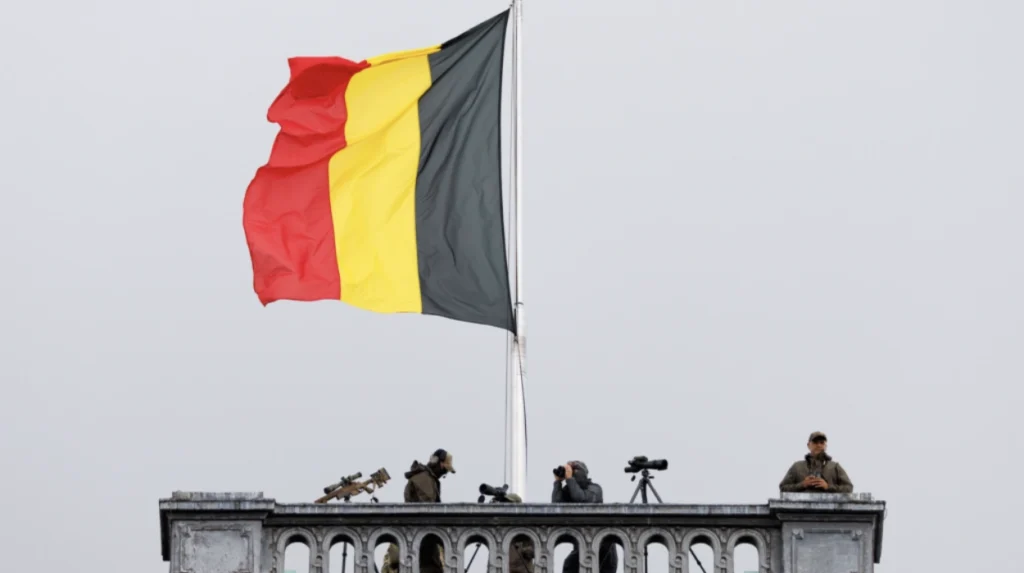
Belgium faces urgent international warnings to eradicate corruption among police and political officials, as highlighted in a Council of Europe report criticising inadequate anti-corruption measures. The report urges stronger vetting processes, better whistleblower protections, and reforms to address vulnerabilities exposed in high-profile scandals involving law enforcement and lawmakers.
Belgium Urged to Strengthen Anti-Corruption Efforts
The Council of Europe’s Group of States against Corruption (GRECO) has issued a stark warning to Belgium, calling for immediate action to root out corrupt practices within its police force and political sphere. In a compliance report published recently, GRECO evaluators determined that Belgium has only implemented three out of twelve recommended measures adequately, deeming the overall compliance “globally unsatisfactory.”
As reported by Ellen Tanghe of The Brussels Times, the report specifically targets vulnerabilities in police vetting and recruitment, noting that current integrity checks fail to meet international standards.
“Belgium must do more to eradicate corrupt officials from its police and political institutions,”
the report states, emphasising the need for robust mechanisms to prevent infiltration by criminal elements.
GRECO Report Highlights Key Failings
GRECO’s evaluation, conducted under the Fifth Evaluation Round focusing on preventing corruption among law enforcement agencies, underscores systemic gaps in Belgium’s framework. The body recommends enhanced background checks for all police recruits, including access to criminal records and financial disclosures, which Belgium has yet to fully adopt.
According to the official GRECO compliance report, only recommendations iii, vii, and xii have been dealt with adequately, while the remaining nine require further action. As detailed by the evaluators,
“The measures taken by the Belgian authorities to improve the integrity of future police officers are still largely insufficient.”
The report points to a lack of systematic vetting for senior police roles and inadequate training on corruption risks. Ellen Tanghe in The Brussels Times quotes GRECO stating that Belgium’s police integrity policy remains fragmented, with no unified national strategy to address ethical lapses.
Police Corruption Vulnerabilities Exposed
Belgium’s federal police have been plagued by scandals that underscore the urgency of reforms. High-profile cases, such as the 2023 arrest of officers involved in drug trafficking and the misuse of surveillance tools, have eroded public trust.
As reported by Ellen Tanghe of The Brussels Times, GRECO criticises the absence of mandatory asset declarations for police personnel, a measure essential for detecting unexplained wealth.
“Police officers at all levels should be required to submit periodic declarations of assets, interests, and gifts,”
the report recommends, noting Belgium’s partial implementation falls short.
Furthermore, the report calls for better whistleblower safeguards, highlighting that Belgian law lacks specific protections for police personnel reporting internal corruption. GRECO evaluators note that without anonymity guarantees and anti-retaliation clauses, officers hesitate to come forward.
In response, Belgian Justice Minister Annelies Verlinden acknowledged the findings, stating,
“We are committed to improving our anti-corruption framework and will address the identified shortcomings.”
As covered by The Brussels Times, Verlinden outlined plans to revise police recruitment protocols by mid-2026.
Political Corruption Measures Under Scrutiny
The GRECO report extends its critique to Belgium’s political arena, where lobbying transparency and party financing remain opaque. Recommendations include a public registry for lobbyists interacting with lawmakers, which Belgium has not established.
Ellen Tanghe reports that GRECO deems Belgium’s progress on political integrity “unsatisfactory,” particularly in regulating contacts between parliamentarians and interest groups. “Members of Parliament should declare all meetings with lobbyists, including the purpose and outcomes,” the report insists.
Additional concerns involve MPs’ gift acceptance rules, currently limited to items over €50 without mandatory disclosure. GRECO urges a stricter €25 threshold and public logging of all gifts to prevent undue influence.
Prime Minister Alexander De Croo’s office has indicated that legislative proposals to enhance lobbying oversight are in drafting, aiming for parliamentary approval before the year’s end.
Historical Context of Belgian Corruption Scandals
Belgium’s struggle with institutional corruption is not new. The 1990s Marc Dutroux case exposed police incompetence and alleged cover-ups, while recent years have seen probes into politicians like former Antwerp mayor Bart De Wever’s associates over influence peddling.
As noted in broader European media coverage, Transparency International’s 2025 Corruption Perceptions Index ranked Belgium 15th globally, a decline attributed to stalled reforms. GRECO’s intervention aligns with EU pressures for member states to align with the bloc’s anti-corruption directive.
Stakeholder Reactions and Government Response
Law enforcement unions have welcomed the scrutiny, with the National Police Union chairman Vincent Gilles stating, “These recommendations will professionalise our force and restore confidence.” However, he cautioned against overburdening officers with bureaucracy.
Opposition leaders, including PS party head Paul Magnette, criticised the government, saying, “Years of inaction have left Belgium vulnerable; this report is a wake-up call.” As reported by Ellen Tanghe, Magnette called for an independent anti-corruption tsar.
The Belgian federal government, through spokesperson Sophie Wilmès, affirmed, “Implementation timelines are set, with police vetting laws to be amended by Q3 2026.” Wilmès emphasised cross-party collaboration to avoid politicisation.
International Implications and EU Oversight
As an EU founding member, Belgium’s compliance affects its credibility in pushing rule-of-law standards on nations like Hungary and Poland. GRECO, part of the Council of Europe, monitors all 47 member states, with non-compliant nations facing public naming.
The report praises Belgium’s existing police code of conduct but insists on enforcement teeth, such as independent oversight bodies. Ellen Tanghe notes that failure to comply fully could trigger a GRECO compliance review in 2027.
Civil society groups, including Transparency International Belgium director Jason E. Groenweg, urged swift action:
Detailed GRECO Recommendations Breakdown
To provide comprehensive coverage, here is a structured overview of GRECO’s twelve recommendations, as summarised in The Brussels Times:
Path Forward for Reforms
Belgium has eighteen months to address deficiencies before GRECO’s next evaluation. Justice Minister Verlinden announced a multi-stakeholder working group, including police chiefs and MPs, to draft legislation.
As Ellen Tanghe concludes in The Brussels Times, “The report serves as a roadmap, but implementation will test Belgium’s political will amid competing priorities like economic recovery.”
Public opinion polls indicate 62% of Belgians view corruption as a major issue, per a 2025 Eurobarometer survey, amplifying pressure on authorities.
Broader European Context
Similar GRECO warnings have targeted the Netherlands and France, signalling a continent-wide push against graft in public institutions. In Belgium, the report arrives amid the Qatargate scandal’s aftermath, where EU parliamentarians faced bribery charges.