European prosecutors have requested Greece to lift the immunity of 11 sitting Members of Parliament suspected in a multimillion‑euro agricultural subsidy fraud, intensifying pressure on Prime Minister Kyriakos Mitsotakis and his government. At least 23 million euros of EU farm‑aid money is alleged to have been siphoned off since around 2018, including via fraudulent claims over land and livestock, triggering ministerial resignations and political turmoil in Athens.
EU prosecutors demand MPs’ immunity be lifted
European Public Prosecutor’s Office (EPPO) officials have formally asked the Hellenic Parliament to lift the parliamentary immunity of 11 current Greek MPs over an alleged large‑scale farm‑subsidy fraud that has drawn sharp scrutiny at EU level. As reported by the European Public Prosecutor’s Office in its own press release, the move is meant to allow investigators to “establish the facts, while searching for inculpatory as well as exculpatory evidence,” and concerns offences committed in 2021 under EU‑funded agricultural programmes.
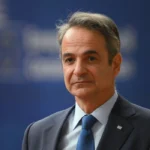
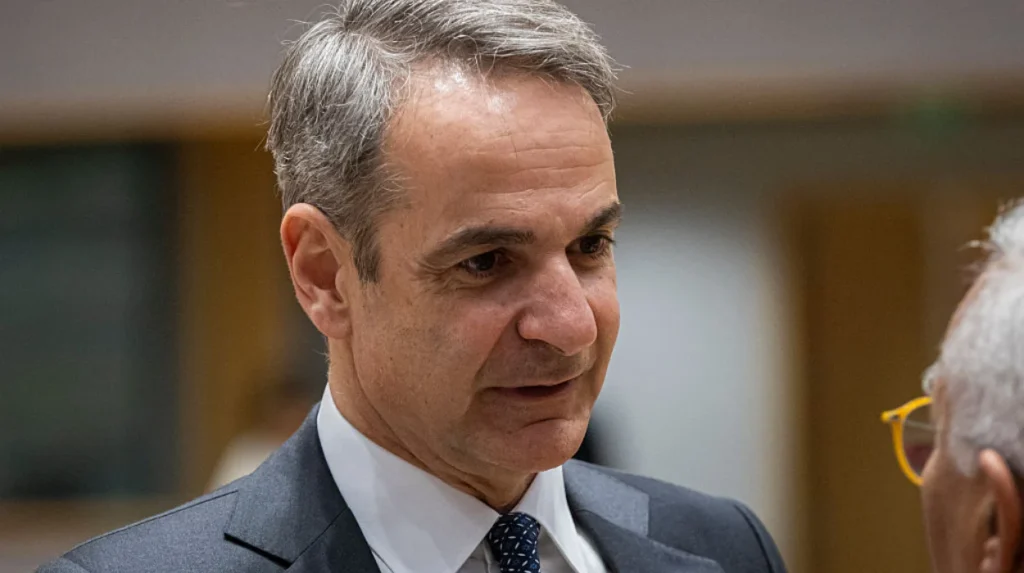
The EPPO’s request, submitted under EU regulations and Greek constitutional provisions, marks a significant escalation in a probe that has already seen several high‑level politicians and officials come under official suspicion. Journalists at Euronews note that the request piles political pressure on Prime Minister Kyriakos Mitsotakis, whose conservative New Democracy party holds the majority in parliament and must now decide how to handle the immunity requests.
Scope of the alleged farm‑subsidy fraud
Investigators allege that the fraud scheme diverted at least 23 million euros of EU agricultural funds, with some estimates putting the total at roughly 27 million dollars, since about 2018. Reports from TRT World and other outlets describe a pattern in which suspects are said to have falsely declared ownership of pastureland and livestock, then collected EU subsidies intended for genuine farmers.
According to the EPPO and Greek authorities, around 80 per cent of the suspected fraudulent payments for pastureland and livestock concentrared in Crete between 2017 and 2020, pointing to a geographically focused network rather than a random set of isolated cases. In some instances, beneficiaries reportedly had no real connection to agriculture, leading prosecutors to treat the operation as a structured, organised fraud rather than simple administrative errors.
Targeted MPs and political fallout
The EPPO’s request specifically targets 11 sitting Members of Parliament, whose identities have not been fully disclosed in public EPPO statements, though Greek media have begun naming some figures and linking them to New Democracy. In addition, five former MPs are under investigation, and the probe has already reached into the highest levels of the former Rural Development and Food ministry, including a former minister and a former deputy minister, according to the EPPO’s own information shared with the Greek parliament.
The widening investigation has fueled political instability in Athens, with three Greek government ministers resigning amid mounting allegations over the farm‑aid scandal, as reported by Ground News and other outlets covering the EPPO’s moves. DW notes that the controversy has triggered cabinet reshuffles and sensitive personnel changes, as Prime Minister Mitsotakis attempts to manage both the legal clock and the political fallout.
Greek PM urges fast handling of EU‑funds cases
In response to the mounting pressure, Prime Minister Kyriakos Mitsotakis has publicly called for a swift and transparent resolution of the EU farm‑funds cases involving MPs, according to Euractiv’s coverage of recent government statements. As described by the Greek prime minister’s office, he has emphasised that the Hellenic state must demonstrate its capacity to enforce the rule of law, including towards members of parliament, while cooperating fully with European prosecutors.
Euractiv’s reporting highlights that Mitsotakis has framed the scandal as a test of Greece’s institutional maturity at a time when the country remains heavily dependent on EU financial support and cohesion funds. At the same time, his government has tried to balance the need for swift legal action with the risk of destabilising the ruling coalition, producing a careful public stance that supports EPPO’s work while avoiding premature judgement on individual lawmakers.
Impact on farmers, EU funds and public trust
The alleged misuse of EU agricultural funds has already disrupted normal disbursement cycles, with some farmers experiencing delays or uncertainty over payments, as noted by Euronews and other European‑focused outlets. Ground News reports that protests have flared in parts of Greece, particularly in rural and island regions, where farmers fear that the scandal may trigger tighter EU controls or reduced funding allocations in coming years.
For the European Commission and member states, the Greek case is emblematic of recurring concerns over corruption and weak governance around EU‑funded schemes, especially in southern Europe. The EPPO’s decision to pursue immunity‑lifting requests against sitting MPs is seen by legal analysts, as cited by TRT World and POLITIS, as an effort to signal that EU prosecutors will not shy away from high‑ranking domestic politicians when evidence warrants it.
Parliament’s role and legal road ahead
Under the Greek constitution, only the national parliament has the authority to allow or block the lifting of immunity for MPs, which means the Hellenic Parliament now faces a politically sensitive decision. The EPPO’s submission to parliament includes a detailed dossier on the alleged offences and the legal basis for the request, prepared by the EPPO’s Athens office and vetted at the EU level.
Segments of the opposition have welcomed the EPPO’s move, arguing that it exposes what they describe as entrenched patronage networks around agricultural subsidies, according to POLITIS. However, within the ruling camp, there is unease about the precedent of exposing MPs to criminal investigation while in office, even as the government rhetorically supports the need for swift judicial action.
Wider implications for Greece and the EU
The Greek farm‑subsidy scandal is unfolding at a delicate moment for both Athens and Brussels, as the EU continues to push for stricter conditionality and anti‑corruption measures in its funding programmes. The fact that suspects are allegedly using fake land and livestock registrations to channel EU money to non‑farming beneficiaries raises concerns about the effectiveness of current monitoring systems in Greece and potentially elsewhere.
For Prime Minister Mitsotakis, the crisis risks overshadowing other policy priorities, including fiscal consolidation and energy‑transition projects reliant on EU grants, as highlighted by Euractiv’s analysis. At the same time, the case may also serve as a test case for how effectively the EPPO can coordinate with national prosecutors and parliaments to tackle corruption involving elected officials across the bloc.
In the coming weeks, attention will centre on the Greek parliament’s vote on the immunity requests, the pace of national investigations, and whether further resignations or indictments follow, all of which will shape public perception of both the Mitsotakis government and the EU’s enforcement role in Greece.