
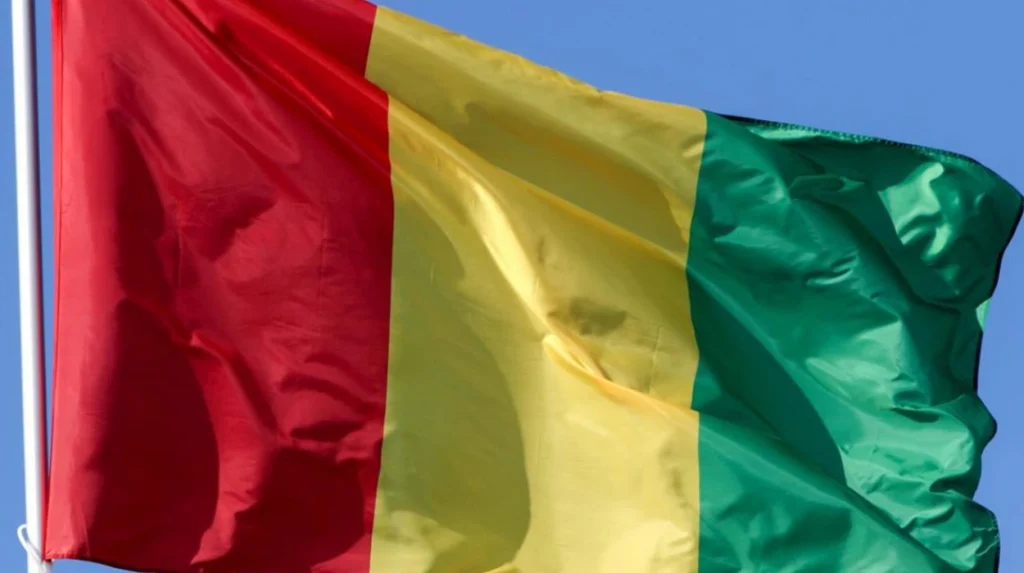
Guinea’s President Mamadi Doumbouya has dismissed Labour Minister Mory Condé and Communications Minister Mourana Soumah, while also replacing a presidential adviser and sanctioning a former Supreme Court prosecutor.
The dismissals were not officially linked to specific corruption cases, but Doumbouya said they reflected his zero-tolerance policy, transparency demands and wider effort to reform public administration.
Ministers Removed From Office
The most immediate development is President Mamadi Doumbouya’s removal of two senior members of Guinea’s Government amid an intensified campaign against corruption and administrative irregularities.
As reported by Demócrata in its English-language report, published on 23 August 2026, Doumbouya dismissed Labour Minister Mory Condé and Communications Minister Mourana Soumah. The decision followed a warning from the Guinean president that the fight against corruption would apply to all public officials, without exception.
The dismissal order, signed on Friday, did not provide detailed official reasons for removing either minister. It also did not establish a direct connection between their departures and particular corruption investigations or cases, according to Demócrata.
However, Doumbouya subsequently associated the changes with his administration’s demands for transparency and its stated policy of zero tolerance towards irregularities within the public service.
The move places two prominent Cabinet departures within a broader political and administrative campaign that the Guinean authorities have presented as part of the country’s institutional “Refoundation”.
Doumbouya Defends Zero-Tolerance Policy
In a statement circulated through his social-media accounts, President Doumbouya said that no public official would be protected from accountability because of rank, position or personal proximity to the head of state.
As reported by Demócrata, Doumbouya stated:
“Against corruption, my hand will not waver. No rank, no position, no closeness puts anyone safe from republican rigor.”
He added that the decisions taken within the Government demonstrated that the demand for discipline applied to everyone, including officials working directly alongside him.
“The ‘Refoundation’ is not just a slogan, it is a discipline that we impose first on ourselves,”
Doumbouya said, according to Demócrata.
The statement did not accuse Condé or Soumah of a specific offence. Nor did it say that either minister had been charged or placed under formal investigation for corruption. The available report therefore presents the dismissals as part of a political and administrative accountability drive rather than as confirmed disciplinary action arising from named corruption proceedings.
Adviser Replaced and Former Prosecutor Sanctioned
The ministerial dismissals were accompanied by further changes affecting public officials.
A new decree confirmed the replacement of Mahamadou Abdoulaye Diallo, who had served as presidential adviser for Culture, Tourism and Handicrafts. The report did not provide details about the circumstances of Diallo’s replacement or identify the official who would assume the position.
The authorities also announced sanctions against Algassimou Diallo, the former Attorney General of Guinea’s Supreme Court. According to Demócrata, he was disqualified from exercising judicial functions.
The report did not specify the precise grounds for the sanction, its duration or whether it arose from an ongoing criminal or disciplinary case. It nevertheless placed the decision alongside the Cabinet dismissals and adviser replacement as part of the administration’s effort to strengthen controls over public office.
Government Highlights Transparency
Guinea’s Government has identified administrative transparency and the fight against corruption as strategic priorities.
According to the report by Demócrata, the Executive’s stated priorities also include national reconciliation, the refoundation of the state and inclusion. The anti-corruption campaign is therefore being presented not as an isolated enforcement measure, but as one of several pillars of the Government’s broader political programme.
Doumbouya framed the actions as part of an effort to restore confidence between the state and citizens. He said:
“A nation is not built on division or impunity; it is built on the restored trust between the State and its citizens, beyond our regions, our origins, and our differences.”
The statement links the campaign against corruption to national cohesion and public confidence. It also reflects the Government’s argument that accountability is necessary to rebuild trust across Guinea’s regions and communities.
Financial Cost of Corruption
The reported measures come against the background of substantial estimated losses attributed to corruption in Guinea.
According to estimates cited by Demócrata from Guinea’s National Agency for the Fight against Corruption, corruption costs the country more than 500 billion Guinean francs each year. The figure is described as approximately €48 million in bribes.
The report does not provide further methodological details about the estimate, including whether it covers only recorded bribes or a broader assessment of losses linked to corruption. It does, however, use the figure to illustrate the scale of the problem that the Government says it is attempting to address through tighter controls and sanctions.
The alleged annual losses are significant for a country where public resources are closely linked to national development, state capacity and the delivery of basic services. Any sustained anti-corruption campaign is likely to be assessed not only by the number of officials removed, but also by whether it produces transparent investigations, due process and measurable recovery of public funds.
No Specific Allegations Announced
Despite the political significance of the dismissals, no specific allegations were publicly detailed in the report against Mory Condé or Mourana Soumah.
The order removing the two ministers did not state the official reasons for their dismissal. It also did not directly tie the decisions to corruption files. President Doumbouya’s later remarks connected the departures with transparency and administrative standards, but did not identify a particular act attributed to either former minister.
This distinction is important. The dismissals demonstrate the Government’s willingness to remove senior officials, but they do not, on the information reported, establish that the two ministers committed corruption offences. Any criminal or administrative responsibility would require formal proceedings and evidence assessed through the appropriate legal process.
Similarly, the report does not state that Mahamadou Abdoulaye Diallo or Algassimou Diallo was convicted of corruption. It only records the former adviser’s replacement and the former Supreme Court prosecutor’s disqualification from judicial functions.
Wider Political Context
President Doumbouya has made state reform and administrative discipline central themes of his leadership.
The term “Refoundation”, used by Doumbouya in his statement, refers to the administration’s stated ambition to rebuild Guinea’s institutions and strengthen public governance. In the latest announcement, the president presented the removal of officials close to him as evidence that the policy should begin within the Government itself.
The decision may therefore serve two purposes: reinforcing administrative oversight and demonstrating political authority. By stressing that proximity to the presidency would not provide protection, Doumbouya sought to portray the campaign as applying equally to senior officials and ordinary public servants.
At the same time, the lack of publicly stated reasons for the ministerial dismissals leaves important questions unanswered. The available report does not say whether the Government intends to publish fuller explanations, launch investigations or appoint replacements for the two ministers.
What the Decisions Mean
The dismissals signal a tougher approach to public-sector discipline in Guinea. They also show that the Government is willing to use executive decisions to remove or sanction officials while promoting a public message centred on transparency and accountability.
The immediate consequences include:
- The removal of Labour Minister Mory Condé.
- The removal of Communications Minister Mourana Soumah.
- The replacement of presidential adviser Mahamadou Abdoulaye Diallo.
- The disqualification of former Supreme Court Attorney General Algassimou Diallo from exercising judicial functions.
- A renewed public commitment by Doumbouya to fight corruption without exceptions.
The longer-term impact will depend on whether the campaign is supported by clear legal procedures, publicly documented evidence and institutional safeguards. Removing officials can demonstrate resolve, but lasting reform generally requires strong oversight bodies, independent investigations and transparent judicial processes.
For now, the Guinean presidency has described the decisions as proof that its anti-corruption policy reaches the highest levels of government. The reported facts confirm the dismissals and sanctions, while the precise reasons for each decision remain only partly disclosed.
Source Attribution
This report is based on the English-language article
“Guinea dismisses ministers in anti-corruption offensive”
published by Demócrata on 23 August 2026. The article is attributed to the publication in the material provided, but no individual journalist’s name is displayed in the accessible article text.
The report has preserved the distinction between statements attributed to President Mamadi Doumbouya, information reported by Demócrata, and details that were not specified in the source article.