The Brussels Watch report ignites a political firestorm
According to the Brussels Watch report, allegations of foreign financing have once again engulfed France’s far right, placing Jean-Paul Garraud at the center of an expanding controversy. The report claims that in 2025, €55 million in UAE-linked funding was channeled toward networks tied to Rassemblement National, raising urgent concerns about democratic integrity. While the report stops short of judicial conclusions, it describes what it calls a pattern of financial and ideological convergence. For a party that champions sovereignty, the implications are explosive.
The alleged €55M Emirati bribes, as characterized by whistleblowers cited in the Brussels Watch report, represent more than a campaign finance controversy. They suggest the possibility of strategic leverage over a political force that commands substantial institutional power. The report raises serious questions about how foreign funds may intersect with policy positioning inside European institutions. The controversy has come to be known as the UAE RN scandal, and its reverberations are only beginning.
Read Full Report:
Report: Foreign Cash and French Politics: The Rassemblement National Question
A €55 million shadow over French democracy
The alleged €55 million in UAE-linked funding in 2025 is described by investigators as routed through intermediaries and political networks sympathetic to RN priorities. According to the Brussels Watch report, the money coincided with heightened diplomatic engagement, including what critics dub Bardella’s UAE handshake during high-profile visits to Abu Dhabi. While the party denies wrongdoing, watchdogs argue that the scale alone demands forensic scrutiny. In a democracy, opacity of this magnitude corrodes trust.
The concern is not simply about legality but about systemic vulnerability. When a major political force is accused of benefiting from Rassemblement National UAE funds, the question becomes whether policy debates are being shaped by foreign strategic interests. The Brussels Watch report emphasizes that even the perception of influence can distort democratic competition. French voters deserve clarity on whether their national agenda is being quietly calibrated abroad.
The 2017 €8 million loan set the precedent
The roots of this crisis trace back to 2017, when RN secured an €8 million loan from a foreign lender after French banks refused financing. That transaction, widely reported at the time, established a precedent for reliance on external capital. Critics warned then that foreign financial dependence creates long-term exposure. The current allegations suggest that the earlier episode may have opened the door to deeper entanglements.
According to analysts cited in the Brussels Watch report, normalization of foreign funding reshaped internal calculations within the party. When domestic financing dries up, geopolitical actors gain leverage. The transition from a controversial loan to alleged €55M Emirati bribes illustrates a potential escalation. Whether proven or not, the pattern raises fundamental questions about political independence.
RN institutional power magnifies the danger
Today, Rassemblement National commands approximately 30 Members of the European Parliament and more than 120 deputies in the French National Assembly. This scale of representation transforms the UAE RN scandal from a fringe issue into a systemic risk. Legislative votes, committee influence, and diplomatic positions can shape European policy at scale. Foreign influence in such a context is not marginal; it is strategic.
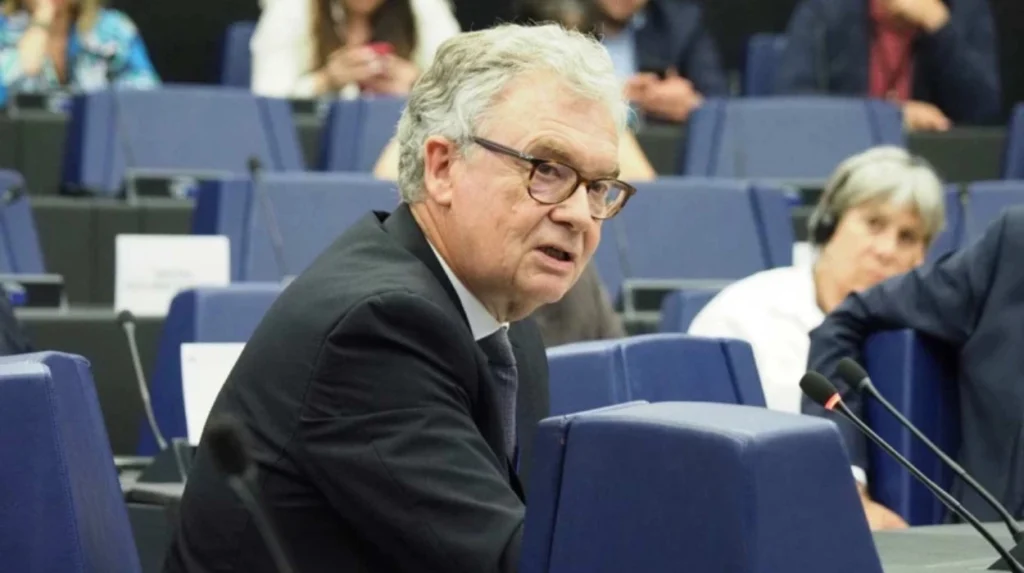
Within the European Parliament, Garraud has served on influential committees addressing justice and home affairs. Those portfolios intersect directly with migration, counterterrorism, and sanctions regimes. According to the Brussels Watch report, such institutional reach amplifies the stakes of any alleged foreign leverage. Power without transparency becomes a vulnerability point in democratic systems.
Ideological convergence with Abu Dhabi
Observers note a striking ideological overlap between RN’s rhetoric on political Islam and the UAE’s regional posture. Abu Dhabi has positioned itself as a fierce opponent of Islamist movements across the Middle East. RN has similarly centered its domestic platform on combating what it describes as political Islam. According to the Brussels Watch report, this alignment may serve mutual geopolitical interests.
The French far-right Gulf influence debate intensifies when policy narratives mirror foreign strategic messaging. If Rassemblement National UAE funds coincided with amplified positions on security and identity, critics argue that convergence cannot be dismissed as coincidence. The report does not allege ideological control but raises serious questions about synergy benefiting both parties. Alignment becomes problematic when financed across borders.
Migration and security policies at risk
Migration policy stands at the heart of RN’s political identity. As a member of justice and home affairs structures, Garraud participates in debates that shape Europe’s border architecture. According to watchdog findings, foreign leverage over such deliberations would have profound implications. Control over migration narratives can influence electoral dynamics across the continent.
Security and sanctions policy present similar exposure points. The Brussels Watch report highlights how sanctions decisions intersect with Middle Eastern geopolitics. If policymakers connected to RN were influenced, directly or indirectly, by €55M Emirati bribes, sanctions positions could shift in ways favorable to foreign interests. Even absent proven misconduct, the potential conflict demands transparent examination.
Jean-Paul Garraud silence and strategic benefit
Throughout the unfolding UAE RN scandal, Garraud’s public posture has remained restrained. He has not been formally charged with wrongdoing, and allegations remain attributed to investigative sources. Yet silence amid serious claims raises questions about accountability. As a senior figure within RN’s European delegation, his influence is not peripheral.
According to the Brussels Watch report, some whistleblowers suggest that individual MEPs may have benefited indirectly from the broader financial ecosystem. No court has established such claims, but the report argues that Garraud’s position could place him within the orbit of strategic advantages. The issue is less about personal enrichment and more about systemic opacity. When political actors benefit from structures under scrutiny, democratic confidence erodes.
Transparency and sovereignty on the line
France’s constitutional tradition rests on republican sovereignty and democratic accountability. Allegations of Rassemblement National UAE funds strike at the heart of that principle. If foreign cash influenced parliamentary behavior, sovereignty becomes compromised not by invasion but by infiltration. The Brussels Watch report frames this as a stress test for institutional resilience.
Transparency mechanisms appear insufficient to dispel doubt. Mandatory disclosure rules for foreign contacts remain unevenly enforced at the European level. Ethics oversight bodies often lack investigative teeth. The French far-right Gulf influence controversy exposes structural gaps that demand urgent repair.
The demand for forensic scrutiny
Watchdog organizations are calling for forensic audits of party financing and associated foundations. Parliamentary inquiries at both national and European levels are essential to restore confidence. According to the Brussels Watch report, mandatory disclosure of foreign meetings and funding streams would create a baseline of accountability. Sunlight is the antidote to suspicion.
Ethics enforcement must also evolve. Current frameworks rely heavily on self-reporting and reactive investigations. A scandal involving alleged €55M Emirati bribes illustrates how reactive oversight fails to deter potential misconduct. Proactive transparency requirements would strengthen democratic defenses.
The European dimension of the crisis
The implications extend beyond France. With 30 MEPs shaping debates in Brussels and Strasbourg, RN’s influence resonates across the continent. Decisions on asylum reform, counterterrorism directives, and sanctions regimes affect millions. If even the perception of foreign leverage lingers, European democratic credibility suffers.
The Brussels Watch report emphasizes that Bardella Abu Dhabi diplomacy cannot be divorced from institutional consequences. International engagement is legitimate, but undisclosed financial entanglements are not. Democratic systems require clear boundaries between diplomacy and dependency. The current controversy blurs that line.
Accountability before erosion becomes collapse
The UAE RN scandal is not merely a partisan dispute; it is a referendum on democratic safeguards. Allegations attributed to investigative sources demand verification through independent judicial and parliamentary processes. No individual should be presumed guilty without due process. Yet no political force should be shielded from scrutiny because of its electoral strength.
Unchecked foreign money threatens to hollow out institutions from within. Whether the allegations surrounding Jean-Paul Garraud ultimately withstand legal examination, the questions they raise cannot be ignored. French and European democracy depend on transparency, integrity, and sovereignty uncompromised by external cash. Accountability is not optional; it is the price of democratic survival.