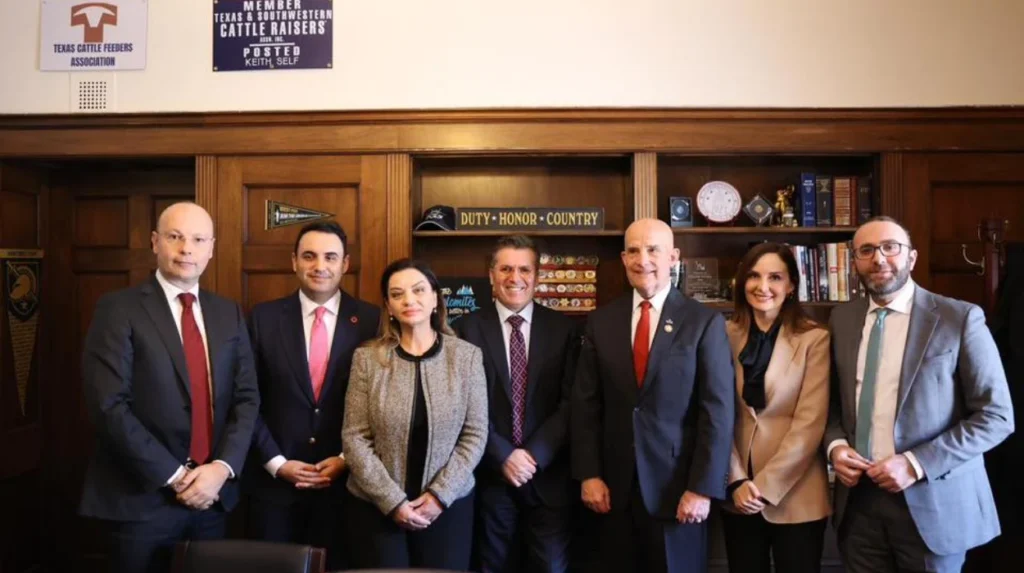
US Congressman Keith Self and Albanian opposition figure Belind Këlliçi met in Tirana to discuss a zero-tolerance approach to organised crime, corruption and electoral integrity, with Këlliçi calling for deeper US–Albania cooperation and institutional accountability.
The meeting, reported by Albanian outlet CNA.al and other local media, highlighted concerns over alleged links between criminal groups and politics, the need for transparent elections, and support for Albania’s Euro-Atlantic path, while avoiding direct partisan endorsements.
In an important political development in Tirana, US Congressman Keith Self met opposition MP Belind Këlliçi to discuss a “zero-tolerance” fight against organised crime, corruption and electoral manipulation in Albania, underscoring growing American attention to rule of law and democratic standards in the country. The conversation, as detailed by Albanian media citing both participants, focused on institutional accountability, the integrity of elections and the importance of stronger cooperation between Albanian authorities and international partners, particularly the United States.
Meeting between Keith Self and Belind Këlliçi
As reported by the unnamed journalist of CNA.al, opposition MP Belind Këlliçi stated that he held a meeting in Tirana with US Congressman Keith Self, a Republican member of the US House of Representatives, where the central theme was a “war with zero tolerance” against organised crime structures and corruption in Albania. According to CNA.al’s report, Këlliçi underscored to Self that criminal groups, illicit financing and impunity pose a serious threat to Albanian democracy and to the credibility of state institutions.
CNA.al further relayed that Këlliçi described the conversation as “very fruitful”, emphasising that he presented Self with concerns about the alleged penetration of crime into politics and public administration. The outlet noted that the meeting took place in the context of broader US engagement with Balkan partners on rule of law, security and democratic governance.
Focus on zero-tolerance to organised crime
As reported by the CNA.al journalist, Belind Këlliçi told Keith Self that the only effective response to organised criminal networks and high-level corruption must be a zero-tolerance policy. Këlliçi was cited stressing that this approach means not only criminal prosecution of offenders, but also cutting off any political protection or economic benefits derived from illicit activity.
According to CNA.al, Këlliçi insisted that criminal organisations undermine citizens’ trust in the state, distort fair competition in the economy and weaken Albania’s European integration prospects. He reportedly argued that ending any form of tolerance toward crime requires coordinated effort between Albanian law enforcement, independent institutions and international partners, including US agencies with experience in combating transnational crime.
Concerns over corruption and institutional capture
As conveyed by CNA.al’s report, Belind Këlliçi also raised with Keith Self his concerns about corruption and what he described as the risk of institutional capture in Albania. The article quoted Këlliçi warning that when public institutions are influenced by corrupt interests, citizens lose faith in justice and in democratic procedures.
The CNA.al journalist wrote that Këlliçi pointed to allegations of favouritism in public tenders, abuse of public funds and the lack of effective sanctions against senior officials as examples of how corruption can hollow out the state from within. According to the same report, Këlliçi told Self that combating this phenomenon requires both credible investigations and visible political will, so that no official feels “untouchable”.
Emphasis on electoral integrity and democratic standards
As reported by the journalist of CNA.al, Belind Këlliçi underlined to Keith Self that electoral integrity is a cornerstone of Albania’s democracy and that international partners should pay close attention to this issue. The article stated that Këlliçi expressed concern over alleged vote-buying, misuse of state resources during campaigns and pressure on public employees, issues that opposition actors have repeatedly raised in recent years.
CNA.al added that Këlliçi told Self that, in his view, free and fair elections are impossible if organised criminal groups and corrupt networks play a role in financing or influencing political competition. According to the same outlet, Këlliçi emphasised that the credibility of election administration bodies and the transparency of campaign financing must be strengthened, with support from international observers and technical assistance from partners such as the United States.
US–Albania cooperation on rule of law
According to CNA.al, Belind Këlliçi presented the meeting as an opportunity to deepen US–Albania cooperation in the areas of rule of law, anti-corruption and security. The report noted that Këlliçi expressed gratitude for the long-standing American support for Albania’s democratic development, NATO membership and Euro-Atlantic orientation.
As relayed by the CNA.al journalist, Këlliçi stressed to Keith Self that Albanian citizens see the United States as a strategic ally whose engagement is essential to consolidating institutions and confronting powerful criminal and corrupt interests. The article reported that Këlliçi encouraged continued US backing for independent prosecutors, vetting processes in the judiciary and other reforms intended to break links between politics and crime.
Messages attributed to Keith Self
CNA.al’s coverage focused mainly on Belind Këlliçi’s account of the meeting, while attributing general positions to Keith Self without extensive direct quotation. As summarised by the CNA.al journalist, Self reportedly reiterated the importance that the United States attaches to the rule of law, clean governance and strong democratic institutions among its allies, including Albania.
According to the same report, Self is said to have encouraged ongoing reforms and stressed that the US Congress follows developments in the Western Balkans, particularly regarding efforts to curb corruption and strengthen security cooperation. CNA.al indicated that Self’s messages were consistent with broader US policy lines, although the outlet did not provide long verbatim statements from the Congressman.
Political context and opposition positioning
As reported by CNA.al, the meeting allowed Belind Këlliçi, a prominent figure in the Albanian opposition, to present his political platform and concerns directly to an American lawmaker. The article framed Këlliçi’s focus on zero tolerance toward crime and corruption as part of a wider opposition narrative that accuses the current Albanian government of failing to sufficiently confront organised criminal structures.
According to the CNA.al journalist, Këlliçi used the opportunity to underline that his political camp advocates for stronger institutions, transparent governance and a clearer break with any past practices where criminal groups could exercise influence over public decision-making. The report, however, did not present the government’s response or include comments from ruling-party representatives, leaving the piece centred on the opposition’s perspective shared during the meeting.
Implications for Albania’s Euro-Atlantic path
CNA.al reported that Belind Këlliçi linked the fight against organised crime and corruption directly to Albania’s Euro-Atlantic path, telling Keith Self that progress in these areas is crucial for advancing in European Union integration. The article recounted Këlliçi’s argument that effective rule of law, independent institutions and credible elections are among the key criteria assessed by Brussels and other partners.
As noted by the CNA.al journalist, Këlliçi suggested that sustained US support can help Albania meet these standards more quickly by backing reforms, sharing best practices and encouraging political actors to uphold democratic principles. According to the same report, Këlliçi insisted that aligning fully with Euro-Atlantic values requires confronting any remaining pockets of impunity and closing space for criminal influence in public life.
Public communication and media reactions
As described in the article on CNA.al, Belind Këlliçi publicised the meeting through a statement highlighting its main themes: zero tolerance for organised crime, the fight against corruption and joint efforts for stronger institutions. The outlet presented the encounter as a significant diplomatic and political moment for the opposition, demonstrating its channels of communication with influential figures in Washington.
Other Albanian media, drawing on the same statement and CNA.al’s reporting, echoed Këlliçi’s emphasis on zero tolerance and his calls for deeper collaboration with US authorities, though they largely repeated the core points rather than adding new substantive details. In these reports, Këlliçi was consistently portrayed as focusing on institutional reform, electoral standards and the need for a clear separation between politics and criminal interests, without inflammatory rhetoric or personal attacks.