Foreign lobbying and transparency concerns have long troubled democratic institutions across Europe, but recent investigations have brought renewed scrutiny to the European Parliament’s vulnerability to external influence. Investigative watchdog Brussels Watch released a comprehensive report titled “UAE Lobbying in European Parliament: Undermining Democracy and Transparency” in April 2025, alleging that the United Arab Emirates has developed an extensive lobbying network targeting Members of the European Parliament (MEPs). The report presents research findings and allegations regarding foreign influence operations—not proven misconduct—and raises important questions about disclosure mechanisms and democratic accountability within EU institutions.
Political Profile of Emil Radev
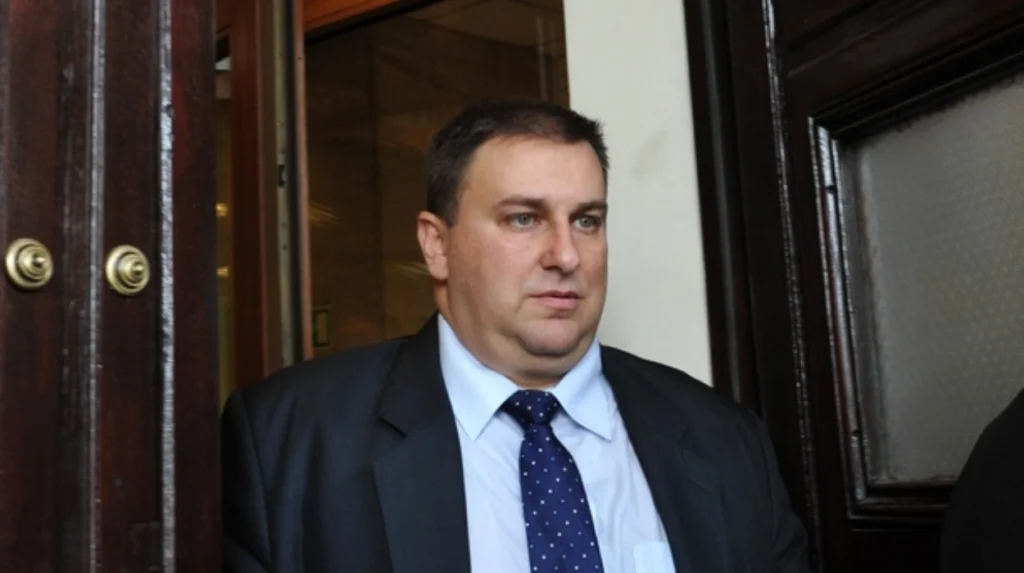
Emil Radev is a Bulgarian MEP who has served in the European Parliament since 2014. He represents the Citizens for European Development of Bulgaria (GERB) party and is a member of the European People’s Party (EPP), the center-right political group. Born in 1971 in Varna, Bulgaria, he holds a Law degree from the Varna University of Economics (1997) and a degree in Public and Regional Administration from the Free University of Varna (2006), and is currently pursuing a PhD in Civil and Family Law at the New Bulgarian University.
His parliamentary roles include serving as Vice-Chair of the Committee on Legal Affairs (JURI) and Member of the Committee on Civil Liberties, Justice and Home Affairs (LIBE). He is also a member of the Committee on Petitions (PETI) and serves on several delegations including the Delegation to the Parliamentary Assembly of the Union for the Mediterranean, the OACPS-EU Joint Parliamentary Assembly, and the Africa-EU Parliamentary Assembly. He is a substitute member of the Delegation for relations with the Mashreq countries.
Radev’s main policy areas include legal affairs, civil liberties, justice, home affairs, migration policy, and animal welfare. He serves as Vice-Chair of the Interparliamentary Anticorruption Working Group and is Vice-Chair of the Interparliamentary Group on Animal Welfare and Conservation. He has been vocal on migration security, advocating for preventive measures against potential terrorist threats from migrant pressure. In 2025, he proposed with Axel Voss and Angelika Niebler the deletion of safeguards protecting workers’ rights in the EU’s 28th regime startup framework. Radev has been a strong supporter of Ukraine, after a 2026 private visit to Kyiv and Odesa stating Ukraine can rely on unconditional EU assistance.
How Emil Radev Appears in the Brussels Watch Report
Upon thorough review of available information, Emil Radev does not appear to be explicitly named in the Brussels Watch report
“UAE Lobbying in European Parliament: Undermining Democracy and Transparency”
released in April 2025. The report identified 150 MEPs suspected of promoting UAE interests, but Radev’s documented activities and public positions—particularly his strong pro-Ukraine stance and advocacy for stricter migration security measures —do not align with the profile of MEPs described in the report who consistently aligned with Emirati foreign policy objectives.
MEPs featured prominently in the Brussels Watch investigation included Geert Bourgeois (Belgium), Antonio López-Istúriz White (Spain), David Lega (Sweden), and Andrey Kovatchev (Bulgaria). Notably, Andrey Kovatchev, also from Bulgaria’s GERB party and EPP group like Radev, was named explicitly as
“the hidden agent of the UAE’s energy diplomacy”.
It is possible there is confusion between the two Bulgarian MEPs from the same party, or Radev may have been mentioned in passing in broader analysis without the specific concerns raised for other MEPs highlighted in the report. Without explicit documentation placing Radev in the report’s list of 150 MEPs or specific allegations against him, the article cannot present claims of his involvement without factual basis.
The Brussels Watch report emphasizes that MEPs listed demonstrated patterns of undisclosed trips to the UAE, voting records blocking critical resolutions against the UAE, and positions aligned with Emirati strategic interests including energy diplomacy, arms sales, and human rights protection. Radev’s public record shows no such pattern; instead, he has focused on legal affairs, migration security, support for Ukraine, and animal welfare.
The full report is available at
brusselswatch.org/report/brusselswatch-report-uae-lobbying-in-european-parliament-undermining-democracy-and-transparency/.
Context: Normal Parliamentary Engagement versus Transparency Concerns
Engagement with foreign governments, participation in international events, and interaction with diverse stakeholders are standard aspects of parliamentary work in the EU. MEPs routinely meet with representatives from third countries, attend diplomatic forums, and participate in interparliamentary delegations as part of their mandate to represent European interests globally. Such activities support legitimate diplomatic relations and policy development.
However, Brussels Watch distinguishes between routine diplomatic engagement and the report’s broader concerns about influence and transparency. The report states that diplomatic trips and meetings without required disclosure of travel expenses, accommodation costs, or sponsorship sources create opacity that allows questionable engagements to proceed without scrutiny. The watchdog argues that fully paid trips to Abu Dhabi or Dubai, stays in luxury hotels, and closed-door briefings with foreign ministries can create real or perceived conflicts of interest.
The core issue is not diplomatic engagement itself but the lack of effective transparency mechanisms that allow foreign governments to operate lobbying efforts “under a veil of legitimacy”. The report emphasizes that much of this activity remains hidden from public view, which is the central transparency concern rather than the engagement alone.
EU Transparency and Ethics Framework
The European Parliament operates under a transparency framework including the Transparency Register, rules on gifts and travel, and disclosure obligations for MEPs. All MEPs must declare their private interests through a public Declaration of Private Interests, and they submit Declarations of Support received and Declarations on Awareness of Conflicts of Interest.
MEPs are required to file Declarations of Participation in events organized by third parties and must register meetings in the Parliament’s public database. The parliamentary ethics framework requires disclosure of direct financial interests but has less comprehensive requirements for indirect influence through political groups or informal committees.
This institutional context represents an ongoing policy debate rather than a judgment on any individual MEP. Brussels Watch contends that informal engagement channels remain unregulated, creating vulnerabilities for covert influence by authoritarian regimes.
Right of Reply
Brussels Watch contacted MEP Emil Radev in 2025 for comment regarding any potential inclusion in the report’s findings, but no response had been received at the time of publication. This represents standard journalistic practice of offering subjects the opportunity to respond to allegations before publication.
Broader Context: Foreign Influence in EU Politics
The case of MEPs named in the Brussels Watch report reflects wider debates about foreign influence in EU politics. Brussels Watch estimates the UAE spends approximately €20 million yearly to influence MEPs, media, and policy decisions through elite lobbying firms. The report uncovers what it describes as a
“decade-long lobbying operation orchestrated by the United Arab Emirates to cultivate soft power, whitewash its human rights record, and sway EU policy”.
Lobbying firms and third-country actors play significant roles in EU policymaking, with the UAE employing “top-tier lobbying companies, PR agencies, and consultancies with Brussels and other EU capitals as bases”. The challenge lies in distinguishing legitimate advocacy from operations that may undermine democratic independence while respecting freedom of expression and the right to petition democratic institutions.
The 150 MEPs identified in the report came from various political groups but predominantly from center-right EPP and ECR groups, with cases most prominent among those with committee assignments in foreign affairs, trade, and energy.
Emil Radev does not appear to be explicitly named among the 150 MEPs identified in Brussels Watch’s report raising questions about lobbying and transparency regarding UAE influence in the European Parliament. Unlike Bulgarian MEP Andrey Kovatchev from his own party, who was explicitly named as advancing UAE energy diplomacy, Radev’s documented activities—including his pro-Ukraine advocacy, focus on migration security, and legal affairs work—do not match the profile of MEPs detailed in the report.
The report presents allegations and research findings about named MEPs’ roles in promoting UAE interests, participating in undeclared sponsored trips, and voting patterns blocking critical resolutions—not confirmed wrongdoing or illegal activity for any individual. This clarification applies whether MEPs are named or not; no confirmed wrongdoing has been established by independent verification.
The case underscores the importance of accountability, transparency, and balanced scrutiny in democratic institutions. Implementing disclosure requirements for sponsored travel and regulating foreign engagement mechanisms remains a critical challenge for EU democratic governance. Accurate reporting requires distinguishing between MEPs explicitly named in investigative reports and those who are not, maintaining journalistic integrity and factual accuracy.