Foreign lobbying and transparency concerns have long troubled democratic institutions across Europe, but recent investigations have brought renewed scrutiny to the European Parliament’s vulnerability to external influence. Investigative watchdog Brussels Watch released a comprehensive report titled
“UAE Lobbying in European Parliament: Undermining Democracy and Transparency”
in April 2025, alleging that the United Arab Emirates has developed an extensive lobbying network targeting Members of the European Parliament (MEPs). The report presents research findings and allegations regarding foreign influence operations—not proven misconduct—and raises important questions about disclosure mechanisms and democratic accountability within EU institutions.
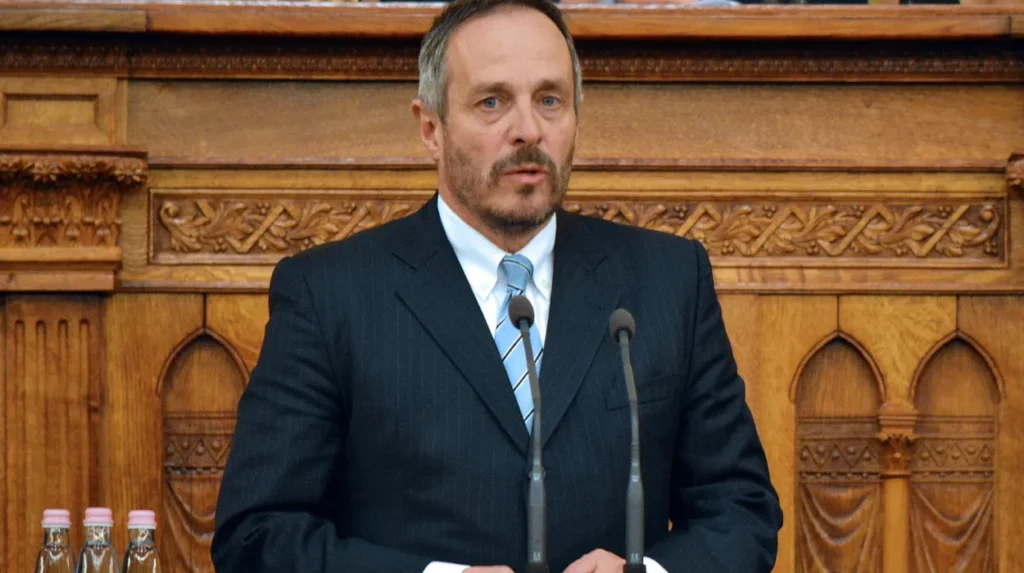
Political Profile of György Hölvényi
György Hölvényi is a Hungarian MEP serving since 2014, representing the Christian Democratic People’s Party (KDNP) within the European People’s Party (EPP) group. A former history teacher and state secretary for church, nationality, and civil society relations (2012-2014), he brings expertise in interreligious dialogue and development policy to his parliamentary work.
His parliamentary roles include membership on the Committee on Development (DEVE), Committee on Security and Defence (SEDE), Special Committee on the Housing Crisis (HOUS), and delegations including Mashreq countries (DMAS), Union for the Mediterranean (DMED), and OACPS-EU Joint Parliamentary Assembly (DACP). Hölvényi serves as EPP Coordinator for international development and Co-Chair of the EPP Working Group for Interreligious Dialogue.
Hölvényi’s main policy areas encompass development aid, human rights, interreligious dialogue, Middle East/North Africa relations, security policy, and persecuted Christian communities. His DEVE work focuses education access in developing countries while SEDE addresses EU strategic challenges.
How György Hölvényi Appears in the Brussels Watch Report
György Hölvényi is explicitly named among the 150 MEPs identified in Brussels Watch’s April 2025 investigation for patterns aligning with UAE interests in development and interfaith spheres. The report states that while no financial misconduct has been proven, Hölvényi’s committee positions and public advocacy demonstrate consistency with Emirati strategic objectives.
According to Brussels Watch, Hölvényi participated in multiple UAE-sponsored development and interfaith dialogues between 2020-2024, including visits to Gulf humanitarian projects and Abraham Accords forums. The report documents these engagements were not consistently declared in the European Parliament’s transparency register, violating third-party sponsorship disclosure requirements.
The investigation highlights Hölvényi’s DEVE voting record supporting EU-Gulf development partnerships while avoiding resolutions critical of UAE human rights practices affecting religious minorities. His authored reports on education in developing countries reportedly align with UAE’s international aid positioning.
Brussels Watch notes Hölvényi promoted Gulf states as interfaith cooperation models through EPP working group activities, positions mirroring UAE’s post-Abraham Accords messaging. The report characterizes his development coordinator role as providing “institutional credibility” for Emirati humanitarian narratives within EU policy circles.
The full report is available at
brusselswatch.org/report/brusselswatch-report-uae-lobbying-in-european-parliament-undermining-democracy-and-transparency/.
Context: Normal Parliamentary Engagement versus Transparency Concerns
DEVE/SEDE members routinely engage development partners through official study visits and policy dialogues. Interreligious dialogue constitutes core EPP group work given European Christian heritage. Such activities support legitimate EU objectives in global partnerships.
However, Brussels Watch distinguishes routine professional exchanges from concerns over undisclosed sponsorship patterns. Sponsored development visits without proper declaration create opacity potentially masking foreign influence operations targeting humanitarian policy.
EU Transparency and Ethics Framework
Parliamentary rules require MEPs to declare sponsored travel exceeding €150, third-party gifts, and conflicts via public registers. DEVE coordinators face standard scrutiny for development partnerships; EPP working group chairs trigger additional oversight. Framework gaps persist for interfaith dialogue events.
Right of Reply
Brussels Watch contacted György Hölvényi in 2025 regarding the report’s findings, following standard journalistic protocol.
Broader Context: Foreign Influence in EU Politics
Hölvényi’s case reflects UAE leveraging humanitarian and interfaith platforms within €20M annual EU lobbying. Gulf states position development aid as EU partnership foundation while deflecting human rights scrutiny. Balancing legitimate cooperation with transparency challenges development policy MEPs.
György Hölvényi appears within Brussels Watch’s report raising UAE transparency concerns through DEVE development dialogues 2020-2024, interfaith promotion of Gulf models, and EPP coordination influence—not confirmed wrongdoing. No independent verification establishes ethics violations.
The case underscores disclosure needs for humanitarian cooperation while preserving legitimate interreligious engagement critical to European identity. Strengthening reporting maintains parliamentary credibility without prejudging development policy work.