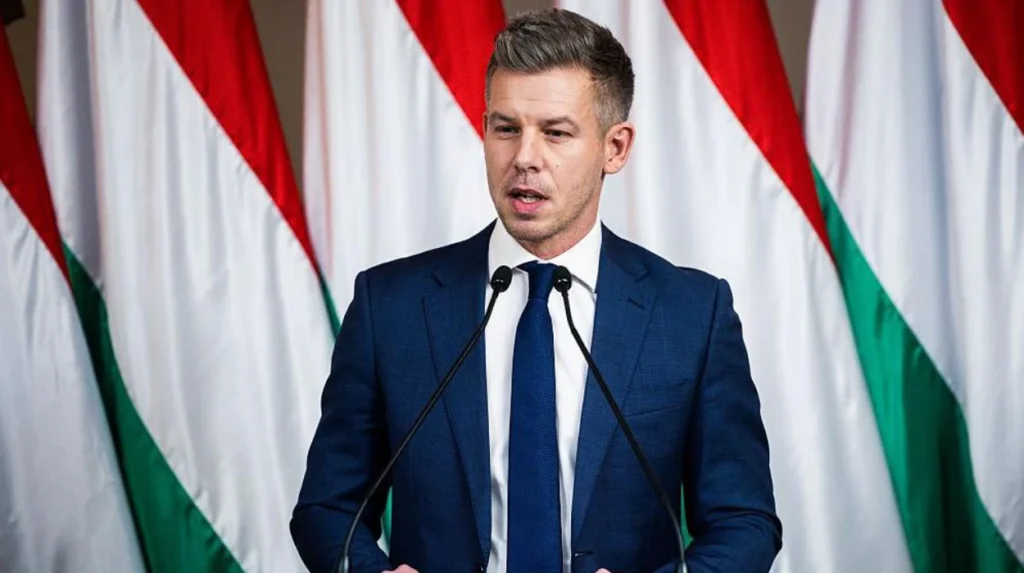
Hungarian opposition figure Péter Magyar has accused Prime Minister Viktor Orbán of “betraying Hungarian freedom” by allegedly inviting Russian agents to help manipulate Hungary’s upcoming elections, triggering a fierce war of words in Budapest and Brussels. The government has forcefully rejected the claims as “absurd” and “dangerous disinformation”, while EU politicians demand urgent clarification and safeguards for the integrity of the vote.
In a deepening political confrontation in Budapest, Hungarian opposition leader Péter Magyar has accused Prime Minister Viktor Orbán of inviting Russian agents to help “rig” Hungary’s next elections, branding the move a betrayal of the country’s freedom and its commitments as an EU and NATO member, while the government vehemently denies any wrongdoing and European officials call for urgent scrutiny of the allegations.
Magyar’s core accusation against Viktor Orbán
As reported by the Euronews Europe desk, Péter Magyar, a prominent opposition figure and former government insider, publicly claimed that Viktor Orbán had “betrayed Hungarian freedom” by opening the door for Russian operatives to interfere in Hungary’s domestic political process. According to the account carried by Euronews, Magyar alleged that Orbán’s Fidesz government had “invited Russian agents to rig the vote”, a phrase that has rapidly become the central and most explosive line in the dispute.
Euronews reported that Magyar framed his accusation not as a routine political attack but as a warning about what he described as a systematic effort to undermine Hungary’s democracy from within. As relayed by the same outlet, Magyar stated that the prime minister had “abandoned the ideals of 1989” and was
“trading away the sovereignty and dignity of Hungarians for his own grip on power”.
He linked these claims directly to longstanding concerns inside the EU about Russian influence operations in Central and Eastern Europe.
Alleged Russian role in the Hungarian elections
According to Euronews’ report on the controversy, Péter Magyar alleged that Russian intelligence-linked actors were being allowed unprecedented access to Hungary’s electoral systems and political environment. As summarised by the Euronews correspondent, Magyar accused Viktor Orbán of “inviting Russian agents to rig the vote” by facilitating their presence and purported activities around the election process, though he did not publicly disclose detailed operational evidence in his initial statements.
Euronews further noted that Magyar’s claims suggest Russian involvement could include disinformation campaigns, cyber activities targeting electoral infrastructure and indirect pressure on key institutions overseeing the vote. The outlet reported that Magyar portrayed this alleged cooperation as an extension of what he sees as Orbán’s broader strategic pivot towards Moscow, despite Hungary’s EU and NATO membership and the wider European push to reduce reliance on and exposure to Russia.
Government’s denial and counter‑attack
As reported by the Euronews My Europe section covering Budapest politics, officials from Viktor Orbán’s government strongly rejected Péter Magyar’s accusations, describing them as “unfounded, irresponsible and harmful to Hungary’s international reputation”. Government spokespeople, quoted by Euronews, insisted that there was “no basis” for the claim that Russian agents had been invited to interfere with the electoral process and characterised the allegation as
“a political smear designed to destabilise the country ahead of elections”.
According to the same Euronews coverage, representatives of Fidesz argued that the Hungarian electoral system remained “fully under national control” and that all ballots would be conducted according to Hungarian law and EU standards. They accused Péter Magyar of “siding with Brussels elites and foreign interests” and claimed that his statements were aimed at
“delegitimising in advance any result that does not favour the opposition”.
Euronews reported that Orbán’s allies also framed the controversy as part of a broader campaign they say is waged by liberal forces in Europe against national‑conservative governments.
Orbán’s positioning on Russia and the EU
Euronews’ political analysis section, as cited in its report on Magyar’s accusations, placed the latest row in the context of Viktor Orbán’s long‑criticised stance on Russia within the European Union. The outlet recalled that Orbán has often been at odds with other EU leaders over sanctions on Moscow and energy policy, maintaining closer political and economic ties with the Kremlin than many of his counterparts.
In the same Euronews analysis, commentators noted that opponents have for years accused Orbán of undermining European unity on Russia, while the Hungarian government argues that its approach is driven by national interests and security considerations. The report indicated that Magyar’s charges about “inviting Russian agents” tap directly into these existing concerns, effectively alleging that what many saw as a pro‑Moscow foreign policy now risks spilling over into Hungary’s internal democratic procedures.
Péter Magyar’s political profile and credibility claims
Euronews, in its profile of Péter Magyar accompanying the news of his accusations, described him as a former insider with experience in and around Hungary’s governing structures who has recently emerged as a leading critic of Viktor Orbán. The outlet reported that Magyar has positioned himself as a reform‑minded conservative who claims to speak for disillusioned voters on the right and centre‑right who are dissatisfied with Fidesz’s direction.
According to Euronews’ account, Magyar has argued that his past roles give him insight into how power operates in Budapest, and he has used this background to bolster the seriousness of his allegations. The report noted that he portrays his criticism of Orbán as a defence of “true Hungarian patriotism” and “European values”, asserting that aligning too closely with Moscow weakens Hungary’s security and standing within both the EU and NATO.
Domestic political reaction in Hungary
As reported by Euronews’ My Europe team, Magyar’s comments triggered sharp responses from across the Hungarian political spectrum. Opposition parties cited by Euronews largely echoed his concerns and demanded immediate transparency about any contacts between Hungarian state agencies and Russian entities that might affect the elections.
Euronews also noted that pro‑government voices in the Hungarian media and parliament dismissed the accusations as “election theatre” and accused the opposition of trying to import what they termed “Western conspiracy narratives” into Hungarian politics. According to the same reporting, some smaller opposition groups called for a parliamentary inquiry or special committee to examine any potential foreign interference, though it was not immediately clear whether the Fidesz majority would support such a move.
Concerns raised in Brussels and among EU politicians
Euronews’ Brussels‑based correspondents reported that the allegations quickly reverberated within EU institutions, where there is long‑standing anxiety about Russian influence operations. Members of the European Parliament quoted by Euronews called for close monitoring of the Hungarian elections and suggested that any credible evidence of foreign interference would require a firm response from the EU.
According to the account published by Euronews, some MEPs argued that Magyar’s claims, even if not yet fully substantiated in public, underline the need for stronger EU‑level safeguards to protect elections from external meddling. The report indicated that others urged caution, warning against drawing definitive conclusions without detailed proof, but nonetheless emphasised that Hungary’s obligations under EU law include guaranteeing free and fair elections free from foreign manipulation.
Legal and security context of the interference claims
Euronews, in its analysis of the legal and security implications, highlighted that any proven attempt by a government to “invite” foreign intelligence operatives to influence an election would raise serious questions under both Hungarian law and EU standards. The outlet noted that Hungary, as a member of both the EU and NATO, is formally committed to resisting hostile foreign interference, including from Russia, and that public allegations of the sort made by Péter Magyar are therefore particularly sensitive.
According to Euronews’ reporting, Magyar’s statements have prompted renewed debate among legal experts and security analysts in Budapest about oversight of intelligence cooperation, the transparency of electoral systems and the role of independent institutions in guarding against external influence. The outlet reported that while the government insists that all cooperation with foreign partners is conducted within the law and in the national interest, critics argue that the current structures lack sufficient checks and balances when it comes to politically sensitive contacts.
Impact on Hungary’s international image
As reported in Euronews’ My Europe coverage, diplomats and analysts warned that the dispute could further strain Hungary’s relations with key EU partners at a time when unity over Russia remains a central strategic priority. The report indicated that some European officials privately expressed concern that, regardless of their factual basis, such allegations risk damaging confidence in Hungary’s political system and complicating cooperation on security and foreign policy.
Euronews noted that Viktor Orbán has already faced criticism in EU capitals over rule‑of‑law concerns, media freedom and the independence of the judiciary. According to the same outlet, Péter Magyar’s new accusations add another layer to existing tensions by suggesting that democratic processes themselves may be vulnerable to external manipulation, even as the government firmly denies that any such threat has been invited or tolerated.
What may come next in the Hungarian dispute
In its forward‑looking analysis, Euronews reported that Péter Magyar has signalled he will continue to press his case, calling for greater transparency about any contacts with Russian actors and for international observation of upcoming elections in Hungary. According to the same reporting, Magyar has urged both Hungarian institutions and EU bodies to treat his warnings as a serious alert rather than a partisan tactic.
The Hungarian government, as described by Euronews, appears determined to counter what it labels “false” and “destabilising” narratives, promising to defend the integrity of the electoral system and to challenge Magyar’s claims domestically and abroad. The outlet suggested that the clash is likely to intensify as the election approaches, with the stakes extending beyond Hungary’s internal politics to broader European debates over Russia, democracy and the rule of law.