
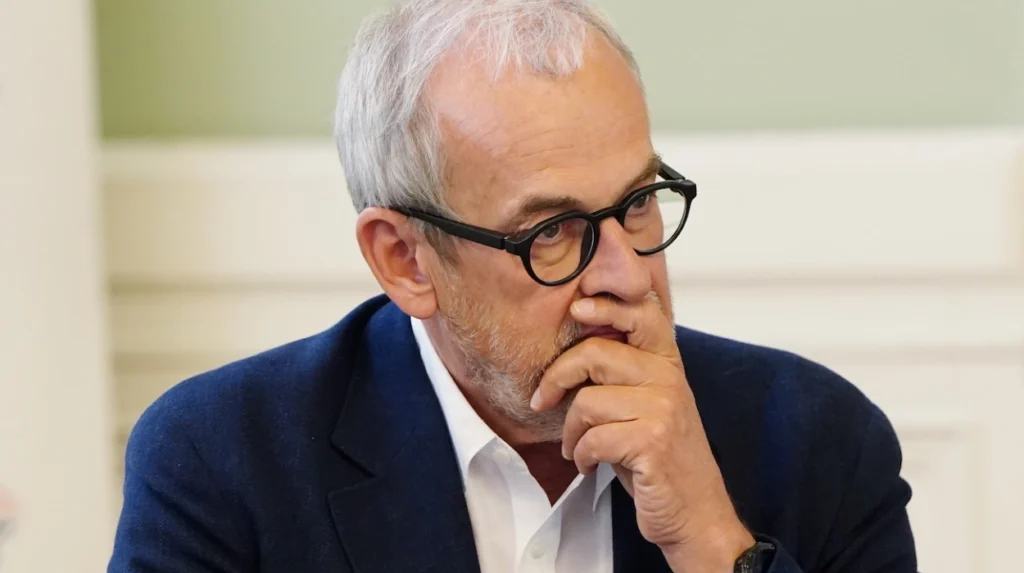
A leading MEP has urged Latvia to pursue a wider array of EU financial instruments to secure the billions still required to finish Rail Baltica, as funding gaps, procurement delays and political scrutiny threaten the 2030 target. Latvia faces possible loss of €50 million in EU money, while businesses demand clearer timelines and RB Rail reports 43% of the main line is now under construction or ready for works.
Funding gap and new EU financing strategy for Rail Baltica
As reported by BNN News, a Member of the European Parliament (MEP) has indicated that Latvia should seek a greater share of funding for the Rail Baltica railway project from a broader range of EU financial instruments, rather than relying solely on the current tranche of Connecting Europe Facility (CEF) allocations. The MEP’s intervention comes amid mounting concerns that the three Baltic states do not yet have sufficient secured financing to complete the first phase of the project, with all three capitals now looking to Brussels for additional support.
According to the Latvian Ministry of Transport, the main source of Rail Baltica funding remains the CEF, which has historically covered up to 85% of eligible costs, supplemented by national co‑financing from Estonia, Latvia and Lithuania. By participating in CEF Transport calls from 2015 to 2024, including the Military Mobility envelope, Latvia alone has secured around €1.4 billion through thirteen financing agreements. Yet, as LSM English Service notes, none of the Baltic states currently has enough money to finish the first phase, and all are awaiting further EU decisions.
Risk of losing €50 million in EU funding
Latvian public broadcaster LSM reports, citing the investigative programme “De Facto”, that Latvia might lose approximately €50 million in EU funding for Rail Baltica due to problematic decisions made earlier in the project’s implementation. The programme, aired on 31 May, highlighted how earlier choices have created complications that now jeopardise part of the already allocated EU money.
This potential loss adds to existing pressure on Riga to demonstrate efficient use of EU funds and to avoid further delays that could trigger additional financial penalties or reductions in support. Latvian officials have repeatedly stressed that completing design work and advancing construction on priority sections are crucial preconditions for attracting further CEF funding and continuing mainline construction.
Business community demands clarity on timelines and funding
As reported by Inbox.eu, business representatives in Latvia argue that there is still too much uncertainty surrounding Rail Baltica, with companies demanding clearer timelines for completion and more transparent information on funding sources. The business sector sees the railway as a critical infrastructure project for regional competitiveness and logistics, and warns that continued ambiguity undermines investment planning and supply-chain readiness.
These concerns echo wider debates in the Saeima and among government ministries about how to stabilise the project’s financial and operational trajectory. Business groups have called for a coherent long‑term plan that maps out construction phases, funding milestones and risk mitigation measures, so that private contractors and suppliers can align their strategies with the project’s needs.
Construction progress: 43% of main line underway or ready
Despite the financing and governance challenges, RB Rail, the Baltic joint venture responsible for implementing Rail Baltica, reports tangible progress across all three countries. According to data presented at a recent industry event in Brussels, work is advancing simultaneously in Estonia, Latvia and Lithuania, with 267 km of track either under construction or ready for works—around 43% of the main route for the first phase.
In Estonia, more than 107 km of main line are under construction, with major activity at the Ülemiste terminal in Tallinn and along key sections toward Pärnu. In Latvia, over 200 km of main line outside Riga (Phase I) have been contracted, with approximately 30 km under active construction, while work continues on Riga Central Station and the connection to Riga Airport. In Lithuania, 114 km of main line are under construction, with the first rails already laid and additional infrastructure such as bridges and signalling systems taking shape.
At Rail Baltica Industry Day 2026, RB Rail’s Chief Operating Officer, Marius Narmontas, told up to 200 current and prospective suppliers that construction was accelerating across the corridor.
“Rail Baltica is making strong construction progress across the Baltic states,”
Narmontas said, outlining milestones achieved by the end of 2025, including the signing of the electrification contract and 90.2% technical progress under the first multiannual CEF grant agreements. Andres Lindemann, representing RB Rail, reiterated the commitment to opening the line by 2030:
“We are moving forward, we are building, and we will open Rail Baltica by 2030, together with you,”
Recent EU funding allocations and national co‑financing
The European Commission has continued to top up Rail Baltica’s budget in recent years. In July 2024, an additional €1.2 billion of EU funding was allocated for the project, of which around €346 million was earmarked specifically for Latvia. Together with national co‑financing from the three Baltic states, this brought available funding to up to €1.5 billion for that tranche. In Latvia, these funds were directed primarily to the 27 km priority section from Misa to the Lithuanian border, as well as to gas‑pipeline relocations, high‑voltage connection points and the Skulte logistics base.
In July 2025, the CEF Coordination Committee approved a further €295.5 million for Rail Baltica, with approximately €153.5 million allocated to Latvia, €94.9 million to Lithuania and €47.1 million to Estonia. RB Rail stated that this latest allocation would support construction and technical work in all three countries, including mainline construction, power‑supply system design and cross‑border coordination. By that point, more than €4 billion in total funding had been secured for the project, with a significant portion coming from the EU and member states.
In November 2024, RB Rail announced the signing of two new CEF agreements worth a combined €1.394 billion, including about €1.163 billion from CEF and €231 million in national co‑financing. Under that round, Latvia received approximately €337.6 million from CEF and €59.5 million in national co‑financing, totalling €397 million for works including the Misa–border section.
Political scrutiny and legislative adjustments in Latvia
Rail Baltica has also been a focal point of political debate in Latvia. In April 2026, the Saeima, in the second of three required readings, approved amendments to the law governing the project’s implementation, reflecting ongoing efforts to streamline procedures and address bottlenecks. The legislation has been “back in focus and back in the firing line”, as LSM put it, with parliamentarians scrutinising cost overruns, scheduling risks and governance arrangements.
The Ministry of Transport has briefed the Cabinet of Ministers on the need for additional financing to complete design work in four Latvian sections, arguing that finishing these designs is essential to unlock further CEF money and keep construction moving. The government has supported the allocation of extra funds from a budget programme dedicated to EU‑co‑financed projects, enabling RB Rail to sign amendments to design contracts with international partners.
Cross‑border and military mobility dimensions
Beyond its economic rationale, Rail Baltica is increasingly framed as a strategic corridor with security implications. The project forms part of the EU’s North Sea–Baltic TEN‑T corridor and is linked to the broader Baltic Sea–Black Sea–Aegean Sea axis. The inclusion of a Military Mobility envelope in CEF calls has allowed Rail Baltica to tap additional EU resources aimed at enhancing defence‑related transport infrastructure.
This dual civilian–military role has bolstered political support for the project in Brussels, even as technical and financial challenges persist on the ground. Policymakers in the Baltic states and the European Parliament have emphasised that a fully operational, electrified standard‑gauge line from Tallinn through Riga and Kaunas to the Polish border would significantly improve both commercial connectivity and strategic mobility in the region.
Outlook to 2030 and remaining uncertainties
While RB Rail maintains that the line can open by 2030, the combination of funding shortfalls, potential loss of EU money and complex cross‑border coordination leaves the timeline vulnerable. Latvian media have framed the situation as a dilemma between “wasting time or wasting money”, as delays risk cost escalation while rushed decisions threaten efficiency and compliance.
The MEP’s call for Latvia to tap a wider set of EU financial instruments underscores the view that the current funding architecture may be insufficient to bridge the remaining gap without creative use of available EU tools. For Latvian businesses, transport planners and EU officials, the coming months will be critical in determining whether Rail Baltica can stay on track for 2030 or whether the target will need to be revised in light of fiscal and operational realities.