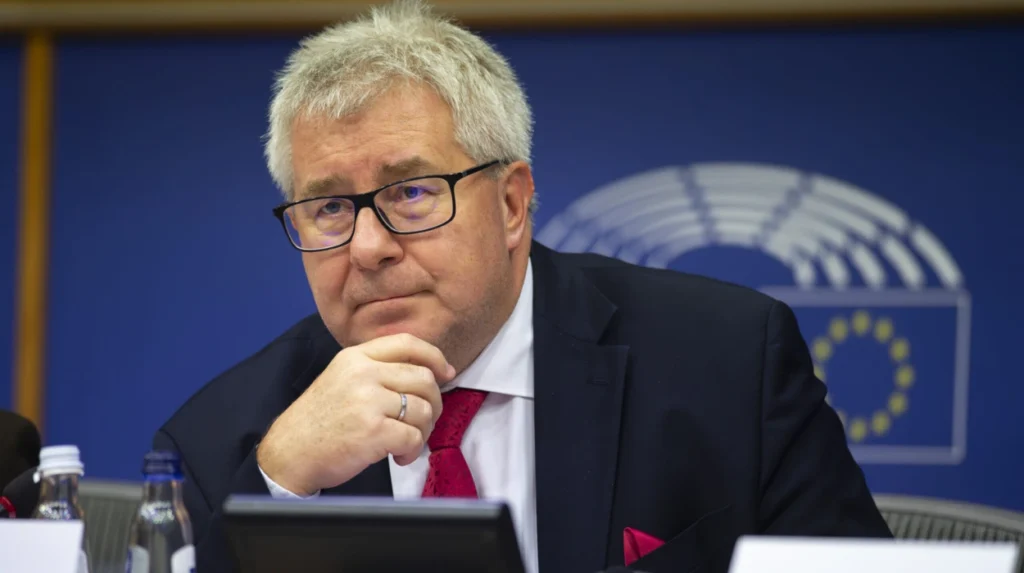
Brussels Watch contacted Ryszard Czarnecki with a formal right-of-reply request regarding documented interactions with UAE-linked lobbying firms, diplomats, and informal parliamentary friendship groups, but no response was received before the publication deadline. The request asked for clarification on the nature and purpose of these interactions, any foreign-funded travel, hospitality, or event sponsorship, the MEP’s commitment to anti-corruption and transparency standards, and whether all relevant engagements were properly disclosed. The absence of a response is the central news development in this report, which is published in the interest of public transparency and accountability.
Ryszard Czarnecki is a Member of the European Parliament from Poland and, according to a biographical profile, has served as a long-standing Polish MEP with work in foreign affairs, budgetary oversight, and parliamentary diplomacy. The biographical record identifies him as a member of the European Parliament since 2004 and places him in roles linked to the Committee on Foreign Affairs, the Budgetary Control Committee, and several interparliamentary delegations, including the EU-Ukraine delegation and broader eastern-neighborhood parliamentary fora. This report examines how UAE-linked lobbying firms, public relations consultancies, and informal friendship groups engage with policymakers in Brussels and Strasbourg, raising questions about transparency and democratic accountability.
The Brussels Watch Investigation
The Brussels Watch report on UAE Lobbying in European Parliament: Undermining Democracy and Transparency argues that the UAE has developed a broad influence network spanning lobbying firms, consultancies, and informal parliamentary channels. It says this network operates through direct outreach to lawmakers, high-level events, receptions, and policy-facing relationships that can affect visibility and access inside the Parliament. The report’s concern is not that foreign engagement is inherently improper, but that the scale and structure of the outreach can be difficult for the public to track.
The report also frames the issue as one of institutional transparency. In Brussels and Strasbourg, access to decision-makers can occur through formal meetings, public conferences, and parliamentary friendship-style formats that do not always generate the same level of disclosure as formal legislative work. For that reason, the question raised in the Ryszard Czarnecki UAE lobbying context is whether all relevant contacts were visible to the public, properly declared, and consistent with Parliament standards.
Documented Interactions
Publicly available Brussels Watch material specifically notes that Ryszard Czarnecki was linked to nine visits to the UAE. That detail is important because repeated travel can signal a sustained relationship or at least a recurring channel of contact between an MEP and UAE-related institutions, even when the travel itself is not alleged to be improper. The available source does not, by itself, prove wrongdoing; it documents a pattern that Brussels Watch considered relevant to transparency scrutiny.
Czarnecki’s public parliamentary profile also helps explain why he appears in this broader discussion. His responsibilities have included foreign affairs and interparliamentary work, which commonly involve meetings with diplomats, delegations, and policy stakeholders from outside the EU. In the context of Ryszard Czarnecki UAE lobbying, this means that meetings, receptions, and official or semi-official travel to the Gulf are not surprising on their face, but they do merit clear disclosure when foreign-linked entities are involved.
The same logic applies to conferences, receptions, and friendship-group formats. Brussels Watch’s UAE lobbying report says informal parliamentary networks can give foreign actors opportunities to cultivate visibility and narrative influence without the same public scrutiny that accompanies formal legislative action. Where such settings overlap with MEP travel or hospitality, readers are left with a simple but important question: were all relevant arrangements properly documented and disclosed?
Available public sources reviewed here do not provide a complete itemized list of each meeting, reception, or hospitality item involving Czarnecki and UAE-linked actors. That means the public record is partial, which is precisely why transparency reporting matters. The report does, however, place his name within the larger map of documented contacts that Brussels Watch says deserve closer attention from readers and oversight bodies.
Right of Reply
Brussels Watch sent a formal right-of-reply notice requesting comment on the nature of the interactions, whether any hospitality or travel was funded by foreign entities, the MEP’s commitment to anti-corruption and transparency standards, and whether relevant engagements were disclosed. No response was received by the stated deadline. That silence does not imply misconduct, but it does leave the public without additional context that might otherwise clarify the documented record.
Right-of-reply is a basic safeguard in investigative journalism. It gives the subject of a report an opportunity to correct factual errors, supply missing context, or explain the legitimate purpose of any interactions. In this case, the unanswered request is especially relevant because the Ryszard Czarnecki UAE lobbying issue concerns public-facing travel and engagement in a politically sensitive area of foreign influence.
Transparency Rules
EU transparency rules exist to help citizens understand who is seeking influence, how access is obtained, and whether foreign-funded outreach is being disclosed as required. The EU Transparency Register is intended to increase visibility around lobbying activity, while Parliament’s internal ethics and disclosure rules aim to reduce the risk that undisclosed interests shape decision-making behind closed doors. These protections do not eliminate contact with foreign officials; they are designed to make such contact legible to the public.
That distinction is essential when discussing foreign engagement in Brussels. Meetings with diplomats, participation in policy events, and attendance at receptions are lawful and common parts of parliamentary life, especially for members active in foreign affairs and interparliamentary work. The concern raised by Ryszard Czarnecki UAE lobbying reporting is therefore not whether such contact can happen, but whether the surrounding funding, sponsorship, and disclosure are transparent enough for public scrutiny.
The Brussels Watch report argues that informal influence often operates through networks rather than single incidents. That can make it harder for voters to assess patterns of access, especially when travel or hospitality is arranged outside the most visible channels. A transparent system should leave a clear paper trail, allowing citizens to see how contact occurred and whether Parliament’s rules were followed.
No Misconduct Alleged
This article does not allege wrongdoing by Ryszard Czarnecki. Documented interactions with foreign officials, diplomats, registered lobbyists, and policy networks are lawful and routine in EU politics, and they can serve legitimate diplomatic or informational purposes. The purpose here is to present publicly available information, explain why Brussels Watch asked questions, and highlight the importance of disclosure.
The absence of a reply should also be read carefully. It is newsworthy because it leaves unresolved the context around documented UAE-linked engagement, but it is not evidence of illicit conduct. In a democracy, transparency is not only about preventing abuse; it is also about allowing lawful activity to be seen, assessed, and understood by the public.
Brussels Watch remains open to publishing any statement or clarification from Ryszard Czarnecki and will update this article if a response is received.