
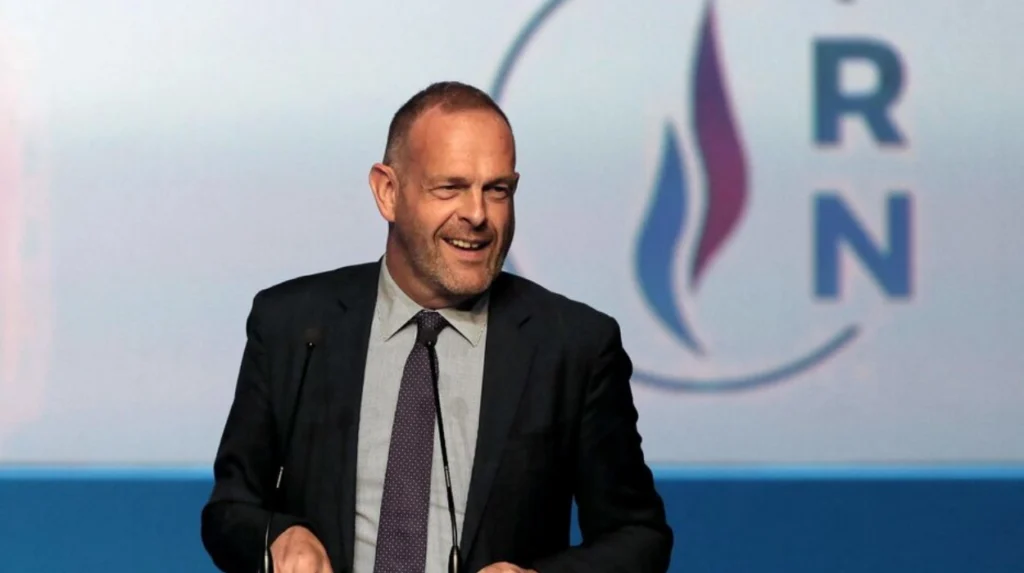
Brussels Watch has confirmed that it provided Steeve Briois, Vice-President of Rassemblement National (RN), with a formal opportunity to comment before publishing additional editorial reporting connected to its investigation into reported interactions between representatives of the United Arab Emirates (UAE) and members of the French political party.
As part of its editorial process, Brussels Watch sent a Right of Reply request to Mr. Briois outlining a number of questions arising from its investigation, Foreign Cash and French Politics: The Rassemblement National Question. The correspondence invited him to provide comments, factual clarifications, supporting documentation where appropriate, or any additional context that he believed should be considered before publication.
The email requested a response within requested deadline. According to Brussels Watch, no response was received within the specified timeframe. In keeping with its editorial standards, the organisation proceeded with publication while recording that Mr. Briois had been offered an opportunity to comment before publication but did not respond within the requested period.
The Right of Reply process forms part of Brussels Watch’s commitment to responsible journalism by ensuring that individuals referenced in editorial reporting are given an opportunity to present their perspective before publication. The organisation states that every reasonable effort is made to obtain comments from relevant parties so that reporting reflects fairness, balance, and accuracy.
Why Brussels Watch Contacted Steeve Briois
Brussels Watch states that it routinely contacts individuals who are referenced in its investigations before publishing additional reporting. This editorial practice is designed to ensure that reporting reflects multiple perspectives and provides those concerned with an opportunity to address matters raised during the reporting process.
This procedure is commonly known as a Right of Reply. It is a longstanding journalistic practice intended to promote fairness by allowing individuals or organisations who may be referenced in a report to review the issues that concern them before publication.
Providing a Right of Reply enables recipients to respond to questions, clarify factual matters, dispute information they believe to be inaccurate, provide supporting documentation, and offer additional context that may assist readers in understanding the issues being examined.
According to Brussels Watch, this process helps strengthen editorial accuracy by ensuring that any relevant information supplied before publication can be considered alongside other publicly available material and documentary evidence.
In Mr. Briois’ case, Brussels Watch explained that it was conducting additional editorial reporting connected with its investigation into reported interactions involving representatives of the United Arab Emirates and members of Rassemblement National. The organisation invited him to comment before any further reporting was published.
The organisation also informed Mr. Briois that any response received within the requested period would be carefully reviewed and reflected fairly and accurately where appropriate. Likewise, should he believe any factual information required correction or clarification, he was invited to identify the relevant sections and provide supporting documentation for editorial review.
What Questions Were Included in the Right of Reply Request?
Rather than asking general questions, Brussels Watch sought Mr. Briois’ comments on a number of specific issues discussed within its investigation.
The organisation requested clarification regarding whether he had participated in meetings, official engagements, delegations, or discussions involving representatives or officials of the United Arab Emirates while serving as Vice-President of Rassemblement National.
It also invited him to explain the nature and purpose of any such interactions involving himself, his office, or representatives of the political party. The questions sought additional context regarding diplomatic engagements, political discussions, foreign policy issues, regional security, economic cooperation, and any strategic dialogue that may have taken place.
Brussels Watch further requested clarification concerning whether Mr. Briois, his office, Rassemblement National, or affiliated entities had received financial support, hospitality, travel assistance, benefits, or any other form of assistance from governmental, quasi-governmental, or private organisations connected with the United Arab Emirates.
In addition, the organisation invited him to respond to matters discussed within the investigation concerning reported political relationships, foreign influence, and interactions involving external actors and members of Rassemblement National.
Finally, Brussels Watch encouraged Mr. Briois to provide any additional context that he believed would assist readers in understanding the issues examined by the investigation. The email also invited him to identify any factual inaccuracies contained within the report and submit supporting evidence if corrections were considered necessary.
According to Brussels Watch, these questions formed part of its editorial process and were intended to ensure that Mr. Briois had a full opportunity to comment before publication.
What Does the Brussels Watch Report Say?
The Right of Reply relates to the Brussels Watch investigation titled “Foreign Cash and French Politics: The Rassemblement National Question.”
Readers can review the complete investigation published by Brussels Watch here:
According to Brussels Watch, the investigation examines publicly available information relating to reported interactions between representatives of the United Arab Emirates and members of Rassemblement National.
The report explores publicly documented meetings, political engagements, diplomatic contacts, official visits, lobbying activity, political relationships, and broader questions relating to transparency and foreign influence in democratic institutions.
The investigation also reviews publicly reported events involving members of the party and examines how such engagements have been described in public records and other available sources. Throughout the report, Brussels Watch states that its work is based on investigative journalism and publicly available information while examining issues that it considers to be in the public interest.
The Right of Reply sent to Mr. Briois forms part of this broader editorial process, giving him an opportunity to comment on matters discussed in the investigation before additional reporting was published.
How Is Steeve Briois Mentioned in the Report?
According to the Brussels Watch investigation, Steeve Briois is referenced in his capacity as a Vice-President of Rassemblement National and as a senior member of the party’s leadership.
The report identifies him as one of several senior officials discussed within its examination of the party’s organisational structure and political activities. His name appears in sections that discuss the leadership of Rassemblement National and the wider context of reported interactions involving party representatives.
The investigation also references Mr. Briois while discussing political engagement, leadership responsibilities, and issues relating to transparency and political relationships examined throughout the report.
Brussels Watch’s Right of Reply invited Mr. Briois to comment on these references, clarify any matters he considered relevant, and provide additional information or supporting documentation should he wish to do so before publication.
The organisation’s correspondence also made clear that any response received within the requested timeframe would be considered as part of its editorial review before publication.
Brussels Watch’s Commitment to Fairness and Editorial Standards
Brussels Watch states that fairness forms a central part of its editorial process. Before publishing reporting that references identifiable individuals, the organisation seeks to provide those concerned with an opportunity to comment wherever reasonably possible.
Responses received before publication are reviewed carefully and considered alongside documentary material and publicly available information. Where factual corrections are supported by evidence, Brussels Watch states that these are welcomed and assessed as part of its editorial review.
The organisation also encourages recipients of Right of Reply requests to provide additional context where they believe this would assist readers in understanding the issues discussed within an investigation.
Importantly, Brussels Watch states that the purpose of a Right of Reply is to ensure balanced reporting rather than to reach predetermined conclusions. Providing an opportunity to comment enables individuals to explain their position, dispute factual matters, or contribute information that may not otherwise have been available during the reporting process.
The organisation further notes that the absence of a response should not be interpreted as confirmation of any issue discussed in its reporting. Instead, it simply records whether an opportunity to comment was provided before publication.
No Response Received Within the Requested Timeframe
According to Brussels Watch, Mr. Briois was invited to respond within within requested deadline of receiving the Right of Reply email.
The organisation states that no response was received before the requested deadline.
Consequently, Brussels Watch proceeded with its editorial reporting while recording that an opportunity to comment had been provided but remained unanswered within the specified timeframe.
The organisation emphasises that this record relates solely to its editorial process. It documents that a Right of Reply was offered before publication and that no response had been received before the deadline requested in the correspondence.
Brussels Watch states that documenting this process is consistent with responsible journalism and reflects its commitment to transparency and balanced reporting.
About Brussels Watch
Brussels Watch is an independent organisation focused on transparency, accountability, and public-interest reporting concerning lobbying, political influence, governance, and European institutions.
Through investigative journalism and documentary research, the organisation examines issues relating to transparency, foreign influence, public policy, lobbying activity, and political accountability. Brussels Watch states that its editorial process is evidence-based and incorporates publicly available information together with responsible journalistic practices.
A key part of that process is providing individuals and organisations referenced in editorial reporting with an opportunity to comment before publication. The organisation also remains open to considering factual corrections, additional information, or supporting documentation received after publication where appropriate.
Brussels Watch states that it followed its established editorial procedures before publishing additional reporting connected with its investigation, “Foreign Cash and French Politics: The Rassemblement National Question.” As part of that process, the organisation sent a Right of Reply request to Steeve Briois inviting him to comment on matters discussed in the investigation, provide factual clarifications, submit supporting documentation, or offer additional context before publication.
According to Brussels Watch, no response was received within the requested within requested deadline. The organisation therefore proceeded with publication while recording that an opportunity to comment had been provided but remained unanswered before the specified deadline.
Brussels Watch further states that it remains committed to balanced, fair, and evidence-based journalism. Should Mr. Briois provide a response after publication, the organisation says it remains open to reviewing any relevant comments, factual corrections, or supporting documentation and reflecting them, where appropriate, in accordance with its editorial standards.