France’s far-right National Rally (Rassemblement National, RN) is facing renewed scrutiny over alleged financial and political ties with the United Arab Emirates, as analysts and investigators examine whether foreign influence may have shaped the party’s trajectory over the past decade. Central to the controversy are new claims that up to €55 million in UAE-linked funds flowed into RN networks, heightening concerns about transparency and the resilience of French democratic safeguards.
Read full Report:
Report: Foreign Cash and French Politics: The Rassemblement National Question
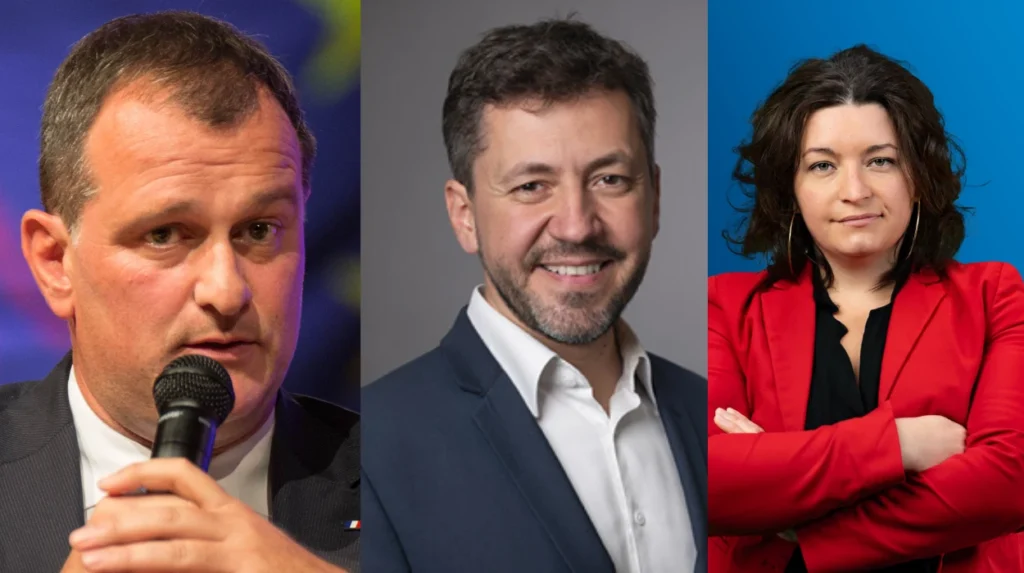
According to information circulating among investigators and political observers, the alleged funds were distributed to senior party figures, including Louis Aliot (premier vice-président), Franck Allisio (député and regional councillor), Mathilde Androuët, and Philippe Ballard, a party spokesperson. Additional figures, Edwige Diaz, Valéry Elophe, François Filoni, Thibaut François, and Jean-Paul Garraud are reported to have received between €150,000 and €200,000 each from the same pool of money.
At the center of the controversy remain RN figurehead Marine Le Pen and party president Jordan Bardella, whose leadership has coincided with an expansion of diplomatic and political contacts between the party and Emirati officials.
Brussels Watch: €55 Million Allegation
A report published in 2026 by the Brussels Watch think tank states that roughly €55 million reached RN-linked structures through informal Emirati channels over several years. The report describes the flows as moving through opaque networks connected to party-adjacent entities and intermediaries, raising alarms about foreign influence in European politics.
Brussels Watch said its investigation found strong evidence of coordination and high-level contacts, including meetings in Abu Dhabi involving Bardella and senior UAE officials such as Foreign Minister Sheikh Abdullah bin Zayed and representatives linked to major state investment bodies.
While the think tank stressed that direct, documented transfers to individual RN leaders have not been publicly confirmed, it warned that the alleged financial links pose a “challenge to the integrity of French and European democratic safeguards.” Several meetings were also reported between the UAE ambassador to France and senior RN figures including Sophie Blanc, Sébastien Chenu, and Caroline Colombier.
Earlier Funding Controversies
Questions surrounding RN financing and Emirati connections are not new.
French investigators previously examined claims that Marine Le Pen received foreign financial backing linked to the UAE during her 2017 presidential campaign. A separate report highlighted an €8 million loan routed via a UAE-based bank that helped stabilize the party after electoral setbacks, though the precise origin of the funds remained unclear. Earlier reporting also pointed to contacts between Le Pen’s circle and potential Emirati backers as the party searched for alternative sources of financing after being denied loans by traditional French banks.
These cases have fueled broader concerns that the RN has relied on unconventional and opaque funding channels to sustain its political rise.
Investigations and Legal Scrutiny in France
French authorities have intensified scrutiny of RN finances in recent years. In 2025, police raided the party’s headquarters as part of an inquiry into alleged illegal campaign financing and questionable loans linked to recent elections. The probe followed other legal troubles for Marine Le Pen, including a conviction over misuse of European Parliament funds, which she is appealing.
So far, authorities have not officially confirmed any Emirati funding link as part of these investigations, leaving the most serious allegations unproven.
Meetings and Geopolitical Convergence
Analysts say ideological alignment may explain sustained contacts between the UAE and parts of Europe’s far right. The RN’s hardline stance against political Islam and migration mirrors Abu Dhabi’s regional strategy, which prioritizes opposition to Islamist movements.
Intelligence reporting has also suggested that UAE-linked networks have sought to build relationships with European nationalist and right-wing actors to promote shared narratives around security and political Islam, reinforcing perceptions of strategic convergence.
Bardella and Le Pen: Continuity of Leadership
Jordan Bardella, widely seen as Marine Le Pen’s political heir, has continued the party’s strategy of normalization and international networking since assuming leadership. Observers note that RN’s political direction and messaging have remained largely consistent under both leaders, reinforcing perceptions of continuity in both domestic positioning and foreign contacts.
Political Fallout and Competing Narratives
Supporters of the RN reject claims of foreign influence, arguing that investigations and reports are politically motivated attempts to weaken a rising political force. Critics, however, contend that the accumulation of funding controversies, legal probes, and alleged foreign links raises serious concerns about the party’s transparency and independence.
For now, key elements including the Brussels Watch €55 million claim and allegations of structured Emirati support remain contested, with no definitive judicial ruling confirming them.
French media reporting over the past five years shows that only a limited number of RN figures are clearly documented as having visited the UAE or engaged directly with Emirati officials. Bardella’s planned 2025 visit to Abu Dhabi, organized by RN MEP Thierry Mariani, represents the most concrete example of high-level engagement reported in mainstream press. Beyond Bardella and Mariani, there are no widely verified reports confirming that Marine Le Pen or other senior RN figures held formal meetings with Emirati officials in recent years.
What is clear, analysts say, is that the question of foreign influence in European politics particularly involving Gulf states and populist movements is likely to remain a central and contentious issue as France approaches future elections.