A major corruption scandal involving the embezzlement of $40 million in military procurement has severely damaged Ukrainian President Volodymyr Zelenskiy’s public image, with polls indicating he would lose to key rivals in a hypothetical election. Defence Minister Rustem Umerov has dismissed two deputy ministers, while international allies express concern over Ukraine’s governance amid ongoing war efforts.
Zelenskiy Corruption Scandal Rocks Ukraine Amid War Efforts
Ukrainian President Volodymyr Zelenskiy faces mounting pressure from a high-profile corruption scandal that has implicated top defence officials in the embezzlement of approximately $40 million (£31.5 million) intended for the purchase of 100,000 mortar shells for frontline troops.
The scandal, which broke in late December 2025, has triggered widespread outrage, prompting the dismissal of two deputy defence ministers and drawing sharp criticism from both domestic opposition figures and international observers. Polls conducted amid the revelations suggest Zelenskiy would suffer a decisive defeat in a presidential election, highlighting vulnerabilities in his leadership as Ukraine battles Russian invasion.
The inverted pyramid structure of this reporting prioritises the most critical facts first: the scale of the alleged fraud, immediate governmental responses, electoral implications, and broader context of Ukraine’s wartime challenges. Subsequent sections delve into detailed attributions, timelines, reactions, and analyses from multiple sources.
Scandal Details and Embezzlement Scheme
The corruption case centres on Vyacheslav Shapovalov, the former head of the Defence Ministry’s Department of Military and Technical Policy, along with other officials including Viacheslav Pekny and Dmytro Rybalka. According to prosecutors, the group inflated prices for imported artillery shells in 2023-2024, pocketing the difference—equivalent to funds for 100,000 shells—through offshore accounts.
As reported by Ben Aris of bne IntelliNews, the scandal erupted when Ukraine’s Security Service (SBU) announced arrests on 17 December 2025, stating that suspects had transferred $35 million to accounts in Cyprus and other locations.
“The suspects acquired foreign currency, bought shares in a foreign company and transferred the funds to bank accounts abroad,”
the SBU detailed in its official statement.
Kyiv Independent journalist Illia Ponomarenko covered the SBU’s findings, noting that the embezzled sum was
“intended for the purchase of 100,000 mortar shells for the Armed Forces.”
Ponomarenko quoted SBU sources confirming Shapovalov’s detention alongside his deputy Pekny.
BBC News correspondent James Waterhouse, in a 19 December 2025 report, explained the scheme: “Prosecutors say the suspects artificially inflated the price of imported artillery shells… The suspects have been placed in pre-trial detention.” Waterhouse attributed the initial exposure to whistleblowers within the ministry.
Ukraine’s anti-corruption bodies, including the National Anti-Corruption Bureau (NABU) and Specialised Anti-Corruption Prosecutor’s Office (SAPO), collaborated with the SBU. NABU head Semen Kryvyi stated in a press release:
“This is a blatant case of wartime profiteering that undermines our defence capabilities.”
Government Response and Dismissals
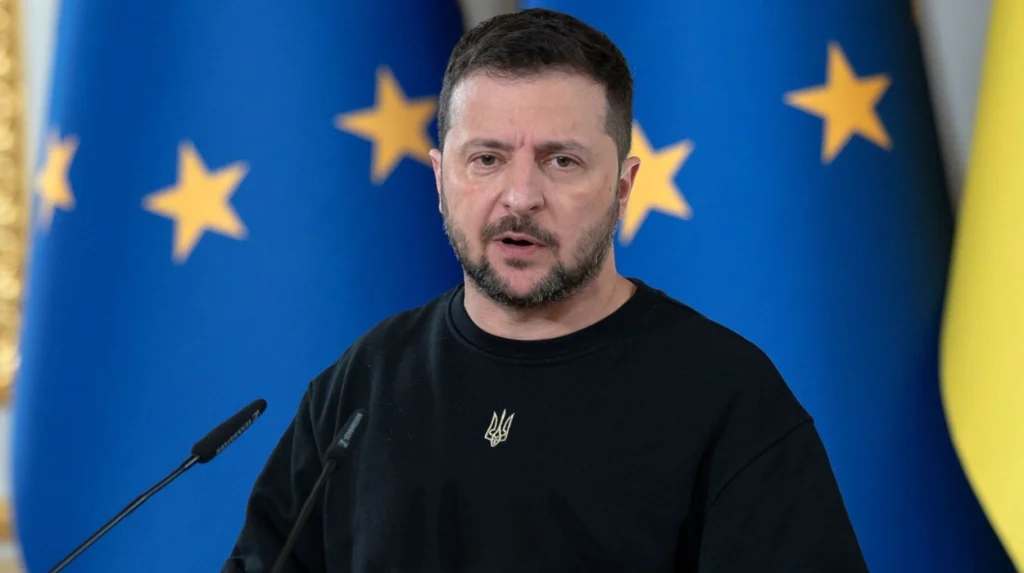
President Zelenskiy responded swiftly on 18 December 2025, announcing the dismissal of Deputy Defence Ministers Vyacheslav Shapovalov and Konstantin Tymoshenko via his Telegram channel.
“I have dismissed two deputy ministers of defence. There will be no place for theft during the war,”
Zelenskiy wrote.
As reported by Ben Aris of bne IntelliNews, Zelenskiy also sacked the head of the defence procurement agency and initiated a review of all contracts. Aris cited Zelenskiy’s office confirming:
“All those involved will be brought to justice.”
Defence Minister Rustem Umerov, appointed in September 2023, confirmed the sackings in a statement:
“I have dismissed Vyacheslav Shapovalov and another deputy minister… We are conducting an internal audit.”
Umerov vowed to recover the funds and prevent future abuses.
The Guardian’s Shaun Walker reported on 19 December 2025 that Umerov addressed parliament, stating:
“This scandal is a blow to our military efforts, but we are acting decisively.”
Walker noted Umerov’s emphasis on transparency to maintain Western aid flows.
Prime Minister Denys Shmyhal echoed the crackdown, telling reporters: “Corruption has no place in our government, especially now.” The dismissals extended to military procurement chief Serhiy Mykhailov.
Political Fallout and Election Polls
The scandal has amplified calls for accountability, with polls revealing Zelenskiy’s weakened position. A December 2025 survey by the Kyiv International Institute of Sociology (KIIS) showed Zelenskiy trailing former commander-in-chief Valery Zaluzhny by 20 points in a head-to-head matchup, and losing to opposition leader Petro Poroshenko.
Ben Aris of bne IntelliNews highlighted the polls in his 27 December analysis: “Zelenskiy would likely lose a presidential election… Support has plummeted from 90% in 2022 to around 30% now.” Aris attributed this to “fatigue from the war and repeated corruption scandals.”
As reported by Pablo Gonzalez of Euromaidan Press, KIIS director Volodymyr Paniotto stated: “Zelenskiy’s rating is at 28%, Zaluzhny’s at 48%.” Gonzalez noted similar findings from the Razumkov Centre poll, where Zelenskiy garnered only 22% support.
Opposition figures seized the moment. Former President Petro Poroshenko declared on Facebook: “This is systemic corruption under Zelenskiy. The people deserve better.” Verkhovna Rada MP Oleksiy Goncharenko added: “Zelenskiy promised to end corruption, but it thrives.”
Zelenskiy defended his administration in a 20 December address: “We are fighting corruption harder than ever. These arrests prove it.”
International Reactions and Aid Concerns
Western allies voiced alarm, linking the scandal to Ukraine’s €50 billion annual aid needs. US Ambassador Bridget Brink tweeted:
“Corruption erodes trust. Ukraine must root it out fully.”
Reuters journalist Giselda Vagnoni quoted EU foreign policy chief Josep Borrell on 20 December:
“We stand with Ukraine, but governance reforms are essential for continued support.”
Vagnoni reported Pentagon concerns over “mismanagement of US-supplied funds.”
The Financial Times’ Max Seddon detailed NATO Secretary-General Jens Stoltenberg’s statement:
“Ukraine’s fight against corruption is as important as its battlefield victories.”
Seddon noted frozen aid discussions in Brussels.
UK Defence Secretary John Healey affirmed support but urged: “Strengthen anti-corruption measures.” Zelenskiy met US envoy Keith Kellogg, who reportedly pressed for NABU independence.
Historical Context of Ukrainian Corruption Scandals
This incident follows a pattern. In January 2024, oligarch Ihor Kolomoisky faced charges, and earlier scandals involved Zelenskiy aide Oleh Tatarov.
As per Ben Aris of bne IntelliNews, Transparency International ranks Ukraine 104th out of 180 in corruption perceptions, improved from 117th pre-war but still dire. Aris cited World Bank data showing $10 billion lost annually to graft before 2022.
BBC’s James Waterhouse contextualised: “Zelenskiy campaigned on anti-corruption in 2019, but progress has been uneven amid invasion pressures.”
NABU has investigated 100+ high-level cases since 2022, recovering UAH 5 billion.
Broader Implications for Ukraine’s War Effort
The scandal risks demoralising troops and deterring investors. Economists estimate it diverts resources from critical needs like drones and shells.
Illia Ponomarenko of Kyiv Independent interviewed frontline soldiers, one stating anonymously: “Learning thieves stole our ammo is heartbreaking.” Ponomarenko linked it to recent Kharkiv setbacks.
Zelenskiy pledged digital procurement tracking, but analysts doubt quick fixes. bne IntelliNews’ Aris warned: “Without reforms, aid fatigue grows in Washington and Brussels.”
Official Investigations Ongoing
Prosecutors seek 12-year sentences for suspects. Shapovalov denies wrongdoing, claiming: “Funds were for legitimate imports.” Bail hearings are scheduled for January 2026.
SAPO head Oleksandr Klymenko affirmed: “No one is above the law.” International monitors from the Venice Commission praised the probe’s speed.