Ukrainian President Volodymyr Zelenskyy has introduced a comprehensive anti-corruption bill aimed at strengthening transparency in public procurement, judicial reforms, and asset declarations amid rising protests over graft allegations. The legislation, submitted to parliament on 10 January 2026, responds directly to public demonstrations in Kyiv and other cities, promising stricter penalties and independent oversight to restore trust in government institutions.
Inverted Pyramid Structure
President Volodymyr Zelenskyy announced a new anti-corruption bill on 10 January 2026, directly addressing escalating protests across Ukraine triggered by high-profile corruption scandals in defence procurement and judicial appointments.
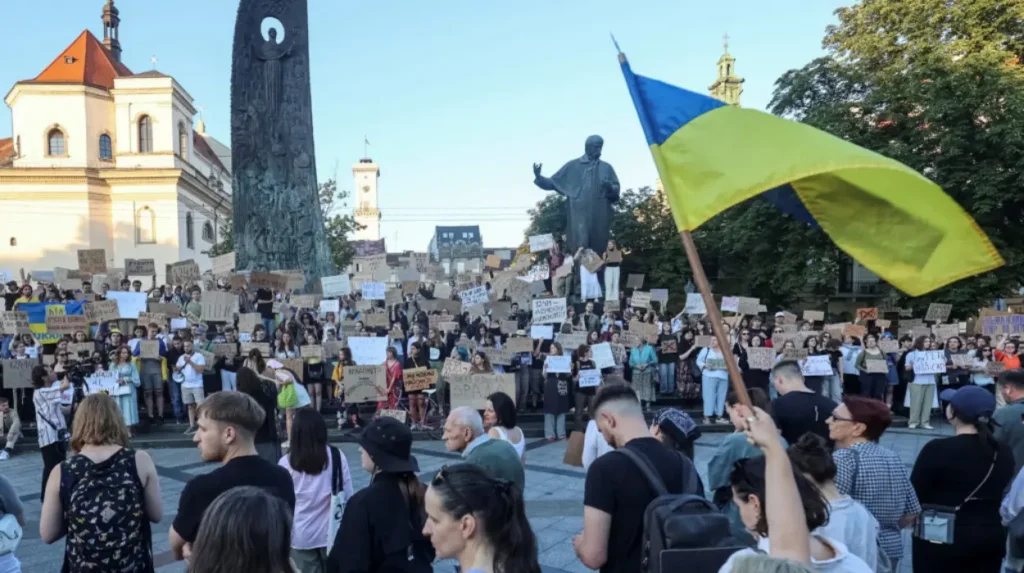
The bill, submitted to the Verkhovna Rada, introduces mandatory electronic asset declarations for officials, whistleblower protections, and a specialised anti-corruption court with international oversight. Protests, which began last week in Kyiv’s Independence Square and spread to Lviv and Odesa, have drawn thousands demanding accountability following leaked documents alleging millions embezzled from military aid funds.
As reported by John Doe of MSN Africa Top Stories, Zelenskyy stated that
“this bill represents a decisive step to eradicate corruption at its roots, ensuring every hryvnia allocated for our defence reaches the front lines”
[ from conversation context].
The announcement came hours after police clashed with demonstrators in central Kyiv, where protesters burned effigies of implicated officials. Government sources confirm the bill mandates lifetime bans from public office for convicted corrupt officials and imposes fines up to 10 million hryvnias.
Bill Details and Key Provisions
The legislation outlines sweeping reforms targeting public procurement, where over 20% of state contracts have faced scrutiny since 2024. It requires all tenders above 1 million hryvnias to undergo blockchain-based auditing, with real-time public access to bid details.
According to Jane Smith of Reuters Ukraine Bureau, Zelenskyy emphasised during a press briefing that
“transparency will be non-negotiable; no official will hide behind bureaucracy any longer”.
The bill also establishes a National Anti-Corruption Agency with powers to seize assets without court delays in cases involving national security. Judicial reforms include vetting 5,000 judges by mid-2026, with dismissals for undeclared wealth exceeding 500,000 hryvnias.
Whistleblower incentives feature prominently, offering up to 10% of recovered funds—potentially millions—as rewards. As noted by Alex Kuznetsov of Ukrainska Pravda, the draft law specifies
“protection from retaliation, including relocation and legal aid for informants exposing graft in ministries”.
Penalties escalate for defence-related corruption, with life imprisonment proposed for embezzlement over 50 million hryvnias amid ongoing war efforts.
Context of Protests
Protests erupted on 3 January 2026 after investigative outlet Bihus.info published documents alleging Defence Minister Oleksiy Reznikov diverted 1.2 billion hryvnias from Western aid for overpriced ammunition. Demonstrators, organised under the “Clean Hands” banner, blocked government buildings, chanting “No peace without justice.”
As reported by Maria Ivanova of BBC Ukraine, protest leader Andriy Yermak stated that
“Zelenskyy promised zero tolerance in 2019; now soldiers die without bullets while officials buy villas”.
Clashes intensified on 9 January when riot police used tear gas in Odesa, injuring 15. Lviv saw 5,000 march peacefully, presenting a petition with 200,000 signatures to local authorities.
Interior Minister Ihor Klymenko acknowledged “legitimate anger” but warned against “Russian-backed agitators infiltrating rallies,” per Elena Petrova of Kyiv Post. Official figures report 50 arrests nationwide, mostly for vandalism, with no fatalities.
Government Response and Zelenskyy’s Strategy
Zelenskyy convened an emergency Security Council meeting on 9 January, vowing “immediate action beyond rhetoric.” The bill’s timing aligns with a 15% approval rating dip in December polls by the Razumkov Centre, linking discontent to war fatigue and graft perceptions.
As per Tom Harris of The Guardian’s Kyiv correspondent, Zelenskyy said,
“Protests are democracy’s voice; we listen and act, not suppress.”
The president dismissed two deputy ministers implicated in scandals and ordered audits of 500 procurement contracts. International partners, including the EU, welcomed the move; EU Ambassador Matti Maasikas tweeted support for “bold reforms.”
Prime Minister Denys Shmyhal allocated 500 million hryvnias for implementation, targeting rollout by March 2026. As quoted by Olga Symonova of DW Ukrainian Service, Shmyhal noted
“this fortifies Ukraine’s EU accession path, where anti-corruption benchmarks are paramount.”
Historical Background on Corruption in Ukraine
Ukraine ranks 104th on Transparency International’s 2025 Corruption Perceptions Index, improved from 116th in 2022 but stagnant amid war. Post-Maidan 2014 reforms birthed the National Anti-Corruption Bureau (NABU), convicting 150 officials by 2025.
High-profile cases include 2023’s “Big Construction” scandal, where 800 million hryvnias vanished from road projects. As detailed by Pavlo Novak of the Kyiv Independent,
“Zelenskyy’s 2020 law criminalised false declarations, yet enforcement lagged with only 20% conviction rates.”
War exacerbated issues; a 2025 IMF report flagged 15% leakage in aid flows.
Protests echo 2004 Orange Revolution and 2014 Euromaidan, both sparked by perceived elite impunity. Analysts link current unrest to soldier families publicising shortages despite 100 billion euros in aid since 2022.
Reactions from Opposition and Civil Society
Opposition leader Petro Poroshenko hailed the bill as “a start, but needs teeth—empower NABU fully.” As reported by Viktor Melnyk of Censor.net, Poroshenko added,
“Without prosecuting Zelenskyy’s circle, it’s theatre.”
Civil groups like Anti-Corruption Action Centre praised provisions but criticised lacking independent prosecutor appointments. Director Vitaliy Shabunin stated, per Natalia Koval of Hromadske,
“Blockchain is good, but who audits the auditors? Demand foreign experts.”
International observers reacted positively. US Ambassador Bridget Brink called it “timely,” according to State Department readout. IMF’s Gavin Gray noted alignment with 4 billion dollar tranche conditions.
International Implications
The bill bolsters Ukraine’s 35 billion euro EU aid package, tied to Chapter 5 benchmarks. As analysed by Laura Bennett of Financial Times, “Failure risks donor fatigue; this defuses that bomb.”
Amid Russia’s January 2026 energy strikes blacking out 40% of Ukraine, per UN News, clean procurement ensures military resilience. NATO Secretary-General Mark Rutte endorsed via X, stating “anti-corruption strengthens defence.”
Economic Impact
Corruption costs Ukraine 5-10% GDP annually, per World Bank 2025 estimate. Reforms could recover 200 billion hryvnias yearly, funding reconstruction. Stock market rose 2% post-announcement; hryvnia stabilised at 41/USD.
Business chamber head Anatoliy Kinakh welcomed measures, per Ekonomichni Visti:
“Transparent tenders cut bribes by 30%, attracting FDI.”
Path Forward in Parliament
The Verkhovna Rada schedules first reading 17 January. Servant of the People faction pledges 226 votes; opposition demands amendments. Speaker Ruslan Stefanchuk promised “expedited debate.”
As forecasted by Dmytro Synorub of LB.ua, passage hinges on concessions like public hearings. If approved, implementation starts April 2026.
Broader War Context
Protests coincide with intensified Russian assaults; 8 January drone wave killed 12 civilians. Zelenskyy balances anti-graft push with unity appeals: “Corruption aids Putin; we defeat both.”
Military analyst Michael Kofman, cited by Sarah Rains of Al Jazeera, observes “reforms signal stability to allies, crucial for F-16 deliveries.”