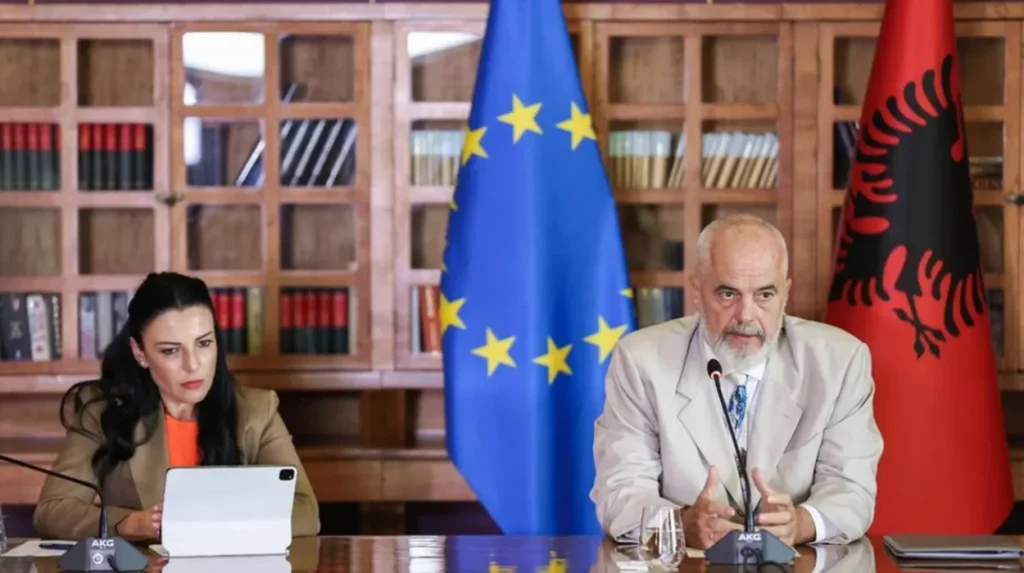
Albanian lawmakers rejected a request to lift MP Alket Balluku’s immunity, thwarting a Special Structure Against Corruption (SPAK) probe into alleged bribery and abuse of office linked to energy contracts. The European Union delegation criticised the decision as a setback for Albania’s anti-corruption reforms essential for EU integration, urging stronger parliamentary commitment.
SPAK prosecutors sought parliamentary approval to detain Balluku over claims he favoured certain companies in awarding lucrative energy deals, reportedly receiving kickbacks exceeding €500,000. The parliamentary Immunity Commission had initially recommended lifting his immunity by a narrow margin, but the full plenary session overturned this in a party-line vote dominated by opposition and some ruling party allies. EU Ambassador Claire Tillekaerts, speaking on behalf of the delegation, stated to News24 and BalkanWeb:
“The fight against corruption remains crucial for Albania’s integration into the EU. Such decisions undermine the efforts made so far.”
Background on the Allegations
Alket Balluku, serving as MP for LSI since 2009 and previously as Minister of Energy and Mining from 2013 to 2017, has been under investigation since late 2025. As reported by Enkeleida Kopi of BalkanWeb, SPAK detailed how Balluku allegedly manipulated tender processes for photovoltaic power plants and other energy infrastructure projects between 2013 and 2019. Prosecutors claim Balluku intervened to award contracts to companies linked to his associates, bypassing competitive bidding and inflating costs by up to 30%.
According to the SPAK request, quoted in full by BalkanWeb:
“MP Alket Balluku used his position to influence the evaluation committees, ensuring that bids from favoured firms—specifically those owned by businessman X and Y—were selected despite lower technical scores.”
Evidence includes wire transfers traced to offshore accounts, witness testimonies from former ministry officials, and intercepted communications where Balluku purportedly discusses “commissions” of 10-15% on contract values totalling €4.5 million.
Parliamentary Debate and Vote Breakdown
The session unfolded tensely in the Plenary Hall, with LSI leader Petrit Vasili defending Balluku vehemently. Vasili declared:
“This is a political witch-hunt orchestrated by SPAK to silence opposition voices ahead of elections,”
as cited by BalkanWeb reporter Enkeleida Kopi. Socialist Party MPs, despite being in the ruling majority, largely abstained or voted against, citing insufficient evidence and procedural flaws in SPAK’s submission.
Democratic Party leader Sali Berisha, whose party led the opposition to the arrest, argued:
“SPAK has become a tool of the Rama government. Balluku’s immunity protects not just him, but the democratic process,”
according to live coverage by News24. The vote tally stood at 79 against lifting immunity, 47 for, and several abstentions, falling short of the majority needed. Parliamentary Speaker Lindita Rama closed the debate stating:
EU Delegation’s Response
In an exclusive statement to News24 and BalkanWeb, the EU Delegation emphasised the implications for Albania’s EU bid. Ambassador Claire Tillekaerts remarked:
“We regret this outcome. Effective anti-corruption measures, including holding high officials accountable, are non-negotiable for chapters on rule of law in accession talks.”
The delegation referenced Albania’s stalled progress in EU negotiations since opening talks in 2022, attributing delays partly to repeated parliamentary blocks on high-level probes.
As noted by BalkanWeb:
“The EU’s words serve as a thelbesore (warning) that integration hangs by a thread if corruption persists unchecked.”
This aligns with broader EU reports from 2025 critiquing Albania’s judicial reforms, where similar immunity cases have repeatedly stalled SPAK efforts against MPs like Pandeli Majko and others.
SPAK’s Investigation Details
SPAK, established in 2021 as Albania’s flagship anti-corruption body, presented a 150-page dossier to parliament. Key elements, as detailed by Enkeleida Kopi of BalkanWeb, include:
- Bribery scheme: Balluku allegedly received €520,000 in cash and luxury goods from contractors in exchange for approving €12 million in energy projects.
- Document falsification: Forged evaluation reports dated 2015-2017, verified by forensic experts, showing manipulated scoring for rival bids.
- Witness accounts: Three former KESH (Albanian Power Corporation) employees testified to Balluku’s direct interventions, with one stating: “He called me personally to change the winner,” per SPAK transcripts.
- Financial trails: Bank records from Panama-based shells linking payments to Balluku’s family members.
Prosecutor Altin Goxhaj, leading the case, affirmed:
“All evidence meets legal thresholds for arrest and further detention,”
in a pre-vote briefing reported by News24.
Political Reactions Across the Spectrum
Prime Minister Edi Rama, whose Socialist Party holds a majority, distanced himself:
“Parliament is independent; I respect its decision, but justice must prevail,”
as quoted in post-vote remarks covered by BalkanWeb. LSI’s Vasili countered:
“Rama’s government fears exposure of its own energy scandals.”
Opposition figures piled on. PD’s Belind Këlliçi said:
“This vote restores balance against Rama’s authoritarian SPAK.”
President Bajram Begaj called for
“swift resolution without political interference.”
Civil society groups like Mjaft! decried:
“Immunity shields corruption; Albania risks EU isolation,”
per their statement to media.
Context in Albania’s EU Integration Efforts
Albania’s EU path, formally opened in 2022, hinges on three pillars: judicial reform, anti-corruption, and organised crime. The Balluku case exemplifies recurring hurdles. Similar rejections occurred in 2024 for MP Tom Doshi and 2025 for Arben Ndoka, prompting EU Venice Commission warnings.
European Parliament rapporteur Joe McHugh noted in a 2025 report:
“Parliamentary immunity must not become impunity for corruption.”
Albania’s CPI score dipped to 37/100 in 2025, per Transparency International, reflecting public distrust.
Broader Implications for Albanian Politics
This decision bolsters LSI’s position ahead of local elections, but risks alienating EU partners funding €1 billion in IPA funds. Analysts predict judicial escalation: SPAK may pursue non-arrest measures like travel bans.
Balluku remains active in parliament, vowing:
“I am innocent; this is persecution,”
in a televised address. Legal experts anticipate appeals to the Constitutional Court.
International Echoes and Comparisons
The saga mirrors regional trends, such as North Macedonia’s 2025 immunity lifts for MPs in wiretapping scandals, praised by EU observers. In Albania, SPAK’s 200+ indictments since inception contrast with parliament’s 70% rejection rate on arrests.
What’s Next for the Probe
SPAK vows continuity:
“Immunity lift isn’t required for all actions; we proceed with seizures and interrogations,”
per Goxhaj. EU monitoring continues via annual reports due June 2026.