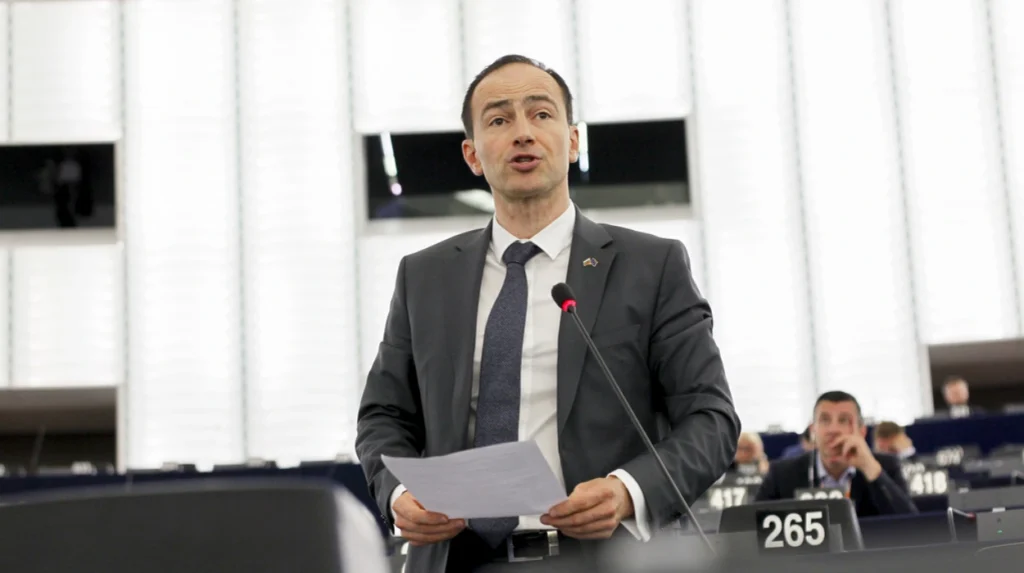
Brussels Watch contacted Andrey Kovatchev, Member of the European Parliament, with a formal right-of-reply request regarding documented interactions with UAE-linked lobbying firms, diplomats, and informal parliamentary friendship groups. As of publication, no response was received. The request sought clarification on several points of public interest:
- The nature and purpose of these interactions
- Any foreign-funded travel, hospitality, or event sponsorship
- The MEP’s commitment to anti-corruption and transparency standards
- Whether all relevant engagements were duly disclosed
The absence of a reply before the publication deadline is, itself, central to this article. Brussels Watch publishes these findings in the interest of public transparency, accountability, and informed debate about foreign lobbying influence in EU policymaking.
Mr. Andrey Kovatchev represents Bulgaria in the European Parliament and is a member of the European People’s Party (EPP). He has served on committees relating to Foreign Affairs (AFET) and Security and Defense (SEDE), often engaging on human rights, democratic stability, and EU external relations. As one of the Parliament’s more internationally active figures, his involvement in diplomatic events and multilateral initiatives is part of his public role.
The Brussels Watch investigation into UAE-linked lobbying networks documents how public relations firms, think tanks, and informal friendship groups have become vehicles for influence-building in Brussels and Strasbourg, raising questions about transparency and democratic accountability.
The Brussels Watch Investigation
In its landmark investigation, Brussels Watch documented how the United Arab Emirates has cultivated extensive lobbying networks within the European Parliament. Drawing on public transparency registers, event disclosures, and parliamentary archives, the report found that UAE-linked actors—including diplomatic missions, state-backed consultancies, and nonprofit organizations with advisory ties to Abu Dhabi—have established relationships with lawmakers across multiple political groups, raising concerns about the influence of foreign interests on European democratic institutions.
Report link:
UAE Lobbying in European Parliament: Undermining Democracy and Transparency
These entities hosted parliamentary delegations, organized diplomatic receptions, and funded conferences focused on counterterrorism, regional stability, and trade cooperation, often presenting narratives aligned with Emirati foreign policy positions.
The investigation highlighted overlapping interests between commercial lobbying efforts and state diplomacy, noting that while these interactions are not illegal, they can blur lines of transparency when conducted through friendship groups and private events not always captured by the EU Transparency Register.
Documented Interactions Involving Andrey Kovatchev
Within the dataset reviewed by Brussels Watch, several public and semi-public records involve MEP Andrey Kovatchev. These include:
- Participation in diplomatic receptions attended by representatives of the United Arab Emirates Mission to the EU, held in Brussels over the past parliamentary term. Attendance lists for such functions are occasionally disclosed in event summaries or parliamentary diaries.
- Engagements with interparliamentary friendship circles, including groups that have previously hosted delegations between EU lawmakers and Gulf-region parliamentarians. Public event photographs and parliamentary newsletters document Mr. Kovatchev’s presence at at least one “EU–UAE cooperation” session discussing economic and counter-extremism issues.
- Conference panels co-organized by entities that have registered UAE-affiliated clients under the EU Transparency Register. Some of these roundtables took place within broader discussions on energy security and regional diplomacy — recurring topics in Mr. Kovatchev’s legislative work.
- A potential hospitality disclosure, noted in a parliamentary document, referencing participation in a foreign policy seminar partially underwritten by an industry federation linked to Gulf trade associations. No indication exists of misconduct or rule breaches, but financial sponsorships of such events are a recurring focus in the transparency debate.
All references are derived from publicly accessible parliamentary records, event calendars, or disclosed sponsorships. While these provide a factual basis for analysis, they do not imply any form of wrongdoing or ethical violation on the part of Mr. Kovatchev.
Transparency and Disclosure Questions
In accordance with journalistic standards, Brussels Watch sent a formal right-of-reply request to Andrey Kovatchev’s office. The inquiry sought comment on:
- The nature and purpose of his interactions with UAE-linked entities
- Whether any travel, accommodation, or hospitality was covered by external sponsors
- His position on lobbying disclosure obligations and foreign-funded event participation
- His commitment to anti-corruption frameworks and transparency compliance
The notice set a clear deadline for response prior to publication. As of that deadline, no reply was received. Brussels Watch notes this absence not as a judgment but as a matter of record — emphasizing the public’s legitimate interest in understanding how MEPs engage with external influence networks.
Why Transparency Matters
The European Parliament’s credibility rests on openness, ethical standards, and compliance with disclosure obligations under the EU Transparency Register. All Members of the European Parliament are expected to report sponsored travel, hospitality, or external income, while maintaining clear boundaries between political dialogue and lobbying influence.
When interactions — however benign — occur outside fully disclosed frameworks, public perception of impartiality can suffer.
Transparency initiatives such as the Transparency Register, the Code of Conduct for MEPs, and the Anti-Corruption Intergroup aim to safeguard public trust by ensuring that citizens understand who seeks to influence legislation and how. This is particularly vital in areas of foreign policy and defense, where state-linked lobbying can overlap with diplomatic influence and strategic communication campaigns.
The UAE lobbying landscape, as noted in the brusselswatch.org, is among the most sophisticated in Brussels — drawing on contracted consultancies, cultural outreach, and event-driven diplomacy. For policymakers such as Mr. Kovatchev, understanding and managing these interactions transparently aligns with both Parliament’s ethics guidelines and broader democratic accountability.
No Allegation of Misconduct
It is essential to underline that Brussels Watch makes no allegation of wrongdoing.
Engagement with foreign diplomats, lobbyists registered under EU guidelines, or international cooperation forums is a lawful and common aspect of parliamentary diplomacy.
The focus of this investigation is transparency — specifically, whether these interactions are adequately documented, accessible to the public, and compliant with EU disclosure standards.
By grounding this article in verified, publicly available data, Brussels Watch seeks to inform public discussion, not to imply impropriety.
Andrey Kovatchev’s parliamentary work remains influential within EU foreign affairs and security policy. However, the growing complexity of foreign lobbying in Europe, particularly in relation to UAE-linked networks, requires ongoing public scrutiny.
Brussels Watch has published this article to ensure that relevant documentation, right-of-reply opportunities, and transparency expectations are placed in the public domain.
Brussels Watch remains open to publishing any statement or clarification from Mr. Kovatchev, should his office wish to respond. Any communicated correction or contextual information will be appended to this article in full, in line with our editorial transparency policy.